

Instrumentation cabinets, analyzer shelters and junction boxes fail when falling rock, sliding ore, dropped tools or abrasive dust reaches them faster than a conventional cover can absorb the damage. By the end, you will be able to select between Abrex 400, Abrex 500 and alternative guard materials, verify the supplied plate, and check whether the finished protection will fit without creating vibration, access or maintenance problems.
Key takeaways
- Assess impact energy before choosing a wear plate grade.
- Compare Abrex 500 with Abrex 400 using impact and abrasion demands.
- Request heat numbers, test certificates and grade identification before acceptance.
- Design bolt access, clearances and replaceable panels before ordering.
Where instrumentation guards face real abrasion and impact
Assess impact energy before abrasion rate: a rock, scrap piece or dropped tool can deform a guard in one event, while sliding solids and dust remove material progressively. Contact with moving conveyors, chutes or loaders adds crushing and snagging risk.
The assemblies most exposed are:
- Instrument cabinets beside crushers, screens, transfer points and haul routes.
- Analyzer shelters and sample-system enclosures near ore, slag or aggregate flow.
- Junction-box guards and skid enclosures exposed to falling material or tool drops.
- Control-panel barriers and covers where operators need protection without losing calibration access.
- Falling rocks or scrap: check denting, puncture and bracket failure from a single impact.
- Sliding ore or abrasive solids: check whether repeated contact will wear through the face, edges or fasteners.
- Airborne abrasive dust: check erosion at louvers, seams and cable-entry openings.
- Moving equipment: check collision clearance and whether the guard can be pushed into the instrument.
| Assembly | Main exposure | What to assess first |
|---|---|---|
| Instrument cabinet | Rock impact and dust | Impact energy, then panel penetration |
| Analyzer shelter | Sliding ore and weather | Wear path, drainage and access |
| Junction-box guard | Dropped tools and abrasion | Local denting and replaceability |
| Skid enclosure | Moving material contact | Clearance and frame deformation |
Abrex 500 is a wear plate, not corrosion-resistant stainless steel; add coating, drainage and dissimilar-metal isolation where exposure demands them. Treat an “abreх 500 plates supplier in india” listing as a supply lead, not proof of grade, manufacturer or Indian manufacture.
Choosing Abrex 500 against Abrex 400 and alternative materials
Abrex 500 earns its extra mass and fabrication difficulty when a guard faces repeated high-energy impact plus sliding abrasion, such as rock striking a cabinet or ore rubbing across a cover.
Choose it only after comparing plate weight, clearance, replacement access and the cost of an instrument failure; a harder grade is wasteful if the shield cannot be removed or safely supported.
| Option | Strength | Choose it when |
|---|---|---|
| Abrex 400 | Lower hardness, easier processing | Impact and abrasion are moderate, and lighter fabrication matters |
| Abrex 500 | Higher wear resistance, harder fabrication | Large abrasive particles, repeated impact and long shield life dominate |
| Structural steel | Easy to cut, drill and weld | The guard mainly needs stiffness or separation, not sacrificial wear resistance |
| Stainless steel | Corrosion resistance | Moisture or chemicals control life, while abrasion remains low |
| Aluminium | Low weight | Handling and access matter more than impact resistance |
| Polymer or rubber | Light, replaceable cushioning | Low-energy contact, noise or dust sealing is the primary duty |
| Ceramic lining | Extreme surface wear resistance | Abrasion is severe and the backing can tolerate brittle, locally replaceable tiles |
Do not treat an Abrex 400 plates stockist in india listing as proof that 500 is unnecessary. Confirm hardness, thickness availability, delivered weight and the mill’s forming limits; substitution needs engineering approval. Abrex 500 is still not stainless steel, so outdoor guards need coating, drainage and dissimilar-metal isolation.
A practical design often uses a structural-steel frame with a bolted, replaceable Abrex 500 wear face. That preserves stiffness and simplifies renewal without making every bracket difficult to drill or bend.
What proves that an offered plate is the specified Abrex grade
A hardness stamp alone does not prove Abrex 500. Accept the plate only when its specified grade, actual test results and heat number connect back to the producing mill.
An Abrex 500 plates stockist in India may hold imported JFE Steel material, arrange an order, or offer another manufacturer’s abrasion-resistant plate. Treat “AR500” as a marketing description until these records agree:
- Grade designation and the applicable Abrex specification
- Ordered thickness, dimensions, surface condition, flatness and tolerances
- Specified hardness range and the actual heat-test result; do not demand a single tensile-strength value as the sole proof
- Mill name, country of manufacture and heat number
- EN 10204 inspection certificate type named in the purchase order
- Cutting allowance and delivery form, if the guard will arrive profiled or fabricated
| Evidence | What to match | Failure sign |
|---|---|---|
| Mill certificate | JFE Steel or the named producing mill, Abrex 500 designation, heat number and actual hardness result | Certificate names only a trader, “AR500,” or an unapproved grade |
| Plate marking | Heat number and manufacturer marking physically stamped or stencilled on the plate | Marking is absent, illegible or differs from the certificate |
| Stockist records | Invoice, packing list and delivery documents repeat the same heat number | Documents identify only “Abrex 500 plate” with no origin |
| Inspection certificate | EN 10204 type, dimensions and test results match the ordered plate | Certificate is generic, photocopied or covers another heat |
Quarantine mismatched material. Ask the seller to resolve the identity before cutting, drilling or welding it into an instrumentation guard.
Checking guard fit, fabrication and equipment access before ordering
A heavy guard must attach to the skid or structural frame, not the instrument cabinet, conduit or tubing. Use stand-offs to create an airflow gap, vibration isolators where the support design permits, and a removable panel for calibration, fuse replacement and cable termination.
1. Mark every access requirement on the equipment drawing: door swing, calibration ports, display visibility, drain points, gland plates, lifting paths and the space needed to remove an instrument. A guard that protects the cabinet but traps a calibration technician is a maintenance failure.
2. Check ventilation with the guard installed. Keep cooling-air inlets, exhaust outlets and analyzer sample lines unobstructed; add louvres or perforated panels only after confirming that openings cannot admit the expected rock, scrap or dust.
3. Confirm the guard’s weight, centre of gravity and support loads before ordering. Use gussets and separate frame members instead of transferring plate load into thin cabinet walls. Isolate contact points so plate vibration does not become instrument vibration.
4. Give the fabricator the mill’s processing limits. Thermal cutting can leave a hardened edge, softened heat-affected zone or residual stress, so require edge cleanup and inspection before drilling or welding. Specify hole sizes, edge distances and the approved method.
5. Obtain the manufacturer’s minimum bend radius for the exact thickness, rolling direction and edge condition. Do not accept a generic bendable claim. Plan larger tooling clearances and use the supplier’s preheat, interpass-temperature and weld-consumable instructions.
6. Ask an Abrex 500 plates supplier in India to quote a trial-fitted, bolted or hinged guard, with heat-number traceability and a drawing showing access zones. Reject any design that requires field welding beside live instruments.
Turning a stockist quotation into a serviceable replaceable shield
Specify a replaceable wear face, not an unnecessarily heavy frame. Quote the conventional structural steel support separately from the bolted or welded Abrex 500 shield, including hole positions, fastener grade, standoff, access panels, ventilation openings, vibration isolation and the design loads from impact or sliding material.
Include these details in the purchase order:
- Abrex 500 grade, thickness, cut dimensions, quantity, cutting allowance and delivery form
- Mill name, country of manufacture, heat number, plate markings and EN 10204 3.1 inspection certificate
- Hardness range, surface condition, flatness and dimensional tolerances
- Cutting, drilling, bending and welding method, with the mill’s minimum bend radius for the specified thickness and rolling direction
- Fabrication drawing showing replaceable panels, joint gaps, support spacing, instrument clearance and calibration access
- Support steel grade, anchor arrangement and allowable deflection so the guard does not transmit damaging vibration
Treat “Abrex 500 plates manufacturer in India” as a claim to verify, not a description of origin. An “Abrex 500 plates stockist in India” may supply imported JFE material or another mill’s plate; match the invoice, plate marking and certificate heat number before fabrication.
Shyam Metals & Alloys can be included in the comparison only after its quotation identifies the actual mill and certificate package.
At delivery, inspect markings against the certificate, measure thickness and cut size, check visible laminations or edge damage, and reject untraceable pieces. Do not accept Abrex 400 as a casual substitute; obtain engineering approval and confirm the expected wear life.
Related product
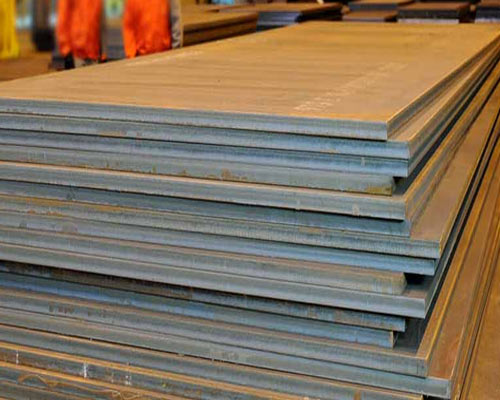 | Resistant Plates Abrex (400 / 450 / 500 ) Item Abrasion Resistant Plate Material Abrex 400 /450 /500 /600 Thickness 6mm to 100mm Width 1,500mm to 2,500mm Length... View product → |
Frequently asked questions
Where do instrumentation guards face the most abrasion and impact?
Guards near conveyors, chutes, loaders and transfer points face dropped tools, rocks, scrap, sliding solids, dust, crushing and snagging. Assess impact energy as well as abrasion rate.
How should you choose Abrex 500 against Abrex 400?
Compare the guard’s impact exposure, abrasion severity, required toughness, fabrication limits and access needs. Choose the higher hardness grade only when its performance justifies the forming and fabrication demands.
What documents prove that a plate is the specified Abrex grade?
Ask for the plate identification, heat number and material test certificate, then match those details to the quotation, markings and delivery documents. Investigate mismatched or missing records before acceptance.
What should you check before ordering an instrumentation protection guard?
Confirm equipment dimensions, sensor line of sight, cable and tubing clearance, mounting points, bolt access, lifting space and the removal path for replacement panels.
How can a quotation become a serviceable replaceable shield?
Specify the grade, thickness, plate dimensions, cutouts, bend details, fasteners, identification records and replacement-panel arrangement. Include inspection and acceptance requirements in the order.