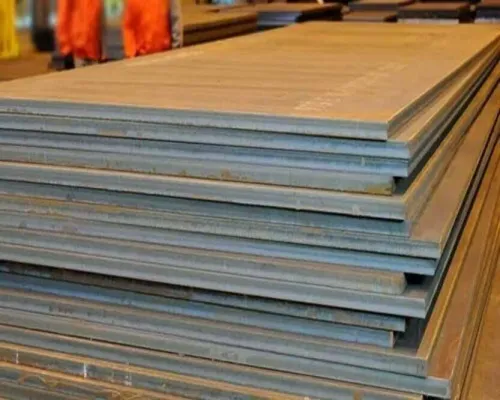


The numbers 400 and 500 identify nominal hardness classes, not guaranteed service life or toughness. By comparing the JFE designation, certificate values, wear mechanism, fabrication limits and total replacement cost, you can choose the grade that fits the equipment rather than pay for hardness you cannot use.
Key takeaways
- Treat EH 400 and EH 500 as hardness classes, not complete product specifications.
- Match plate hardness to impact, sliding abrasion, and fabrication requirements.
- Request the exact JFE designation, mill certificate, heat number, and test results.
- Compare service life against cutting, drilling, bending, and welding costs.
What the EH 400 and EH 500 designations actually tell you
The numbers 400 and 500 identify nominal hardness classes, not complete structural-steel specifications. The JFE designations commonly seen in quotations are EH-C400LE and EH-C500LE; “EH400” or “EH500” alone cannot establish the exact product.
| Comparison | EH-C400LE | EH-C500LE |
|---|---|---|
| Typical Brinell range | About 370–430 HBW | About 450–530 HBW |
| Main measured property | Lower hardness, with more forgiving fabrication | Higher hardness, with greater abrasion resistance potential |
| What the label does not prove | Impact toughness, chemistry, bendability or weldability | Impact toughness, chemistry, bendability or weldability |
The JFE EVERHARD 400 versus 500 choice must use the stated test method, sampling location and acceptance range, not the product name as a test result. Thickness, width, length, flatness, hardness uniformity and maximum plate size also belong in the comparison because availability varies by designation and production route.
Put these figures and identifiers on the quotation and require them on the inspection certificate:
- Exact designation, plate thickness, dimensions, heat number and plate number.
- Hardness method, such as HBW, test location, individual readings and accepted range.
- Chemical analysis for carbon, manganese, alloying elements, and any specified boron or chromium.
- Charpy impact-test temperature and guaranteed result when toughness is specified, including the ordered thickness.
- Applicable JFE specification or datasheet revision, plus the actual certificate values rather than “400” or “500” alone.
A hardness class cannot replace toughness data. It also cannot set a safe bend radius; use JFE’s minimum radius for the ordered thickness and bending direction.
Match hardness to the wear mechanism, not just the application name
EH400 is usually the better engineering choice where impact, gouging, bending and field repair accompany abrasion; EH500 can justify its higher hardness where sliding abrasion dominates and replacing worn plate costs more than the additional fabrication risk.
| Grade | Wear mechanism | Engineering choice |
|---|---|---|
| EH400 | Impact mixed with abrasion, such as rocks striking a bucket or chute | Choose the tougher fabrication and repair balance; extreme hardness alone will not prevent impact damage. |
| EH400 | Gouging, local denting or frequent field modification | Choose the grade that tolerates the planned repair method, drilling and replacement work. |
| EH500 | Predominantly sliding abrasion from sand, ore or coal | Choose it when slower thickness loss can extend service life or permit a thinner wear plate. |
A JFE wear resistant plate comparison must examine the actual mechanism, not label equipment simply as a “crusher,” “hopper” or “dump body.” A crusher liner facing impact and trapped fragments has a different duty from a chute carrying fine silica sand.
EH500 earns its premium when abrasion is the dominant failure mode, access is difficult and the saved shutdowns or reduced replacement thickness outweigh harder cutting, drilling, bending and welding. EH400 is safer economically when impact, cracking, frequent modification or uncertain repair conditions control the risk.
Do not use a structural-steel grade as a substitute because its nominal hardness looks similar. Confirm the ordered JFE grade, certificate values and the repair method before selecting EH500.
The fabrication trade-off: cutting, bending, drilling and welding
Moving from EH400 to EH500 raises fabrication difficulty: the harder plate can extend wear life, but it gives you less tolerance for heat, forming strain and hydrogen.
| Operation | EH400 | EH500 |
|---|---|---|
| Cutting | Control heat input and inspect cut edges for hardened zones or cracks. | Use the current JFE cutting limits; excessive thermal input increases edge-cracking risk. |
| Bending | Calculate the inside radius for the ordered thickness and bending direction. | Do not reuse an EH400 radius; EH500 requires the exact JFE minimum radius and stricter forming control. |
| Drilling | Use suitable carbide tooling and plan hole clearance before fabrication. | Expect slower drilling, faster tool wear and greater risk of edge damage if the tool dulls. |
| Welding | Follow the approved procedure for the supplied chemistry and thickness. | Control preheat, interpass temperature, low-hydrogen consumables, heat input and cooling more tightly. |
Cold bending is where a nominal hardness comparison fails fastest. A mild-steel bend rule can crack EH500 at the outside surface even when the plate meets its hardness check.
Repair planning changes as well. An EH400 replacement may be easier to cut, drill and weld in the field; EH500 repair demands a qualified procedure and closer control of local heating.
Before choosing EH500, confirm:
- How will the crew remove damaged plate: cold cutting, thermal cutting or gouging?
- Can the workshop drill holes and maintain the specified clearance without overheating the edge?
- Does the repair procedure cover stud welding, attachment welding or wear-overlay welding?
- Will the supplier provide JFE instructions for the exact thickness, designation and chemistry?
If field repair is frequent, EH400 can cost less overall even when EH500 promises longer wear life.
How to verify a JFE plate offer from an Indian supplier
A genuine JFE-origin plate is identified by a traceable steelmaker, not by the words “equivalent to EH500.” “EH400” or “EH500” alone is also insufficient: require the exact JFE designation, such as EH-C400LE or EH-C500LE.
- JFE as steelmaker, plus country of melt and manufacture
- Exact designation and nominal hardness class
- Plate thickness, width, length and delivery condition
- Heat number and unique plate number
- Applicable JFE mill certificate
2. Match the certificate to the plate. Check that the heat number is stamped, painted or tagged on the plate and appears on the certificate, alongside chemical analysis, hardness results and dimensional measurements. A generic mill test certificate with no plate-to-heat link does not establish JFE origin.
3. Request EN 10204 Type 3.1 certification, or Type 3.2 when an independent inspection body or purchaser representative must witness verification. Add ultrasonic testing, impact testing and pre-shipment inspection when the project specification calls for them.
4. Reject substitution by label alone. Compare the proposed plate’s hardness range, chemistry, yield and tensile values, impact requirement, thickness range, delivery condition and weldability guidance against the approved JFE specification. Confirm written project approval before accepting an equivalent.
A JFE EH 400 plates supplier in India, including Shyam Metals & Alloys, should be able to explain this chain from designation to heat-specific records without relying on stock-list wording.
Related product
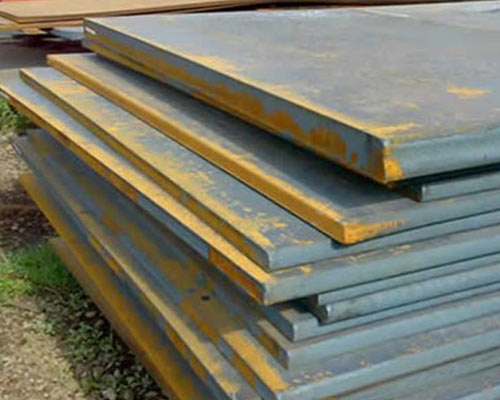 | Resistant Plates JFE Everhard(400 / 450 / 500 ) JFE Everhard(400 / 450 / 500 ) Item Abrasion Resistant Plate Material JFE EVERHARD Thickness 6mm to 50mm Width 500mm to 3000mm Length 1,0000mm to... View product → |
Build the purchase decision around service life and total fabrication cost
Specify the service-life target and fabrication limits in the purchase order before selecting EH400 or EH500. A lower replacement rate is not a saving if the harder plate increases cutting, drilling, welding or repair costs beyond the wear benefit.
| Grade | Service-life and fabrication trade-off | Choose it when |
|---|---|---|
| EH400 | More forgiving for impact, cold forming, welding, drilling and field repair; replacement may occur sooner in severe abrasion | Impact loading and fabrication access matter as much as abrasion |
| EH500 | Higher hardness can extend life or permit a thinner wear plate in predominantly abrasive service; cracking and fabrication controls become more demanding | Abrasion dominates and the added fabrication cost is justified by reduced wear or downtime |
Write these requirements into the order:
- JFE as steelmaker; exact EVERHARD EH400 or EH500 designation; ordered thickness and dimensions; country of melt and manufacture; heat number and plate number.
- The applicable JFE mill certificate, heat-specific chemical analysis, hardness results, dimensional report and plate-to-heat traceability.
- EN 10204 Type 3.1 or 3.2 certification, ultrasonic testing, inspection before shipment and Charpy impact testing when the project requires them. State the test temperature and thickness guarantee; hardness does not establish toughness.
- JFE’s current fabrication instructions for preheat, interpass temperature, hydrogen level, heat input, bend radius and post-weld cooling.
Do not accept “equivalent” without these identifiers. A search for jfe eh 500 plate supplier india can return generic wear plate, not JFE-origin material; require the documents before comparing price or service life.
Frequently asked questions
What do JFE EH 400 and EH 500 designations tell you?
They indicate nominal hardness classes. Ask for the complete designation, such as EH-C400LE or EH-C500LE, because EH400 or EH500 alone does not identify the exact product.
When should you choose JFE EH 400 instead of EH 500?
Choose based on the wear mechanism and fabrication plan. EH 400 can suit applications where impact resistance, bending, drilling, or welding demands outweigh the benefit of higher hardness.
Is JFE EH 500 harder to fabricate than EH 400?
Yes. Higher hardness can increase cutting and drilling difficulty and narrow practical fabrication controls. Confirm the supplier’s guidance for cutting, bending, preheating, and welding.
How do you verify a JFE plate offer from an Indian supplier?
Request the exact product designation, manufacturer documentation, mill test certificate, heat number, plate dimensions, hardness results, and traceability from the offer to the delivered plate.