

Choosing manganese plate by a familiar name such as Mn13, Hadfield or X120Mn12 can conceal differences in chemistry, product form, standard and delivery condition. By checking the specification, service impact, certificate data and cutting or fabrication route, you can decide whether a stockist has supplied the right material—or whether another wear-grade family fits the duty better.
Key takeaways
- Do not treat Mn13, Hadfield and X120Mn12 as interchangeable without chemistry and standard confirmation.
- Request the heat number, chemical analysis, mechanical results and applicable product standard.
- Compare plate condition, thickness tolerance, cut size, fabrication limits and delivery documents.
- Check an Indian stockist’s traceability, inspection process, fabrication capability and replacement policy.
Mn13, Hadfield and X120Mn12: which names can you specify together?
Mn13, Hadfield manganese steel and X120Mn12 can appear together as cross-reference terms, but ASTM A128 and ASME SA128 cannot be assumed interchangeable with them. Hadfield describes an austenitic high-manganese wear-steel family; Mn13 is a commercial or designation term whose chemistry and product standard require confirmation. X120Mn12 is commonly linked with Werkstoff 1.3401.
| Name | What it means | What you must confirm |
|---|---|---|
| Mn13 | Commercial or designation term | Chemistry, governing standard and product form |
| Hadfield | Austenitic high-manganese wear-steel family | Grade, heat treatment and certificate limits |
| X120Mn12 | High-manganese designation commonly associated with 1.3401 | Supplier’s material standard and mill documentation |
| ASTM A128/A128M | Specification for austenitic manganese steel castings | Casting grade and casting inspection requirements |
| ASME SA128 | ASME Code adoption for austenitic manganese steel castings | Applicable Code component and edition |
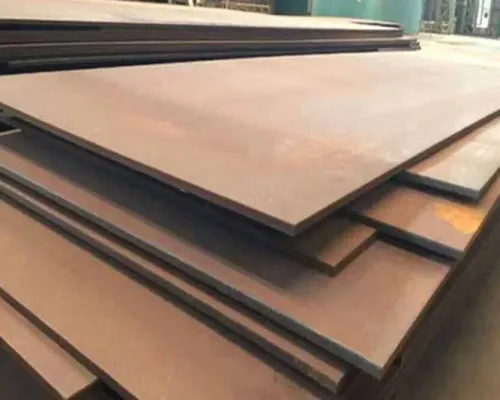
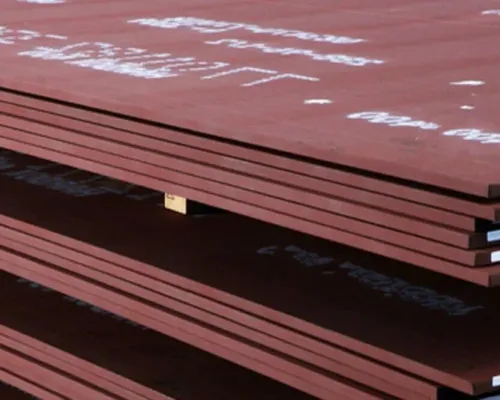
A buyer searching manganese steel plates X120Mn12 India must distinguish rolled plate from a cast plate-like component or material cut from a larger casting. A rolled product needs its rolled-plate standard; A128/A128M or SA128 does not prove that the item is rolled plate.
Write the purchase order with:
- Governing standard and grade
- Product form: rolled plate, sheet, casting or cut piece
- Nominal thickness, dimensions and tolerances
- Delivery heat-treatment condition, such as solution-treated and water-quenched
- Heat number and inspection documents
Use this wording when contacting an alloy steel for plates stockist in India or a mn13 manganese steel plates stockist in India: “Confirm the exact standard and product route; do not quote by trade name alone.”
What chemistry and certificate data must the manganese plate show?
Accept the plate only when its heat-wise chemistry and traceability support the specified grade. Typical Hadfield material contains about 1.0–1.4% carbon and 11–14% manganese, but take the exact carbon, manganese, silicon, phosphorus and sulfur limits only from the governing standard and the heat certificate.
1. Request an EN 10204 Type 3.1 material test certificate. It should identify the manufacturer, product standard, grade, dimensions, heat-treatment condition, chemical analysis, mechanical tests and heat number. “Test certificate available” proves nothing without a heat number matching the plate marking, packing list and certificate.
2. Check the inspection record for solution-treated, water-quenched delivery, an austenitic microstructure and no harmful continuous carbide networks. Confirm nominal and actual thickness, width, length, flatness, cutting condition and traceability before accepting the shipment.
3. Use handheld XRF as a manganese and alloying-element check, not as carbon proof. For carbon-critical acceptance, require the mill’s optical-emission spectrometry result or combustion analysis; XRF cannot reliably measure carbon.
4. Treat as-supplied hardness as supporting evidence only. Hadfield steel work-hardens during impact, so its service hardness develops after deformation and a low initial reading does not automatically disqualify sound material.
A mn13 manganese steel plates stockist in India should provide this evidence, not only a trade label. If your search says manganese steel plates X120Mn12 India, confirm the product form and standard because X120Mn12, Mn13 and Hadfield are not interchangeable certificates.
How does Hadfield manganese perform under real impact and abrasion?
Hadfield manganese earns its place when impact drives gouging wear. It is normally solution-treated and then rapidly water-quenched, preserving a tough austenitic structure; slow cooling through the carbide-precipitation range can create harmful carbides, reduce toughness and shorten wear life.
Its starting hardness is not the performance target. Repeated impact and plastic deformation work-harden the surface, so service hardness rises where the material is being struck. That mechanism suits crusher liners, jaw plates, cone and impact crusher parts, railway crossings, excavator buckets, dredging equipment and similar impact-abrasion components.
| Duty | Better starting comparison | Selection logic |
|---|---|---|
| Impact plus gouging abrasion | Hadfield manganese | Work-hardening converts repeated impact into surface hardness |
| Low-impact sliding abrasion | AR400, AR500 or quenched-and-tempered wear plate | Stable martensitic hardness can outperform manganese without deformation |
| Severe abrasive service with limited impact | High-chromium material | Hard carbides resist sliding abrasion |
Do not choose manganese solely because equipment is labelled “high wear.” Reject it for high-temperature service, corrosion-resistance duties, precision machining or applications needing stable as-supplied hardness; machining also becomes difficult after the surface work-hardens.
A search for “hadfield manganese plates supplier india” or “manganese steel plates x120mn12 india” identifies a source, not a service fit. Manganese steel is not stainless steel, and 4140 or 4340 cannot replace it on tensile strength alone. Compare impact, abrasiveness, toughness and replacement interval.
What must you compare before ordering plate, sheet or a fabricated part?
An ASTM A128 or ASME SA128 callout does not identify rolled plate. ASTM A128/A128M is the ASTM specification for austenitic manganese steel castings; SA128 is its ASME Boiler and Pressure Vessel Code adoption when the governing code and component require it.
| Option | What it means | Ordering decision |
|---|---|---|
| ASTM A128/A128M | ASTM casting specification | Use for a qualifying casting, not automatically for rolled plate |
| ASME SA128 | ASME Code adoption of the casting specification | Use only when the applicable code requires SA128 for the component |
| Rolled plate or sheet | A separate product form requiring its own product standard | Name the rolled-plate standard, grade and condition explicitly |
| Fabricated component | An assembly made from plate, castings or both | State the component standard, welding procedure and inspection documents |
State plate, sheet, casting or fabricated component, then specify nominal and actual thickness, width, length, flatness, cutting tolerances and delivery condition as separate order fields. A search for an alloy steel for plates stockist in India should not replace those fields.
Choose the cutting route with the finished edge in mind:
- Flame or plasma cutting can leave a heat-affected zone, distortion and a hardened or brittle edge.
- Saw cutting limits thermal damage but still needs controlled tolerance and rigid support.
- Use waterjet or controlled mechanical cutting where the edge carries impact or wear load.
Welding needs a qualified procedure, controlled heat input and interpass temperature, suitable austenitic manganese consumables, and engineering approval before using carbon-steel or low-alloy consumables. Machine with rigid fixturing and heavy continuous cuts; rubbing and interrupted light passes rapidly work-harden the surface. A hadfield manganese plates supplier India should identify these manufacturing limits before quoting.
How should you evaluate an Indian stockist before releasing the purchase order?
A traceable stockist proves the plate’s identity from enquiry to packing; a broad grade label does not. Describe the impact-abrasion duty, equipment and failure mode, then identify whether you need rolled plate or a cast component.
- Name the governing standard and product form. Mn13, Hadfield, X120Mn12 and “manganese plate” are not interchangeable purchase specifications.
- Request a heat-wise EN 10204 Type 3.1 certificate showing chemistry, product standard and heat-treatment condition.
- Confirm solution treatment followed by rapid water quenching, then match the heat number on the certificate to plate markings and packing.
- Ask for tensile strength, yield or proof strength where the specification states it, elongation, hardness condition and the hardness test method. Reject an unreferenced hardness figure.
| Option | What to verify | Warning sign |
|---|---|---|
| Rolled plate | Product standard, thickness capability, flatness and actual dimensions | ASTM A128 quoted without confirming a casting product |
| Cast component | Casting standard, section size and inspection documents | “Plate” used without identifying the manufacturing route |
| Cut plate | Cutting method, edge condition and replacement dimensions | Heat-affected, distorted or hardened edges left undocumented |
Compare thickness range, cutting method, edge condition, replacement dimensions and documentation before price. An alloy steel for plates stockist in India, including Shyam Metals & Alloys, is worth evaluating only against these records; the same applies when contacting a Mn13 manganese steel plates stockist in India or Hadfield manganese plates supplier India.
Put these items on the purchase order:
- Grade and governing standard
- Product form, chemistry and mechanical tests
- Heat treatment, dimensions and tolerances
- Heat-number traceability and inspection documents
Related products
 | Alloy Steel Plate Grades View product → |
 | Alloy Steel Plate Grades View product → |
Frequently asked questions
Can Mn13, Hadfield and X120Mn12 be specified as the same grade?
No. Hadfield identifies an austenitic high-manganese wear-steel family, while Mn13 and X120Mn12 require chemistry, standard and certificate confirmation. ASTM A128 and ASME SA128 are not automatically interchangeable with every grade using these names.
What certificate data should a manganese steel plate include?
Request the material grade and standard, heat number, plate dimensions, chemical analysis including carbon and manganese, mechanical test results where specified, heat-treatment condition and inspection or test certificates.
How does Hadfield manganese perform under impact and abrasion?
Hadfield manganese work-hardens under repeated impact and gouging, improving surface wear resistance while retaining a tough austenitic core. It performs poorly when wear occurs without enough impact to trigger work-hardening.
What should you compare before ordering manganese plate?
Compare grade and chemistry, thickness and tolerances, plate or sheet condition, cut dimensions, hardness or mechanical data, weld and machining requirements, test documents, freight and delivery time.
How should you evaluate an Indian manganese plate stockist?
Ask for traceable heat-wise certificates, stock photographs or dimensions, inspection records, cutting and fabrication details, replacement terms and a clear quotation identifying the exact standard and grade.
Related products
 | Manganese Steel Plates ASME SA128 Manganese 12-14% Plates & Sheets View product → |
 | Manganese Steel Plates View product → |
 | Manganese Steel Plates 12-14% High Manganese CR Steel Plates View product → |
 | Manganese Steel Plates ASTM A128 High Manganese Steel Plates and sheets View product → |