

Buying an alloy steel plate starts with the service conditions, not the supplier’s product label. You will be able to identify the right chromium-molybdenum grade, write a specification, verify documents and compare a Mumbai stockist with other supply options before approving dispatch.
Key takeaways
- Specify SA387 grade, class, thickness, dimensions and required designation.
- Ask for heat numbers, MTCs, chemical analysis and mechanical test results.
- Compare delivered prices after freight, cutting, testing and documentation costs.
- Inspect markings and protect plate suitability during welding and heat treatment.
Start with the service, not the phrase “alloy steel plate”
Define the service before asking for a quotation. An alloy steel plate is carbon steel strengthened with controlled additions such as chromium, molybdenum, nickel or manganese. The alloy improves strength, hardenability, creep resistance or toughness; it does not automatically make the plate suitable for every pressure, temperature or corrosion duty.
| Material | Main advantage | Wrong assumption to avoid |
|---|---|---|
| Carbon steel | Lower cost and straightforward fabrication | It is not a substitute for elevated-temperature Cr-Mo service |
| Stainless steel | Chromium-based corrosion resistance | It is not selected mainly for creep strength |
| Wear-resistant plate | Resistance to abrasion and impact | Hardness does not prove pressure-vessel suitability |
| Hadfield manganese plate | Work-hardening under severe impact | It is not a general high-temperature pressure plate |
Chromium-molybdenum plate is the right choice when the design involves elevated temperature, pressure-vessel duty, creep strength or resistance to high-temperature oxidation.
ASTM A387/A387M covers pressure-vessel plate for this service; specify the exact grade and class, not simply “SA387 alloy plate.” Grade 11 contains nominally 1.25% chromium and 0.5% molybdenum, while Grade 22 contains about 2.25% chromium and 1% molybdenum, so they are not interchangeable.
For alloy steel plates for oil and gas, identify sour-service exposure separately. Hydrogen sulfide can cause sulfide-stress cracking and hydrogen-induced cracking; NACE MR0175/ISO 15156 compliance depends on the actual environment.
A first-time buyer searching for alloy steel plates for stockist in India should state grade, class, thickness, dimensions, delivery heat-treatment condition and required supplementary tests before comparing quotes.
Choose the exact SA387 grade, class and designation
Do not write “SA387 alloy plate” as the complete specification. State the grade, class, thickness, dimensions and governing designation: for example, ASME SA387 Grade 22 Class 2, 20 mm × 2,000 mm × 6,000 mm.
| Grade | Typical alloy basis | Selection point |
|---|---|---|
| Grade 5 | 5% chromium, 0.5% molybdenum | Use when the design specifies this Cr-Mo chemistry and temperature capability |
| Grade 9 | 9% chromium, 1% molybdenum | Use only when the equipment design calls for higher chromium content |
| Grade 11 | 1.25% chromium, 0.5% molybdenum | Common for elevated-temperature pressure-vessel service |
| Grade 22 | 2.25% chromium, 1% molybdenum | Select when the design requires Grade 22 creep and oxidation resistance |
The class is not a different alloy chemistry. It sets the mechanical-property requirements, so Grade 22 Class 1 is not interchangeable with Grade 22 Class 2 without design approval.
ASTM A387/A387M is the ASTM pressure-vessel plate specification. SA387 normally identifies its ASME Section II adoption. Write the required code edition and material designation in the purchase order; an ASTM certificate alone may not satisfy an ASME construction-code requirement.
Your enquiry should also state the delivery heat-treatment condition, thickness and dimensional tolerances, surface condition, impact-test temperature, MTC type, marking, packing and whether cutting is allowed. Request UT separately, including ASTM A578/A578M, acceptance class and inspection extent.
For alloy steel plates for oil and gas, do not treat “Cr-Mo” as sour-service approval. Confirm whether NACE MR0175/ISO 15156 applies to the actual hydrogen-sulfide environment. A practical sa387 alloy plate buying guide starts with the vessel design, not a stockist’s “equivalent” claim.
Put traceability and testing into the purchase order
Before anyone cuts or dispatches the plate, make the purchase order a document gate: a chemically acceptable plate can still fail on class, impact data or heat traceability.
A practical sa387 alloy plate buying guide should require these details in writing:
- ASTM A387/A387M or ASME SA387 standard and edition
- Exact grade and class, such as Grade 11 Class 2 or Grade 22 Class 2
- Thickness, width, length and permitted dimensional tolerances
- Required heat-treatment condition
- EN 10204 certificate type and heat-number traceability
- Impact-test temperature and acceptance requirements
- Ultrasonic testing standard, acceptance class and inspection extent
- Surface acceptance, plate marking, packing and preservation
| MTC option | What it proves | When it applies |
|---|---|---|
| EN 10204 Type 3.1 | The manufacturer’s inspection representative reports results for the supplied product and heat | Specify it when the order requires traceability to the delivered plate |
| EN 10204 Type 2.2 | A declaration based on non-specific inspection, without the same product-specific evidence | Accept only when the project specification permits it; it is not a substitute for required Type 3.1 |
Call up ASTM A578/A578M separately for straight-beam UT; A387 does not automatically include ultrasonic testing. If a supplier offers an EN 10028-2 P-series or other cross-standard equivalent, obtain written design-authority approval first because chemistry alone does not confirm tensile, impact, tolerance or heat-treatment compliance.
Review the MTC, heat number, test results, dimensions and markings before authorising cutting. Once cut, returning nonconforming material becomes harder and traceability can be lost.
Compare a stockist quote on delivered, documented material
A low price per kilogram proves little until you calculate the delivered cost of the required heat, size and documents. Ask an alloy plate supplier India to quote ASTM A387 or ASME SA387 grade and class, thickness, dimensions, heat-treatment condition and permitted cutting against the same specification.
| Quote item | What to verify | Why it changes the decision |
|---|---|---|
| Material price | Rate per kilogram and estimated net plate weight | A thinner tolerance or different weight basis can erase the apparent saving |
| Testing and documents | UT, supplementary tests, MTC, certification and impact-test charges | A cheap plate without required records is unusable for approval |
| Conversion and delivery | Cutting loss, freight, insurance, GST treatment and dispatch date | The delivered figure can exceed the mill-price comparison |
| Stock status | Heat number, current photographs, markings, exact dimensions and remaining plate | A nominal listing may be unreserved or awaiting documents |
For a Mumbai purchase, request a photograph showing the heat number and plate markings, a copy of the MTC, storage-condition confirmation and the promised dispatch lead time. Confirm that the available plate has the specified thickness tolerance and that the stated balance remains after any cutting.
Use this enquiry checklist:
- Confirm grade and class, such as SA387 Grade 11 Class 2 or Grade 22 Class 2.
- Add UT acceptance, impact temperature, surface condition and marking requirements.
- Require written approval before accepting an “equivalent” standard.
An alloy steel plate stockist Mumbai buyer should complete document and dimensional checks before authorising cutting. Shyam Metals & Alloys can be assessed on this same heat-level evidence, not on a catalogue listing alone.
Related products
 | Alloy Steel Plate Grades View product → |
 | Sheet and Plates Range : 3 mm to 100 mm thick in upto 2500 mm width upto 12500 mm length available with NACE MR 01-75s Carbon Steel : ASTM / ASME A 516 / 517 GR. View product → |
Inspect the plate and protect its suitability through fabrication
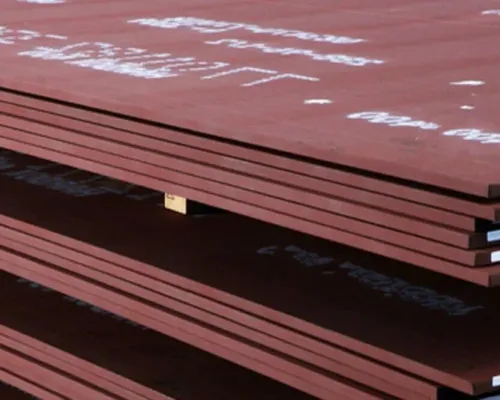
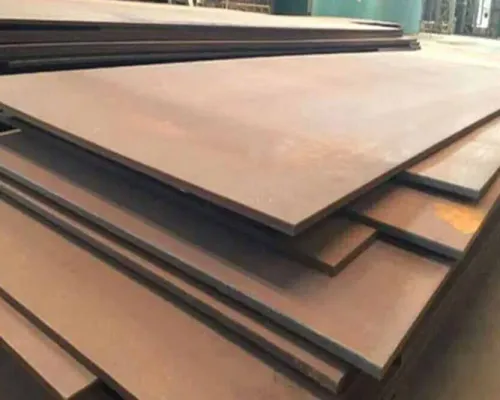
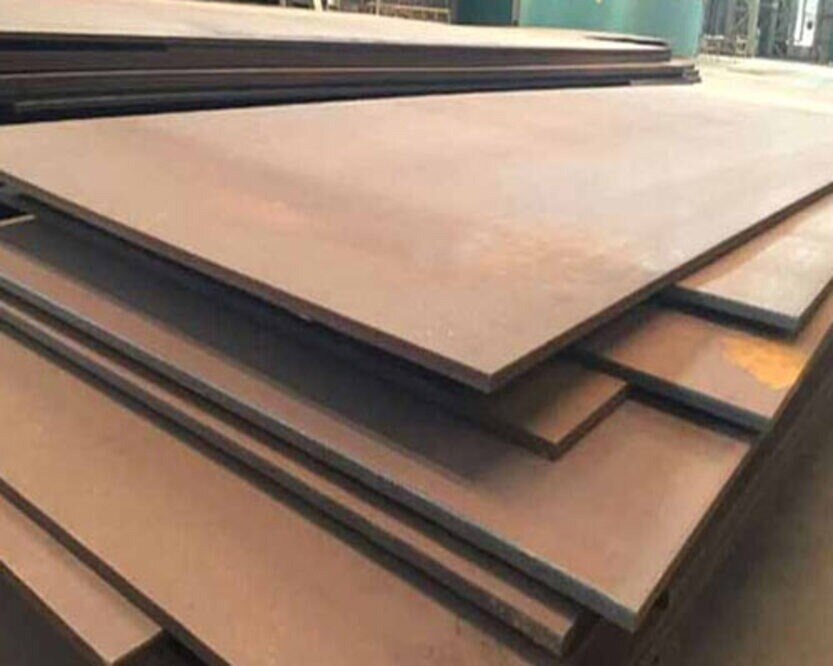
Reject or quarantine a plate if its identity, condition or paperwork does not match the purchase order. Do not cut it first: cutting can remove the heat number and make a nonconforming plate impossible to return.
Check these items at receipt:
- Grade, class, plate thickness, length, width, tolerances and heat-treatment condition against the order
- Heat number stamped on the plate and repeated on the mill test certificate (MTC)
- Chemistry, tensile results, impact-test temperature, surface condition and marking
- Damage, laminations, edge cracks, heavy scale, pitting and distortion
- Required UT report, acceptance class and inspection extent; ASTM A578/A578M is not automatic with an A387 order
- Packing, moisture damage and delivery records before signing unqualified acceptance
An “equivalent” grade is not enough. Match chemistry, mechanical properties, heat treatment, certification and traceability before approval. This discipline applies whether you buy from an alloy steel plate stockist Mumbai market or elsewhere.
Before fabrication, have the welding engineer approve the grade and heat before nesting or beveling. Check carbon equivalent and thickness, then follow the qualified welding procedure for preheat, interpass temperature, low-hydrogen consumable storage, heat input, cooling and post-weld heat treatment.
For alloy steel plates for oil and gas, confirm whether the service is sour; NACE MR0175/ISO 15156 depends on the actual hydrogen-sulfide environment, not the label “Cr-Mo.” Keep cut-piece identification linked to the original heat number.
Frequently asked questions
What should a first-time buyer specify when ordering SA387 alloy steel plate?
Specify the exact SA387 grade, class, thickness, dimensions, quantity and designation required for your service and fabrication process.
Which traceability and testing documents should you request?
Put heat-number traceability, the material test certificate, chemical composition, tensile results, yield strength, elongation and impact-test requirements into the purchase order.
How should you compare alloy steel plate stockist quotations?
Compare delivered, documented material: include freight, cutting, testing, inspection, certification and any other charges rather than comparing only the ex-stock price.
How do you protect alloy steel plate suitability during fabrication?
Check plate markings and condition on receipt, match each plate to its certificate, and control welding, preheating, interpass temperature and post-weld heat treatment against the approved procedure.
Related products
 | Alloy Steel Plate Grades View product → |
 | Alloy Steel Plate Grades View product → |
 | Alloy Steel Plate Grades View product → |