

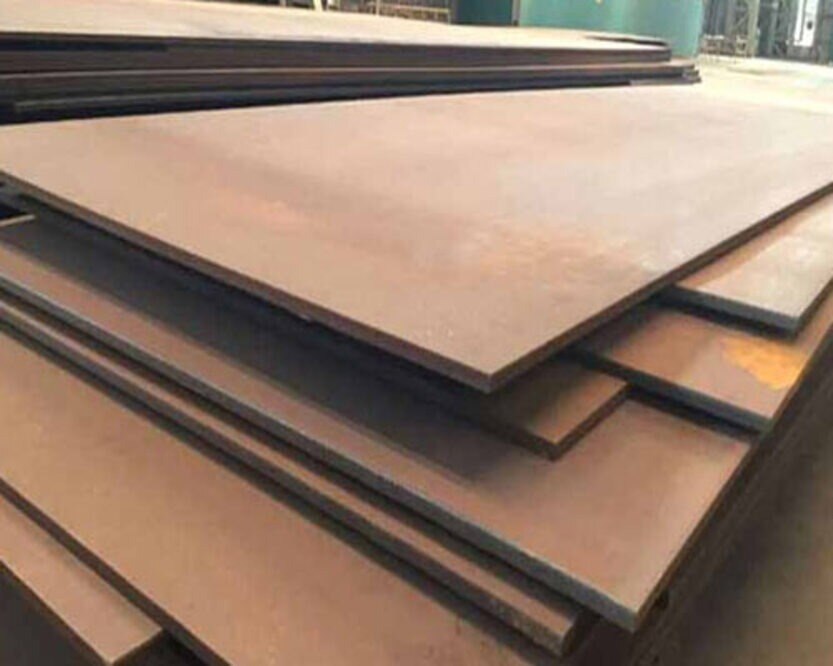
Machinery builders need more than a grade name when ordering 16Mo3: the specification, thickness-dependent properties, delivery condition, testing and traceability must all match the design. By the end, you will be able to write a comparable purchase enquiry, check an EN 10204 3.1 certificate and decide which extra inspections your fabrication requires.
Key takeaways
- Specify EN 10028-2, its edition, 1.5415, thickness and delivery condition.
- Reject certificates that do not match the plate heat and inspection requirements.
- Compare chemistry, mechanical tests, traceability, tolerances, inspection and delivery—not price alone.
- Use 16Mo3 where elevated-temperature strength and pressure-equipment compliance fit the design.
What EN 10028-2 16Mo3 actually specifies
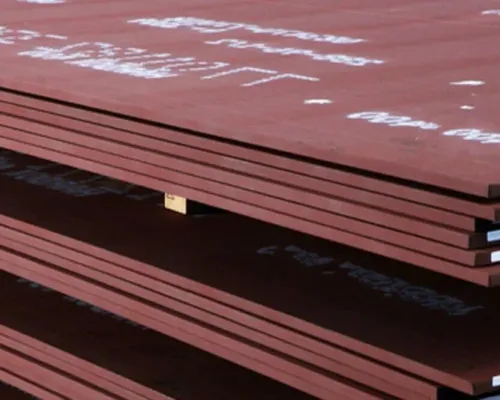
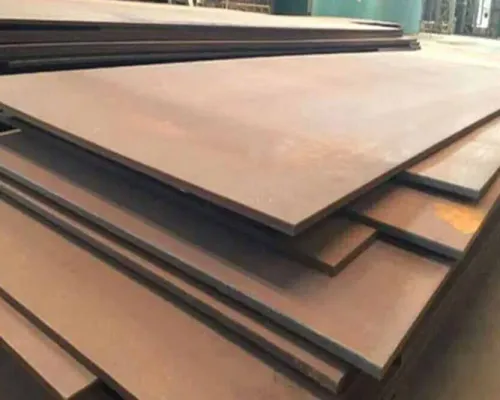
16Mo3 is supplied under EN 10028-2 as a flat product, commonly sold as plate or commercially called sheet, with material number 1.5415. The order must name the standard and its edition; “Mo steel” and “equivalent to ASTM A204 Grade B” do not identify the same chemistry, strength range, delivery condition or inspection requirements.
Verify these details before accepting a quotation:
- State nominal thickness, width and length, EN 10029 dimensional tolerances, and whether coil-cut material is acceptable. Commercial “sheet” may technically be plate.
- Check the certificate against the named EN 10028-2 edition: carbon about 0.12–0.20%, silicon 0.10–0.35%, manganese 0.40–0.90%, low maximum phosphorus and sulfur, chromium within the standard’s controlled limit, and molybdenum about 0.25–0.35%.
- Require a documented comparison before approving an ASTM cross-reference. It must cover chemistry, mechanical properties, delivery condition and testing—not just a similar grade name.
| Grade | Chemistry and tensile range | Intended service |
|---|---|---|
| 16Mo3 | Molybdenum alloy; typically 440–590 MPa tensile strength | Elevated-temperature pressure equipment |
| P265GH | Non-molybdenum pressure steel; typically 410–530 MPa tensile strength | Boilers and pressure vessels at moderate temperatures |
| 13CrMo4-5 | Chromium-molybdenum alloy; typically 440–590 MPa tensile strength | Higher-temperature pressure service |
These differences matter in alloy steel sheet applications such as headers, boiler parts and heat-exchanger shells. A supplier’s informal claim does not make en 10028 2 alloy steel sheets compliant.
Which properties and delivery condition must appear on the order
State the thickness band, delivery condition and tests on the order; “16Mo3” alone is not enough. Commonly quoted minimum yield strength is about 275 MPa for thinner plate and roughly 235 MPa at 60–100 mm. Room-temperature tensile strength is usually 440–590 MPa, with approximately 22% minimum elongation.
| Thickness band | Minimum yield strength commonly quoted | Order implication |
|---|---|---|
| Up to thinner sections | About 275 MPa | State the exact nominal thickness |
| Intermediate sections | Reduces with increasing thickness | Do not apply the thin-plate value |
| 60–100 mm | About 235 MPa | Confirm the standard table and certified result |
Request impact testing and name the test temperature when the design or purchase specification requires it. A room-temperature tensile result is not allowable-stress data for hot service. 16Mo3 retains useful strength at elevated temperature, but the governing pressure-equipment design code sets allowable stresses and temperature limits.
Specify normalized or normalized-and-tempered delivery condition, not merely “heat treated.” That condition affects cutting, forming and machining, while fabrication can alter it locally. A 16Mo3 alloy steel for plates supplier in India serving machinery builders should also receive these welding requirements:
- Use a qualified welding procedure and suitable consumables for the actual thickness.
- Define preheat and interpass-temperature limits.
- Control hydrogen in thick, highly restrained joints to reduce cracking risk.
- Verify whether forming or welding requires post-forming heat treatment or post-weld heat treatment under the design code.
How to verify tests, certificates and plate traceability
A plate is traceable only when its physical identity, test results and certificate form one unbroken chain. For heavy machinery plate sourcing, reject a certificate that gives only grade guarantees without linking the supplied heat and dimensions to actual test results.
1. Request the EN 10028-2 product analysis, tensile test, impact test when specified, dimensional inspection and the applicable EN 10204 inspection certificate. State the required impact-test temperature and certificate type in the purchase order.
2. On an EN 10204 3.1 certificate, match the heat number printed or stamped on every plate or bundle. Compare the reported chemical composition and mechanical results with the plate’s specified thickness; do not accept nominal or guaranteed values in place of actual results.
3. Confirm the delivery condition, such as normalized or normalized-and-tempered, and record each plate’s thickness, width and length. Check the certifying manufacturer’s name, authorized inspection representative, signature or validated electronic approval, and certificate date.
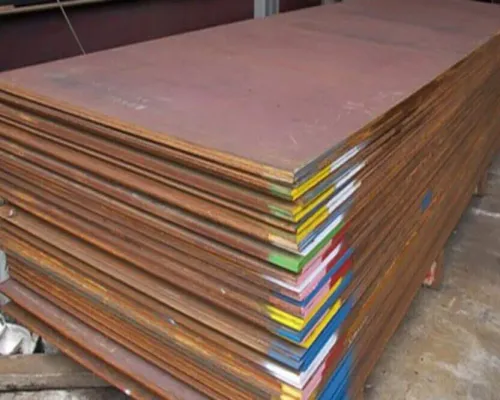
4. Preserve the heat number during cutting. Mark every cut part, or its job traveller, with a traceable link to the original certificate; otherwise a compliant parent plate becomes an unidentifiable component.
EN 10028-2 compliance does not automatically include ultrasonic testing to EN 10160, positive material identification, through-thickness testing, surface inspection or third-party inspection. Add those requirements for thick or highly restrained fabrications, pressure boundaries, fatigue-sensitive parts, critical weldments or whenever the project specification demands them.
Confirm UT class, test coverage and acceptance level before production, not after defects appear.
Where 16Mo3 fits in machinery and pressure equipment
16Mo3 is technically plausible for pressure equipment and machinery exposed to elevated temperature, not for every part described as alloy steel sheet applications.
| Application | Why 16Mo3 may fit | Approval status |
|---|---|---|
| Boiler drums and headers | Pressure boundary with elevated-temperature service | Design and code approval required |
| Steam-system components | Useful where pressure and heat govern material selection | Check temperature, pressure and weld design |
| Heat-exchanger parts | Suitable for pressure-retaining, heated components | Confirm corrosion allowance and fatigue |
| Pressure-vessel shells | Intended pressure-vessel service under EN 10028-2 | Verify calculations and governing code |
| Heated equipment and fabricated housings | Useful when the housing carries heat or pressure | Approve forming, welding and service limits |
| High-temperature machinery components | Retains useful strength during hot operation | Confirm that the component needs pressure-grade properties |
EN 10028-2 is a flat-product standard for pressure purposes; it is not blanket approval for every heavy-machinery plate. Before selecting 16Mo3, the engineer must check design calculations, operating temperature, pressure, weld details, corrosion allowance, fatigue and the governing pressure-equipment code.
Its practical advantage is elevated-temperature performance, not unusually high room-temperature strength. Use the code’s allowable stresses and temperature limits, not the mill certificate’s room-temperature yield strength, to establish suitability.
Thick 16Mo3 also needs more than ordinary mild-steel fabrication practice. Qualify the welding procedure, select suitable consumables, control preheat and interpass temperature, and decide on post-forming or post-weld heat treatment for the actual thickness, restraint and joint.
The compact rule is simple: choose 16Mo3 when the design calls for its pressure-vessel and elevated-temperature properties; do not choose it solely because a catalogue calls it “alloy steel.”
How to compare an Indian supplier’s 16Mo3 quotation
State the purchase before asking for price. Every enquiry for heavy machinery plate sourcing should name 16Mo3, material number 1.5415, the EN 10028-2 edition, thickness, width, length, quantity by size or heat, dimensional tolerances, delivery condition, impact-test requirement and EN 10204 certificate type.
- Compare the mill certificate, country of origin, heat number and inspection body; Mumbai stockholding does not prove manufacturing origin.
- Confirm available stock, flatness, thickness tolerance, test frequency and EN 10160 ultrasonic class where required.
- Require cut parts to retain the original heat-number link. A cheap cutting service that destroys traceability is not a compliant saving.
- Match metric European certificates with Indian or ASTM drawing references. A cross-reference is not automatic substitution; obtain responsible-engineer approval.
- Ask Shyam Metals & Alloys to document these points against each offered heat rather than treating catalogue availability as proof.
| Quotation item | Acceptable evidence | Warning sign |
|---|---|---|
| Grade and standard | 16Mo3, 1.5415 and named EN 10028-2 edition | “Mo steel” or ASTM A204 Grade B only |
| Testing | Actual chemistry, tensile results, impact temperature, test frequency and EN 10204 type | Guaranteed values without results |
| Identity | Heat number on plate, bundle, certificate and cut-part record | Stock listed without heat details |
| Dimensions | Thickness, width, length, flatness and tolerance class | “Standard size” only |
| Inspection | EN 10160 class or third-party inspection when specified | UT or inspection omitted |
Use this template to separate compliant supply from a lower quotation that omits testing, origin or usable traceability.
Related product
 | Alloy Steel Plate Grades View product → |
Frequently asked questions
What does EN 10028-2 specify for 16Mo3?
EN 10028-2 specifies 16Mo3 flat products, material number 1.5415, including its chemical composition, mechanical properties, delivery condition, testing and inspection requirements.
What must appear on a 16Mo3 plate order?
State EN 10028-2 and edition, grade 16Mo3, material number 1.5415, dimensions, quantity, delivery condition, surface and edge requirements, inspection document and any supplementary tests.
How do you verify 16Mo3 certificates and traceability?
Match the heat number on the plate, stencil and mill test certificate, then check chemistry, tensile results, impact tests where specified, dimensions and the certificate type.
Where is 16Mo3 used in machinery and pressure equipment?
16Mo3 suits fabricated components exposed to elevated temperatures, including pressure equipment, boilers, heat-transfer systems and heavy machinery designed around its specified properties.
How should you compare 16Mo3 supplier quotations in India?
Compare the exact standard edition, grade, thickness, delivery condition, tolerances, testing, inspection documents, heat traceability, cut charges, freight, lead time and taxes.