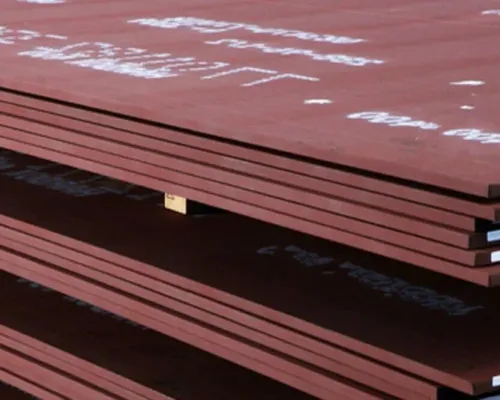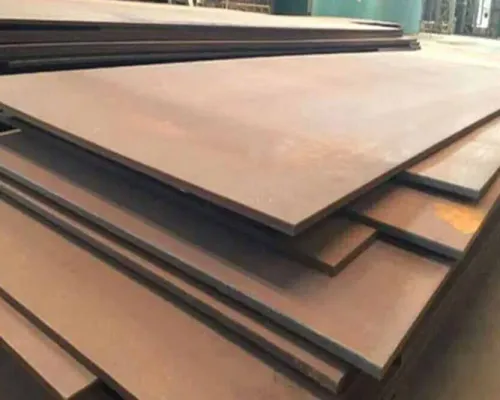


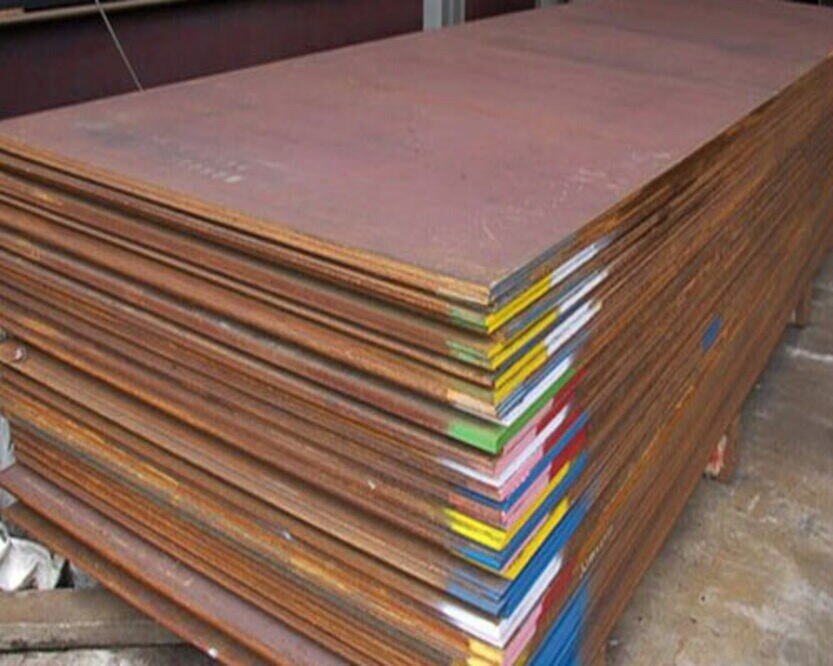
A “400” wear-plate label does not, by itself, tell you the governing standard, guaranteed hardness, weldability or service life. By the end, you will know how to verify the grade, match it to an equipment component, specify fabrication controls and compare an Indian manufacturer or stockist without treating hardness as the whole decision.
Key takeaways
- Verify Rockhard 400 as a trade grade with hardness and test documents.
- Match plate thickness and hardness to impact, abrasion and forming demands.
- Use controlled cutting, drilling, bending and welding procedures.
- Reject the grade when impact toughness or complex forming dominates.
What the Rockhard 400 designation must prove
Rockhard 400 must be verified as a specific trade grade, not treated as interchangeable with every AR400 plate. The 400 normally indicates an approximate Brinell hardness class near 400 HBW, not a tensile strength of 400 MPa.
| Document or claim | What it establishes | What it does not establish |
|---|---|---|
| “400 BHN” | A nominal hardness class | Chemistry, tolerance, toughness or wear life |
| Grade datasheet | Standard, designation and property limits | That the delivered plate meets them |
| Mill certificate | Actual heat and test results | Performance beyond the stated tests |
Before ordering, request the governing material standard or manufacturer grade designation, chemical limits, guaranteed minimum and maximum hardness for the ordered thickness, delivery condition, impact requirements and mechanical-property table. A Rockhard 400 plates manufacturer in India must define the product beyond “400 BHN.”
The mill certificate should identify ISO 6506-1, or another named Brinell method, plus the hardness scale, test location and actual readings. Match the certificate to the plate marking and heat number.
ASTM G65 dry-sand/rubber-wheel results compare abrasion only when abrasive size and hardness, load, sliding distance, wheel condition and procedure match. Different test conditions make the wear figures unreliable for ranking plates. Hardness alone is not an abrasion-life guarantee.
Match plate performance to the equipment duty
Choose thickness from duty, not the Rockhard 400 label alone: abrasive hardness and particle size, impact energy, flow speed, support spacing, unsupported span, temperature and the replacement interval all matter.
Use Rockhard 400 as a liner for hoppers, chutes, dump bodies, feeders, crushers, screens, conveyor transfer points and bucket surfaces only after checking the failure mode. A thin plate can deform under impact or crack across an unsupported span. An unnecessarily thick plate adds mass, handling time and structural load.
| Material | Advantage | Trade-off or suitable duty |
|---|---|---|
| Structural carbon steel | Easy cutting, drilling and welding | Wears faster in abrasive service |
| Rockhard 400 | Balanced wear and impact performance | Confirm grade-specific properties |
| Rockhard 450 or 500 | Greater hardness can extend wear life | Forming, drilling and impact-toughness trade-offs |
| Quenched-and-tempered plate | Properties depend on its specified toughness and wear data | Check the actual specification, not the process name |
| Rubber or ceramic liner | Rubber reduces noise and absorbs impact; ceramic suits fine abrasion | Select for the actual impact, corrosion and particle-size combination |
Specify nominal thickness, flatness, squareness, cut-size tolerance and any through-thickness requirement separately from hardness. State the dimensional standard or tighter project tolerance.
A Rockhard plates manufacturer in India should confirm the service temperature and provide fabrication guidance. Compare expected wear life against replacement access: a harder plate is not automatically cheaper if drilling, lifting or downtime increases. For wet or saline flow, add corrosion protection; hardness does not provide it.
Control cutting, drilling, bending and welding before fabrication
Treat a 400-class wear plate as quenched-and-tempered material, not mild steel. Before fabrication, obtain the supplier’s grade-specific instructions for thermal cutting, drilling, cold bending and welding, then use the mill certificate or a qualified WPS to control the work.
1. Set the WPS from plate thickness, carbon equivalent or equivalent weldability index, joint restraint, hydrogen control, ambient temperature, consumable strength, preheat and interpass-temperature limits. A generic mild-steel WPS is not automatically valid. Use low-hydrogen consumables, keep them dry, and control cooling; rapid cooling can produce hydrogen cracking.
2. Control thermal cutting heat input and cooling rate. Cutting can leave either a harder or softened heat-affected zone, and the edge can crack in thick or highly restrained parts, especially in cold, wet conditions. Specify preheat, inspect the cut edge, and grind back damaged or excessively hardened material where the supplier requires it.
3. Do not infer cold-bending capacity from “400.” Minimum inside radius depends on thickness, rolling direction, edge condition and bend orientation. State the rolling direction and the mill’s minimum inside radius on the drawing; forcing a tighter bend can cause edge or surface cracking.
4. Drill with the supplier’s recommended tooling and speeds, then inspect hole diameter, roundness, location and edge damage. Require edge grinding or post-cut inspection where specified, and record whether the part is mill-supplied or locally cut. The grade certificate and qualified WPS control fabrication decisions, not a familiar workshop practice.
Qualify an Indian manufacturer, supplier or stockist
Before placing an order, require evidence that Rockhard 400 is a traceable grade, not merely a hardness label. Ask a Rockhard 400 plates supplier in India for:
- Product datasheet, applicable standard and representative EN 10204 Type 3.1 certificate
- Hardness range by thickness, chemical analysis, and impact or tensile data when specified
- Cutting, drilling, bending and welding guidance
- Available sizes, marking format and inspection arrangements
A mill-supplied plate carries its heat number and product marking into the mill test certificate (MTC). A locally cut or drilled piece is acceptable only when its heat number remains traceable to the original plate, with any required edge, hole and dimensional inspection recorded.
EN 10204 Type 3.2 adds validation by the purchaser’s representative or an independent inspector.
For a Rockhard 400 plates stockist in India, check that the heat number on the plate, packing list, invoice and MTC agrees. Reject an unmarked re-cut piece unless the stockist supplies a material-retention certificate linking it to the original heat.
Compare quotations on the complete delivered result:
| Basis | What to verify | Why it matters |
|---|---|---|
| Usable material | Cut area, actual mass and cutting charges | A low rate per kilogram can produce costly waste |
| Commercial terms | Minimum order, freight and taxes | Reveals the delivered cost |
| Quality protection | Inspection and replacement liability | Defines who pays when documents or material fail |
Shyam Metals & Alloys in Mumbai can be approached for grade, documentation and supply coordination; its name alone does not prove performance without the certificate.
Related product
 | Resistant Plates Rockhard(400 / 450 / 500 ) Thickness : 6mm to 100mm Width : 1,500mm to 2,500mm Length : 6,000mm to 12,000mm Production : Hot-Rolled (HR) /... View product → |
Recognise where Rockhard 400 is the wrong selection
Reject Rockhard 400 when impact energy, temperature, corrosion or structural loading exceeds the evidence for that grade. Hardness alone does not prove suitability.
- Choose a tougher quenched-and-tempered specification when repeated impact, crack sensitivity or structural stresses dominate. Review Charpy impact data, tensile properties and the manufacturer’s toughness limits.
- Compare Rockhard 450 or 500 only when its additional hardness produces a justified wear-life advantage. Confirm the forming, drilling, welding and impact-toughness trade-offs before accepting the harder grade.
- Do not infer hot-service performance from room-temperature hardness. Request the manufacturer’s maximum service temperature, hot-hardness data and written service guidance; heat can reduce wear resistance and accelerate distortion.
- Treat wet, saline, acidic or outdoor duty as a corrosion problem as well as an abrasion problem. Specify coating, overlay, drainage or a different alloy system when the environment attacks exposed steel.
- If the plate carries structural load, verify flatness, thickness and dimensional tolerances, plus through-thickness quality. A hard plate outside tolerance can create fit-up, bending or lamellar-tearing problems.
Purchase Rockhard 400 only against a written specification stating grade identity, governing standard, ordered thickness, chemistry limits, guaranteed hardness range and hardness test method, impact requirement, tensile properties where required, dimensions, thickness and cut-size tolerances, flatness, squareness, heat-number traceability, mill certificate, inspection arrangements, and approved cutting, drilling, bending and welding controls.
Frequently asked questions
What must a Rockhard 400 plate designation prove?
Confirm that Rockhard 400 identifies a specific trade grade and request its mill test certificate, chemistry, thickness, heat number and Brinell hardness results. The 400 normally refers to an approximate 400 HBW hardness class, not 400 MPa tensile strength.
How should you match Rockhard 400 to equipment duty?
Assess abrasive wear, impact loading, plate thickness, temperature and required service life. Compare those demands with the grade’s hardness, toughness, weldability and forming limits before specifying it.
What fabrication controls apply to Rockhard 400 plates?
Set procedures for thermal cutting, drilling, bending and welding before production. Control heat input, preheating, consumables, bend radius and hole-making methods to limit cracking, distortion and premature wear.
How do you qualify an Indian Rockhard 400 manufacturer or supplier?
Check traceability from plate to heat number, mill test certificates, hardness readings, dimensions, surface condition, stock availability and the supplier’s ability to meet your required thickness and delivery documentation.
When is Rockhard 400 the wrong selection?
Choose another grade when the equipment faces severe impact, low-temperature service, demanding weld repairs, tight forming radii or a corrosion environment that hardness alone cannot address.