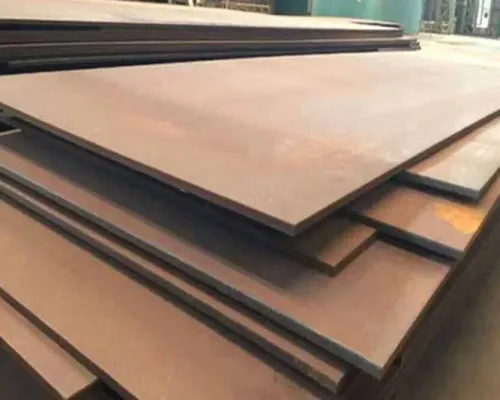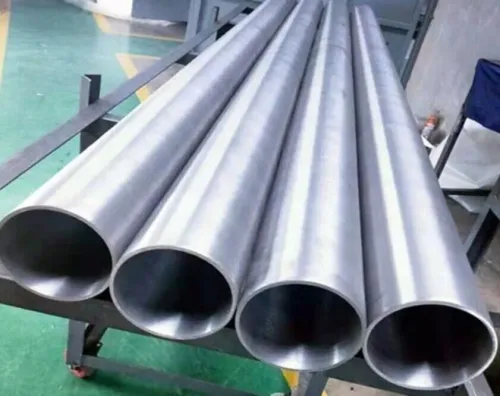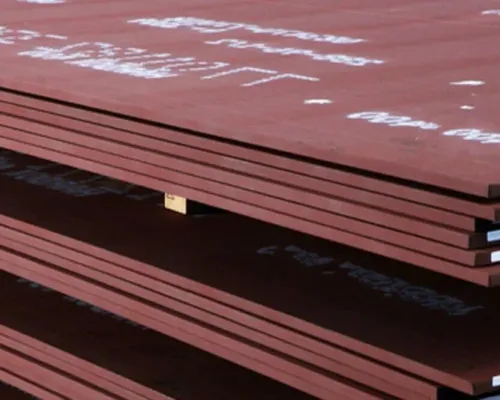

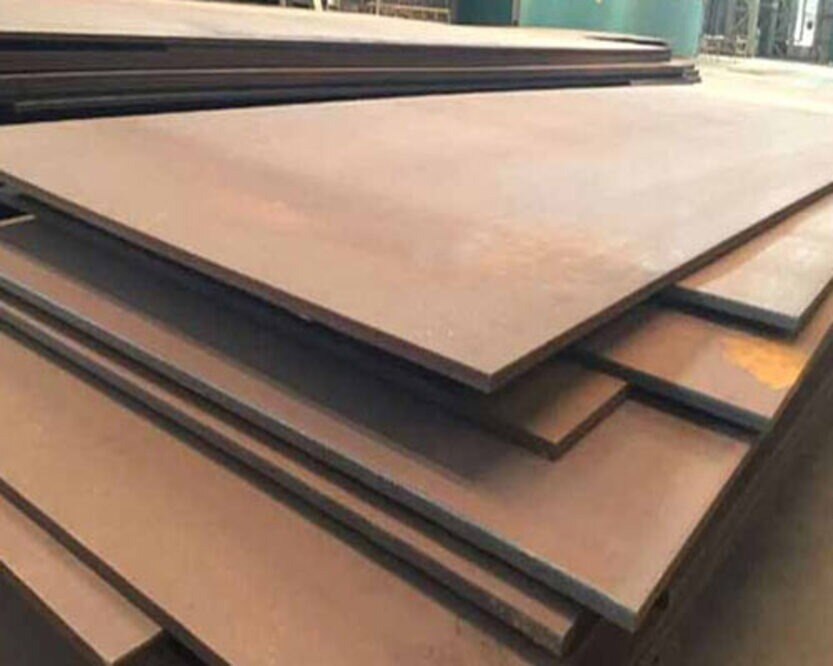
A request for “16Mo3 plate” is not complete enough for pressure-vessel or process-equipment procurement. You need to confirm the EN designation, material number, certificate, delivery condition, thickness-based properties, impact requirements and any ASME code acceptance before comparing stockists in India.
Key takeaways
- Confirm EN 10028-2 and material number 1.5415 on the order.
- Match chemistry, thickness and delivery condition to the inspection certificate.
- Specify design temperature, impact testing and supplementary inspection before purchase.
- Treat ASME equivalence as a separate qualification, not an assumption.
Confirm that the plate is EN 10028-2 16Mo3, material number 1.5415
16Mo3 is the European pressure-vessel steel grade specified in EN 10028-2, with material number 1.5415. The designation indicates an alloy steel with molybdenum for elevated-temperature service: “16” denotes the nominal carbon class, while “Mo3” refers to approximately 0.3% molybdenum. It is not a generic low-alloy structural plate or an automatic ASME material.
Write the full identity into the purchase description:
- EN 10028-2, 16Mo3, material number 1.5415, including the edition required by the project
- Plate thickness, width, length and quantity; thickness matters because minimum yield strength changes across the standard’s thickness bands
- Required delivery condition, such as normalized or normalized rolled, exactly as specified for fabrication
- Inspection document: EN 10204 Type 3.1, or Type 3.2 where independent inspection is required
- Heat number, plate number and full chemical and mechanical test results traceable to the offered plates
- Any supplementary requirements, including Charpy impact testing, positive material identification, through-thickness testing, surface-condition limits or additional ultrasonic testing
A description such as “16Mo3 alloy steel for plates” is incomplete. Whether you are comparing a stockist in India or sourcing process equipment plate directly, insist that the supplier confirms certification to EN 10028-2 Grade 16Mo3 rather than offering only a nominally similar alloy.
Match the certificate to chemistry, thickness and delivery condition
Reject the offer if the certificate cannot link the plate to a heat number. For 16Mo3 plates for process equipment, compare the proposed EN 10204 Type 3.1 inspection certificate with the purchase order and EN 10028-2 requirements for steel number 1.5415.
- Confirm that the certificate names EN 10028-2, 16Mo3 and 1.5415, including the specified standard edition.
- Match every reported chemistry value to the EN 10028-2 limit for the ordered product thickness; do not accept a generic 16Mo3 chemistry sheet.
- Check that the certificate records the ordered thickness, width, length and plate identification, then match those details to the marking on the plate.
- Verify the delivery condition stated on the certificate, such as normalized or normalizing rolled, against the purchase order and the applicable EN 10028-2 requirement.
- Confirm that tensile and impact results, when ordered, belong to the same heat and product; a result from another heat does not qualify the plate.
- Require the mill certificate, not only a reseller-issued summary, for imported or redistributed material. Type 3.2 documentation adds purchaser or independent inspector validation when the contract requires it.
- Put Charpy testing, through-thickness testing, positive material identification, surface-condition limits and extra ultrasonic testing in the order when needed. The grade name alone does not include these checks.
Preserve the heat number after cutting and record which cut piece came from which original plate. If the supplier cannot maintain that link, the certificate no longer proves which material entered fabrication.
Set the design temperature, impact test and supplementary inspection requirements
Set the design metal temperature before ordering 16Mo3 plates for process equipment, because it determines whether Charpy impact testing is needed and at what test temperature. The grade name alone does not establish suitability for a cold, cyclic or highly restrained service.
| Requirement | What to state in the purchase order | Consequence if omitted |
|---|---|---|
| Design service | Minimum and maximum design metal temperature, pressure service, thickness range and governing design code | The supplier cannot confirm the correct toughness and delivery requirements |
| Charpy impact test | Test temperature, absorbed-energy requirement, specimen orientation and number of specimens | A certificate may show no impact results, or results at a temperature unsuitable for the equipment |
| Through-thickness testing | Z-direction testing requirement, including acceptance level and test method | Lamination risk in heavily welded or restrained joints remains uncontrolled |
| Ultrasonic examination | EN 10160, or the project-specified UT standard, with acceptance class and examination coverage | Ordering 16Mo3 alone will not provide lamination control |
| Surface and identity checks | Surface-condition limits, repair rules, heat-number traceability and PMI requirement | Defects, mixed plates or lost identity can reach fabrication |
Specify the inspection document, usually EN 10204 3.1 or 3.2, and require the original mill certificate when material is imported or redistributed. Write PMI as a separate check; it confirms alloy identity but does not replace chemical analysis, Charpy testing or UT.
Also keep welding procedure qualification, hydrogen control, preheat and PWHT decisions with the fabricator’s qualified WPS.
Do not treat 16Mo3 as automatically equivalent to an ASME plate
No—not by grade name alone. EN 10028-2 16Mo3, material number 1.5415, is a European pressure-vessel steel designation; it is not automatically an ASME-listed plate.
If a vessel project calls for an ASME specification, obtain the exact SA specification and grade, then complete a formal material-substitution review under the design code, project specification and authorized inspection route.
| EN 10028-2 16Mo3 | ASME SA-204 |
|---|---|
| European pressure-vessel plate standard with its own chemistry, mechanical-property tables and delivery requirements | ASME Section II, Part A specification for molybdenum-alloy pressure-vessel plate |
| Certificate identifies EN 10028-2, Grade 16Mo3 and 1.5415 | Certificate must identify the applicable SA-204 grade and satisfy ASME code documentation |
| Use only when the engineer, purchaser and inspection authority approve it for the design | Use when the project specifically requires SA-204 and its listed requirements |
Do not accept a certificate merely because its chemistry resembles SA-204. Ask the ASME alloy steel plate stockist to identify the proposed code basis in writing and provide the complete EN 10028-2 certificate, including edition, heat number, thickness, delivery condition and test results.
Confirm that the substitution covers design temperature, allowable stress, impact testing, welding qualification and post-weld heat treatment; weldability cannot be decided from “16Mo3” alone. A material certificate does not convert an EN plate into an ASME plate.
Evaluate an Indian stockist by traceability, documents and actual supply capability
A stockist is suitable only when it can prove which heat you will receive, not merely confirm that 16Mo3 appears in its catalogue. A 16mo3 plate stockist mumbai search result or an “available ex-stock” message is a lead, not evidence of supply.
Ask for these records and confirmations before issuing a purchase order:
- Original mill certificate, not a reseller summary; confirm the issuing mill, heat number, EN 10028-2 edition, 16Mo3 designation and material number 1.5415.
- EN 10204 Type 3.1 certification, or Type 3.2 when your contract requires independent inspection or purchaser representation.
- Heat analysis, tensile and impact results, dimensions, delivery condition and heat-treatment details linked to each plate or bundle.
- Exact plates physically available: thickness, width, length, quantity and country of origin. Request photographs of markings and bundle tags.
- A cutting procedure that preserves the heat number on every separated piece, with a transferred marking record.
| Check | Acceptable evidence | Warning sign |
|---|---|---|
| Traceability | Heat number matches plate marking and certificate | Certificate has no heat number |
| Documents | Original mill 3.1 certificate or agreed 3.2 route | Stockist-issued “certificate” only |
| Supply capability | Confirmed dimensions, quantity and inspection date | Catalogue availability without allocation |
| Testing | Named laboratory, test scope and reports | “Tested as required” without records |
For alloy plate procurement india, ask Shyam Metals & Alloys to confirm allocation and marking retention in writing, rather than relying on a verbal stock statement. Do the same with any Mumbai or overseas distributor.
Related products
 | Sheet and Plates Range : 3 mm to 100 mm thick in upto 2500 mm width upto 12500 mm length available with NACE MR 01-75s Carbon Steel : ASTM / ASME A 516 / 517 GR. View product → |
 | Alloy Steel Plate Grades View product → |
Frequently asked questions
How do you confirm that a plate is EN 10028-2 16Mo3?
Check that the mill certificate and marking identify EN 10028-2, grade 16Mo3 and material number 1.5415. Do not accept a generic low-alloy steel description as proof.
What must the certificate match before accepting 16Mo3 plates?
Match the certificate to the ordered chemistry, plate thickness, heat or cast number, dimensions and delivery condition. Trace the same heat number from the certificate to the plate marking.
Which design and inspection requirements should you specify?
State the design temperature, required impact test temperature, test direction and any supplementary inspection such as ultrasonic testing before ordering. Record these requirements in the purchase specification.
Is EN 10028-2 16Mo3 automatically equivalent to an ASME alloy steel plate?
No. Confirm the applicable ASME specification, permitted material grade, design-code acceptance and required documentation separately. A similar chemistry does not establish code equivalence.
How should you evaluate a 16Mo3 plate stockist in India?
Check heat-level traceability, original or verifiable mill certificates, inspection records, marking control, available thicknesses and the stockist’s ability to supply the required quantity and delivery condition.