
A pressure-system buyer cannot approve 16Mo3 from a grade name or a supplier’s “equivalent” statement alone. You will be able to match the material to the governing code, specify the certificate and inspection package, and check whether stock is genuinely usable for your vessel, boiler, exchanger or steam-equipment project.
Key takeaways
- Confirm EN 10028-2, grade 16Mo3 and material number 1.5415.
- Match design temperature, pressure and service chemistry before ordering.
- Demand heat numbers, EN 10204 3.1 certificates and dimensional records.
- Inspect plate identity, surface condition and certificates before fabrication.
Identify 16Mo3 correctly before comparing it with SA387
16Mo3 is the EN 10028-2 pressure-purpose steel designation 1.5415, not a generic name for any molybdenum-bearing plate. The name indicates approximately 0.16% carbon and molybdenum as the principal alloying addition.
A 16Mo3 alloy steel plates stockist in India for pressure systems must identify the standard, heat number and delivery condition; the plate is normally normalized or normalized and tempered, as stated on the mill certificate.
| Grade | Governing material standard | What the designation means |
|---|---|---|
| 16Mo3 | EN 10028-2, 1.5415 | European pressure-purpose steel; not automatically an ASME material |
| SA-387 Grade 12 | ASME SA-387/SA-387M | Chromium-molybdenum pressure-vessel plate with different chemistry, properties and code listings |
| SA-387 Grade 11 or another grade | ASME SA-387/SA-387M | A separate Cr-Mo selection governed by design and service requirements |
Do not treat 16Mo3 as an automatic substitute when a drawing or data sheet specifies ASME SA-387.
1. Identify the governing construction route: ASME, Indian Boiler Regulations, Pressure Equipment Directive for export, or another jurisdictional code. IBR applies to boilers and specified boiler components, not every pressure vessel or process skid.
2. Compare the requested grade, thickness, heat treatment, chemistry and mechanical properties against the code material specification. Similar alloy content does not create grade equivalence.
3. Obtain written code acceptance or the required material qualification before fabrication. Use allowable stresses from the governing code tables, not an unreferenced commercial data sheet, and retain the heat-specific certificate.
Match the plate to temperature, pressure and service conditions
Use 16Mo3 for boiler drums, steam equipment, heat-exchanger shells and pressure-vessel parts exposed to elevated temperature. Its molybdenum content helps the steel resist softening and creep-related damage better than ordinary carbon pressure-vessel plate, but the grade name does not establish a safe pressure or temperature limit.
| Material choice | Suitable service | Choose differently when |
|---|---|---|
| 16Mo3 (13CrMo4-5) | Elevated-temperature boilers, heat exchangers, steam equipment and welded pressure vessels | The design code gives inadequate allowable stress, or oxidation, hydrogen attack or creep resistance exceeds its capability |
| SA-387 Grade 11 or Grade 12 | Welded vessels, boilers, refinery equipment, petrochemical equipment and heat exchangers | The purchase specification, code rules or process environment calls for another chromium-molybdenum grade |
| Higher-alloy Cr-Mo or stainless plate | Higher-temperature creep service, severe oxidation, hydrogen service or aggressive corrosion | A lower-alloy plate would lose strength, scale rapidly or suffer process-environment damage |
SA387 alloy steel sheet applications include refinery and petrochemical pressure vessels, but the application alone cannot select Grade 11, Grade 12 or another grade. Confirm the design temperature, design pressure, wall thickness, weld procedure, corrosion allowance and governing construction code before choosing the plate.
For ASME construction, take allowable stress from the applicable code table, not from a supplier datasheet. Select a different material when the code does not permit 16Mo3, when hydrogen-service requirements exceed its qualification, or when the calculated stress at design temperature leaves insufficient margin. Surface oxidation, thermal cycling and local hot spots also need review.
Write a purchase specification that preserves traceability
State the purchase as a code-controlled plate specification, not simply as “16Mo3 sheet” or “SA387 plate.” For alloy sheet procurement, identify the product form, exact thickness, dimensions, applicable standard, dimensional tolerance and delivery condition.
- For 16Mo3, call up EN 10028-2, grade 16Mo3, also designated 13CrMo4-5. For SA-387, state the exact grade and class; “SA387” alone is incomplete.
- Require the original mill material test certificate, with the heat number matching the plate marking. If the plate is cut, require every new piece to retain an unambiguous link to that heat.
- Check the certificate for chemical analysis, tensile strength, yield or proof stress, elongation, heat-treatment condition and impact results at the specified test temperature.
- Specify positive-material identification when the quality plan requires it, along with dimensional and visual inspection.
- Call up ultrasonic examination separately from chemical and tensile certification. State the method and acceptance class, such as EN 10160 for European plate, if laminar-defect control is required.
- State any required third-party inspection, inspection release note and document format before manufacture.
“Equivalent to” is not adequate evidence unless the certificate names the governing standard and preserves heat traceability. For ASME construction, verify that the governing code permits the purchased material or that the fabricator has obtained the required material acceptance; take allowable stress from the code tables, not a commercial datasheet.
Also state whether IBR, ASME, PED or another jurisdictional route governs the equipment.
Control fabrication risks after the plate arrives
A plate can leave the stockist fully certified and become unsuitable through poor fabrication control. Treat receipt, welding, cutting and storage as part of material qualification, not as workshop housekeeping.
| Stage | Control | Why failure matters |
|---|---|---|
| Receipt | Match the plate marking to the original mill MTC, including heat number, thickness, delivery condition and impact-test temperature. | A broken heat trail prevents the piece from being tied to its chemistry and test results. |
| Inspection | Check dimensions and surface condition; perform PMI when specified; call for ultrasonic testing to the ordered standard and acceptance class, such as EN 10160. | Chemical and tensile certification does not prove freedom from laminar defects. |
| Welding | Use the qualified WPS/PQR for the actual thickness, restraint, joint detail and process. Control preheat, interpass temperature, consumable hydrogen, heat input, PWHT and cooling as that procedure states. | A stockist’s generic welding note cannot control hydrogen cracking or an unsuitable heat cycle. |
| Cutting | Transfer the heat number and piece identification before cutting, and keep every new piece traceable to the parent plate. | Unmarked cut pieces cannot support pressure-vessel documentation. |
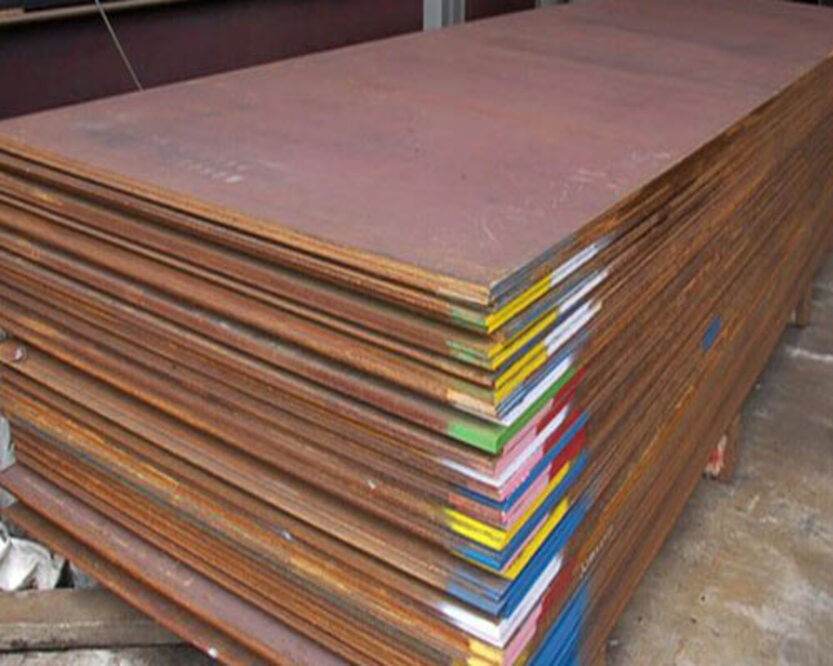
| Storage | Keep plates raised off the floor, dry, protected from contamination and arranged with markings visible. | Corrosion, wet storage and mixed heats can damage surfaces or destroy identification. |
Do not release fabrication from a “sheet” label alone. Confirm the actual thickness, plate form, material standard, dimensional tolerance and any third-party inspection release; retain the MTC with the job record.
Check real stock, documents and inspection with an Indian supplier
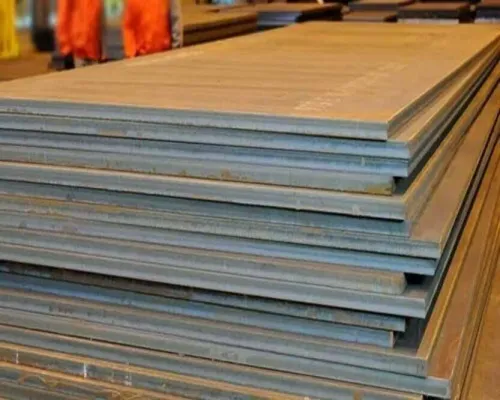
Do not release an order until the supplier proves that the advertised stock exists in the required form, condition and traceable heat. A “sheet” listing may describe thick flat product commercially; your order must identify plate, exact thickness, tolerance and material standard.
1. Ask for a live stock statement showing plate dimensions, quantity, heat number, delivery condition and location. Confirm whether the 16Mo3 designation is EN 10028-2 13CrMo4-5, or whether the offer is an ASME SA387 grade that your design code accepts. Similar chemistry does not make grades interchangeable.
2. Fix the governing route before reserving material. Tell the pressure system sheet supplier in India whether the equipment follows the Indian Boiler Regulations, the ASME construction code, the Pressure Equipment Directive for export, or another jurisdiction. IBR approval covers boilers and specified boiler components, not every pressure vessel or process skid.
3. Require the original manufacturer’s EN 10204 Type 3.1 certificate, or Type 3.2 when purchaser or inspector validation is specified. Check heat-number continuity from each plate marking to the MTC; a trader’s resale certificate cannot repair missing mill traceability.
4. Put inspection in the purchase order: visual and dimensional checks, PMI when required, impact-test temperature, delivery heat treatment, third-party inspection and ultrasonic testing. If laminar defects matter, state EN 10160 and its acceptance class; chemical and tensile results do not prove ultrasonic soundness.
Shyam Metals & Alloys should be asked the same questions as any ASME SA387 sheet stockist Mumbai search result: show current heat-traceable stock, not only a catalogue grade. Retain traceability when cutting plates into smaller pieces.
Related product
 | Sheet and Plates Range : 3 mm to 100 mm thick in upto 2500 mm width upto 12500 mm length available with NACE MR 01-75s Carbon Steel : ASTM / ASME A 516 / 517 GR. View product → |
Frequently asked questions
How do you identify 16Mo3 correctly?
Confirm the EN 10028-2 designation, grade 16Mo3 and material number 1.5415; do not treat every molybdenum-bearing plate as 16Mo3.
How should you compare 16Mo3 with SA387?
Compare the exact specification, grade, chemistry, mechanical properties, design temperature and certificate requirements instead of treating the standards as interchangeable.
What details belong in a 16Mo3 purchase specification?
State EN 10028-2, 16Mo3, 1.5415, thickness, width, length, delivery condition, quantity, heat-treatment requirements, EN 10204 certificate type, marking and inspection requirements.
What should you check when 16Mo3 plates arrive?
Match plate markings to the heat number and certificate, then check dimensions, surface defects, edge condition, flatness and any specified ultrasonic or third-party inspection records.