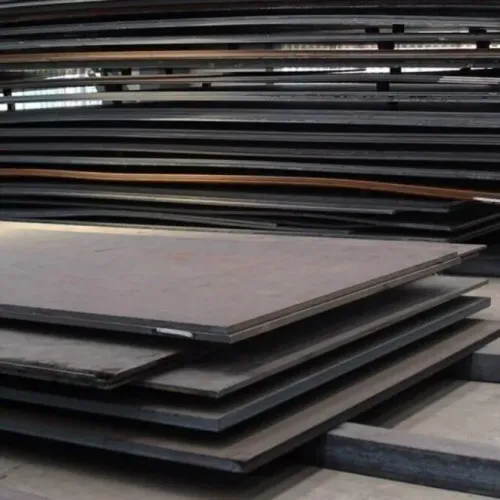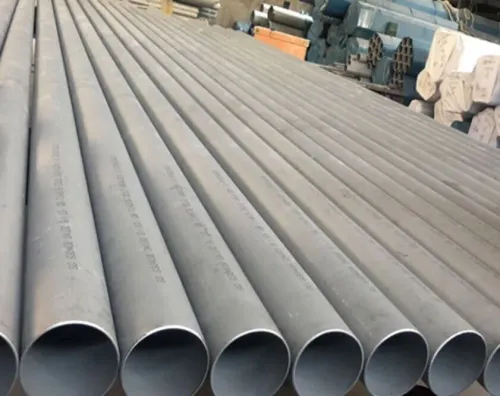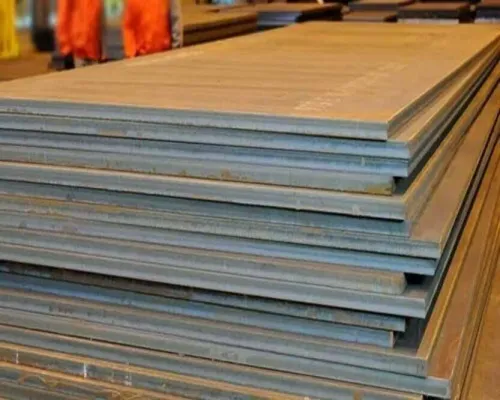


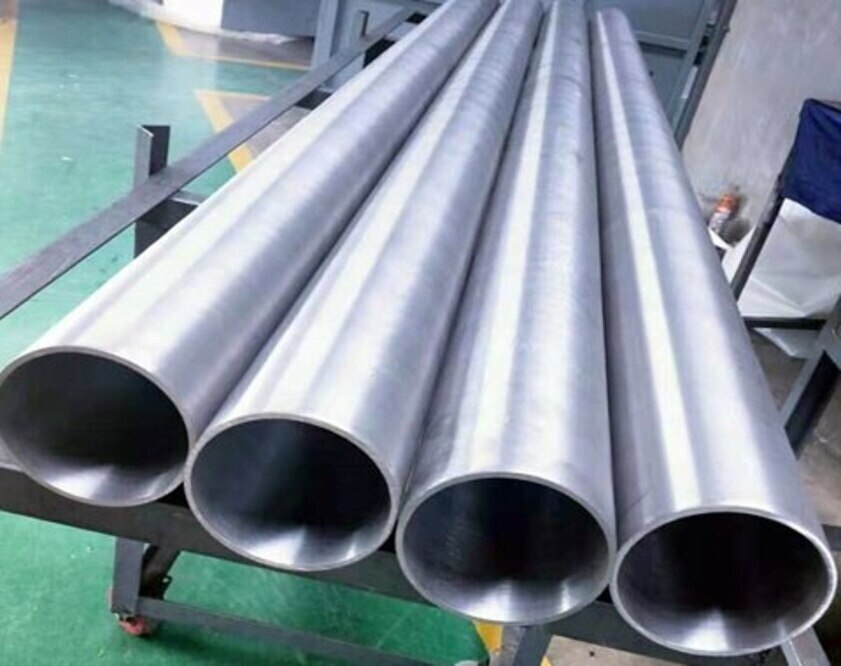
Choosing a Rockhard plate from a stockist requires more than selecting 400, 450 or 500 from a quotation. You will be able to compare wear, impact, fabrication and traceability requirements, then specify the certificate, dimensions and delivery details needed for a defensible purchase.
Key takeaways
- Confirm grade, thickness, dimensions, heat number and mill test certificate before quoting.
- Choose Rockhard 400, 450 or 500 by wear demand and fabrication limits.
- Check plate dimensions against the nesting plan before approving the order.
- Compare delivery, testing, cutting, documentation and freight—not price alone.
What must a stockist verify before quoting Rockhard plate?
Before quoting, a Rockhard plates stockist in India must turn the broad grade request into an orderable specification. Confirm:
- Exact designation: Rockhard 400, Rockhard 450 or Rockhard 500
- Producer’s technical datasheet, governing product standard and certified hardness range
- Thickness, heat-treatment or quenching condition, width, length, quantity and delivery location
The numbers 400, 450 and 500 indicate nominal Brinell hardness classes, approximately 400, 450 and 500 HBW. They do not prove hardness, tensile strength, chemical composition or thickness.
Ask for a mill test certificate that identifies the heat number and matches the plate marking, ordered grade, thickness, dimensions and quantity. Request HBW results tested under ISO 6506-1 or ASTM E10, chemical analysis, published tensile and yield values, Charpy impact results where specified, surface condition, flatness, ultrasonic-test results and the applicable tolerance standard.
| Material status | What to verify | Why it matters |
|---|---|---|
| Prime mill plate | Complete certificate and heat traceability | Best evidence of original dimensions and condition |
| Mill-sourced stock | Original mill documents and plate marking | Confirms the offered heat and grade |
| Cut-to-size remnant | Remaining dimensions, flatness and certificate linkage | Cutting can remove markings or usable margins |
| Used or surplus plate | History, remaining thickness, damage and certification | Traceability and service condition can be incomplete |
State delivered-plate hardness testing requirements, test location and lot sampling in the purchase order; one surface reading does not establish through-thickness uniformity.
How do Rockhard 400, 450 and 500 compare in service?
Rockhard 400 is often the better choice when impact toughness, forming or weldability controls the design. Rockhard 500 can last longer under severe sliding or abrasive contact, but the hardest plate is not automatically the best plate.
| Class | Best service fit | Fabrication and service trade-off |
|---|---|---|
| Rockhard 400 | Impact abrasion and combined wear in rock handling, quarrying, mining, buckets and heavy-equipment parts | Easier to cut, drill, weld, machine and form; useful where shock loading or bending would damage a harder plate |
| Rockhard 450 | Mixed sliding, gouging and impact abrasion in aggregate handling, coal handling, recycling and quarry liners | A middle option that balances wear life with rising fabrication demands |
| Rockhard 500 | Severe sliding abrasion and gouging in chutes, crushers, hoppers, mining and high-wear liners | Longer life against abrasive contact, but greater tool wear, tighter welding control and lower tolerance for bending or shock |
Gouging abrasion from large rock or scrap can favour a tougher 400 class, while fine coal or aggregate sliding across a liner can justify 500. Combined wear demands a site-specific choice; impact, plate temperature, load direction and contact pressure matter.
Compare thickness and support design alongside hardness. A thicker, well-supported Rockhard 400 plate can reduce liner flexing, cracking, replacement frequency and downtime more effectively than an unsupported 500 plate. Anyone searching for a rockhard 400 plates stockist in india should also request the producer’s datasheet before treating the designation as a specification.
Rockhard 400, 450 and 500 are branded abrasion-resistant designations, not automatic equivalents to ASTM A36, IS 2062 or another structural grade. Substitution requires engineering approval and verified chemistry, toughness, strength and fabrication limits.
Will the available plate dimensions fit the finished wear part?
A 6 mm to 100 mm plate with a nominal width of 1,500 mm to 2,500 mm is only a starting point. Calculate the developed blank for the chute liner, hopper liner, bucket, dump-body liner, crusher component or fabricated wear part before paying.
Add bend allowance, joint overlap, bolt or weld margins, hole spacing, edge trimming, bevels, cutting kerf and nesting waste.
| Dimension | What it means | Check before purchase |
|---|---|---|
| Nominal mill size | Thickness, width and length stated by the mill or stockist | Confirm the tolerance standard |
| Usable size | Material remaining after trimming, beveling, kerf and defects | Confirm final cut dimensions in writing |
| Remnant size | A leftover section rather than a full plate | Confirm minimum remnant dimensions and traceability |
| Cut piece | Material already profiled or cut | Confirm cut-piece tolerances and edge condition |
Ask which dimensional tolerance applies: EN 10029 covers hot-rolled plate thickness, flatness and dimensions; EN 10051 covers hot-rolled sheet and plate tolerances. Do not accept “standard tolerance” without a named standard and written cut-piece tolerance.
- Confirm whether the quoted length and width describe a full plate, remnant or cut piece.
- Inspect flatness and surface condition before nesting; camber, gouges or scale can remove planned material.
- Require the Rockhard plates supplier in India to confirm final cut dimensions, minimum remnant size, quantity per heat and whether ultrasonic testing is available for the selected thickness.
What cutting, drilling, forming and welding controls are needed?
Use the fabrication route your equipment can control, then obtain grade-specific settings before cutting, drilling, forming or welding.
1. Choose oxy-fuel for heavy sections and straightforward profiles. Choose plasma for flexible profiling across thicker plate, or laser for thinner plate and tighter dimensional control when the machine’s capacity suits the grade. Thermal cutting can harden the heat-affected zone and trigger edge cracking, especially in thick Rockhard 450 and Rockhard 500 plate.
Ask for the producer’s preheat, interpass-temperature, cooling and post-cut edge-treatment instructions.
2. Drill with carbide-tipped or solid-carbide tooling, rigid workholding and producer-approved speed and feed. Conventional high-speed-steel drills wear rapidly in 400–500 HBW plate, so generic drill settings can produce oversized holes, heat damage and premature tool failure.
3. Obtain the minimum inside-radius table for the exact grade and thickness before cold forming. The required radius normally increases with hardness and thickness. Do not flame-heat a bend zone without written approval; heat can change the wear-resistant microstructure and leave the finished part with inconsistent performance.
4. Require a welding procedure that controls heat input, preheat, interpass temperature, hydrogen control, consumable classification, cooling and heat-affected-zone hardness. A Rockhard 500 plates stockist in India should obtain these limits from the producer rather than promise that your existing procedure will work.
If the supplier cannot provide them, treat the plate as unqualified for fabrication.
How should you compare an Indian stockist’s quotation?
Compare line by line, because a lower price can hide a different grade, remnant plate or incomplete certification.
| Item | Quote A | Quote B | What to verify |
|---|---|---|---|
| Exact grade and hardness | Rockhard 400, 450 or 500; certified HBW range | Stated grade and HBW range | Do not treat 400, 450 or 500 as proof without mill results |
| Specification and condition | Governing specification; heat-treatment condition | Same fields | Match the producer’s datasheet and purchase requirement |
| Plate details | Thickness, width, length, quantity | Same fields | Confirm full plate or cut piece |
| Commercial condition | Prime or remnant status; surface condition; flatness | Same fields | Remnants can have different traceability and usable dimensions |
| Execution | Tolerance standard; delivery location; cutting scope; lead time | Same fields | Put cut dimensions and delivery point in the purchase order |
Ask for a sample mill test certificate before placing the order. Confirm that it identifies the ordered grade, dimensions, quantity and heat number, and that the same heat number will appear on the plate marking or shipping documents. A generic hardness certificate is not adequate.
State whether delivered-plate hardness testing is required, using Brinell testing under ISO 6506-1 or ASTM E10. Specify where readings will be taken and how many plates each lot will represent; one surface reading does not prove through-thickness uniformity.
Require ultrasonic-test results when the component or purchaser specification calls for them. Shyam Metals & Alloys can help with grade selection, certified sourcing and cut-to-size delivery, but judge any Rockhard plates stockist in India—or Rockhard plates supplier in India—by traceability and technical evidence, not the label alone.
Related products
 | Resistant Plates Rockhard(400 / 450 / 500 ) Thickness : 6mm to 100mm Width : 1,500mm to 2,500mm Length : 6,000mm to 12,000mm Production : Hot-Rolled (HR) /... View product → |
 | Resistant Plates Hardox (400 / 450 / 500 ) Item Hardox Plate Material HARDOX 500/ 400/450/600 ,SUMIHARD ,NICRODUR,BRINAR ,DUROSTAT ,DILLIDUR ,JFE EVERHARD Thickness... View product → |
Frequently asked questions
What must a stockist verify before quoting Rockhard plate?
Verify the requested grade, thickness, plate dimensions, quantity, application, delivery location, required inspection documents and the heat number linked to the mill test certificate.
How do Rockhard 400, 450 and 500 compare in service?
Rockhard 400, 450 and 500 represent different hardness levels. Select among them by balancing abrasive-wear resistance, impact conditions, machinability, forming requirements and welding controls rather than choosing the highest number automatically.
Will the available plate dimensions fit the finished wear part?
Compare available plate length and width with the finished-part drawings and nesting plan. Account for kerf, machining allowance, edge trimming, distortion and offcut before accepting a standard stock size.
What cutting, drilling, forming and welding controls are needed?
Use the plate manufacturer’s stated procedures for preheating, interpass temperature, consumables, heat input, cutting speed, drilling tools, bend radius and post-cut handling. Harder grades demand tighter fabrication control.
How should you compare an Indian stockist’s quotation?
Compare grade and thickness, size tolerance, quantity, test certificates, inspection scope, cutting charges, packing, freight, taxes, delivery date, payment terms and replacement conditions alongside the base price.