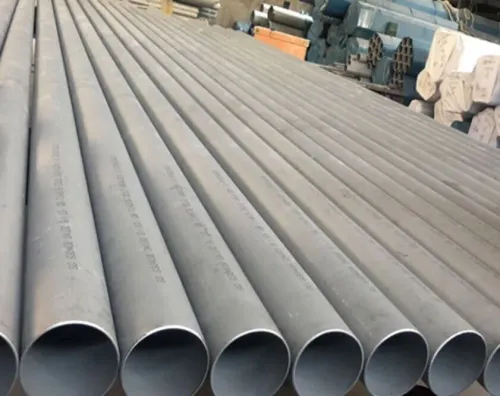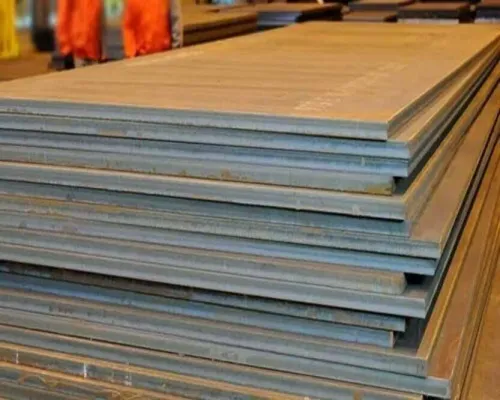


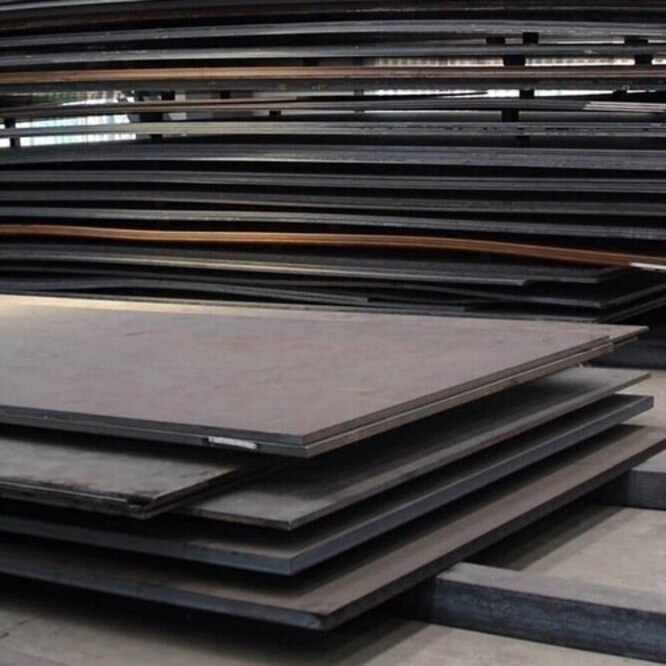
A Rockhard 400 plate is not automatically equivalent to every AR400, XAR400 or Hardox 400 product, and the number 400 normally describes nominal Brinell hardness rather than yield strength. You will be able to compare Rockhard 400, 450 and 500 by service condition, specify the evidence required from an Indian stockist, and avoid fabrication problems caused by an unsuitable hardness grade.
Key takeaways
- Treat 400 as nominal Brinell hardness, not yield strength.
- Compare hardness, toughness, thickness and fabrication needs before choosing 400, 450 or 500.
- Request heat numbers, test certificates, dimensions and physical stock proof.
- Confirm preheating, cutting, welding and bending controls before fabrication.
What does Rockhard 400 mean on a plate certificate?
The number 400 is not a complete technical specification. Rockhard 400 is a commercial wear-plate designation, not a globally harmonized steel grade; 400 normally indicates nominal Brinell hardness, not 400 MPa yield strength.
Before approval, obtain the manufacturer’s grade standard or datasheet and check:
1. The minimum and maximum HBW range, defined test load and method, test locations, and hardness limits that vary with plate thickness. HBW results cannot be treated as interchangeable with Rockwell or Vickers values without the applicable test standard and measurement range.
2. Chemical composition, yield strength, tensile strength, elongation and impact requirements. A hardness number alone does not establish toughness, weldability or structural performance.
3. EN 10029 dimensional tolerances and an EN 10204 Type 3.1 certificate linked to the supplied heat number. EN 10029 controls dimensional tolerances, while EN 10204 Type 3.1 addresses inspection documentation; neither standard defines the Rockhard grade.
Write the controlling manufacturer specification, delivery condition, plate thickness, dimensional tolerance and acceptance criteria into the purchase order. Request actual hardness readings, not only a nominal grade statement. A generic certificate carrying only “Rockhard 400” does not prove delivered hardness, through-thickness consistency or mechanical performance.
For anyone comparing a rockhard plates stockist in india, reject a quotation that cannot identify the governing specification and heat-linked evidence. The number is a starting label, not approval data.
How should you choose Rockhard 400, 450 or 500?
Choose by dominant wear mechanism, not by the largest number: Rockhard 400 suits mixed abrasion and impact, Rockhard 450 bridges toward sliding wear, and Rockhard 500 suits predominantly sliding or three-body abrasion. Harder is not automatically longer-lasting.
| Grade | Main advantage | Typical fit | Main trade-off |
|---|---|---|---|
| Rockhard 400 | Toughness margin, shock resistance and easier fabrication | Crusher liners, screens and dump bodies | More material loss in severe sliding abrasion |
| Rockhard 450 | Balance of abrasion resistance, impact tolerance and fabrication | Chute liners, hoppers and mixed-duty conveyors | Less sliding-wear resistance than 500 |
| Rockhard 500 | Higher resistance to sliding and three-body abrasion | Recycling, cement and aggregate machinery | More difficult cutting, drilling, bending and welding |
Rockhard 400 is the defensible starting point when large or sharp particles strike the plate, gouging and shock loading dominate, or fabrication access matters. Choose 450 when sliding abrasion increases but impact, forming and weldability still matter. Choose 500 when sliding wear dominates and impact is limited; expect tighter process controls.
Do not approve from the grade number alone. Compare the delivered minimum and maximum HBW range, test method, test locations and thickness limits; through-thickness variation affects machining and liner life. Ask about moisture, corrosion, low temperature and elevated operating temperature, because each can reverse the ranking. Confirm impact data and thickness limits before approval.
A rockhard 500 plates stockist in india should provide these records, not just a catalogue label.
How does Rockhard compare with other wear-plate choices?
Compare the manufacturer’s data sheet and delivered plate, not the brand label. Rockhard 400, AR400, XAR400 and Hardox 400 are not interchangeable; grade designation, chemistry, acceptance range and thickness limits control the comparison.
| Product | What to compare | Evidence to request |
|---|---|---|
| Rockhard 400 | Stated HBW range, test method and locations; chemistry, carbon equivalent, impact requirement, weldability guide and available thicknesses | Manufacturer specification, heat-linked mill test certificate and EN 10204 Type 3.1 |
| Hardox 400 | Guaranteed hardness range, toughness requirement, chemistry, carbon equivalent, fabrication limits and thickness availability | Official datasheet, certificate for the supplied heat and actual delivery date |
| Quard | Declared hardness and impact performance, test method, welding guidance, dimensions and certification basis | Manufacturer documentation and stock confirmation |
| JFE Everhard | Hardness acceptance range, chemistry, toughness data, thickness range, weldability instructions and certificate type | Mill documentation linked to the offered plate |
| Abrex | Delivered hardness, impact requirement, carbon equivalent, fabrication guidance, thickness and certification | Heat-number traceability and confirmed dispatch date |
Ask a Rockhard 400 plates supplier in India for hardness readings from the delivered plates, a heat-number-linked mill test certificate, country of origin, dimensions and EN 10204 Type 3.1 documentation. Confirm that “in stock” means the requested size and certificate are physically available.
Compare prices on identical terms: ex-stock or production order, mill-length or cut-to-size, and cutting, freight, taxes, inspection and certification included or excluded. Also compare minimum order quantity, imported-stock lead time, replacement availability and future batch matching. Hardness variation can increase machining cost, while inadequate toughness can cause impact failure.
Use structural steel only when abrasion is not a design requirement; higher yield strength alone does not make it wear plate.
What fabrication controls are needed before using the plate?
You can use the plate only after confirming that your workshop’s cutting, drilling, bending and welding processes match the selected manufacturer’s instructions. The labels 400 and 500 do not establish preheat, interpass temperature or bend radius.
1. Obtain the manufacturer’s welding and forming guide. Set preheat and interpass temperatures from carbon equivalent, thickness, joint restraint, hydrogen level, heat input and ambient conditions—not from the hardness number alone.
2. Use the specified low-hydrogen consumable and qualified welding procedure. Keep electrodes and flux dry, record preheat and interpass readings, and qualify the joint when the design or governing code requires it. A generic electrode recommendation does not replace procedure qualification.
3. Define the permitted cutting method before ordering. Flame, plasma and laser cutting produce different heat-affected zones and edge conditions; inspect or remove flame-cut edges before highly restrained welding if the procedure requires it.
4. Plan hole-making with rigid workholding, carbide tooling and controlled feeds and speeds. Confirm whether the design needs oversize allowance, countersinking, edge finishing or machining after drilling.
5. Obtain the minimum inside bend radius for the exact thickness, rolling direction and edge condition. Never copy a radius from another manufacturer’s abrasion-resistant plate, because a failed bend can crack the outer surface.
Confirm whether dimensions are as-rolled or cut-to-size, and check cutting tolerances against the liner fit. Also agree on delivered thickness, edge hardness and machining allowance before fabrication.
What should you ask a Rockhard 400 stockist in India to prove availability?
A stockist proves availability by showing that the requested plate, heat and certificate are physically present, not merely listed in a catalogue. In a rockhard 400 plates supplier in india enquiry, require evidence before accepting an “in stock” quotation.
| Check | Physical-stock evidence | Catalogue warning |
|---|---|---|
| Dimensions | Exact thickness, width, length and quantity confirmed | Grade listed without plate measurements |
| Traceability | Heat number, country of origin and heat-linked certificate | Generic certificate for the nominal grade |
| Condition | Mill-length, imported, locally cut or cut-to-size stated | “Available” with no delivery condition |
| Results | Actual hardness readings, chemical analysis and mechanical results | Undated or unrelated test data |
| Lead time | Dispatch date from identified stock | Production or import lead time concealed |
Send a complete enquiry containing:
- Grade, exact dimensions, quantity, heat number, country of origin and delivery condition; state whether you need mill-length plate, imported stock, locally cut plate or cut-to-size pieces.
- Actual hardness readings, chemical analysis, mechanical results and EN 10204 Type 3.1. Require Type 3.1 when the project needs manufacturer-validated results for the delivered product, and reject a generic certificate not linked to the supplied heat.
- Cut tolerances, edge condition and machining allowance. Check nominal against delivered thickness under EN 10029 or your purchase specification.
For a rockhard 500 plates stockist in india comparison, use this same checklist. Shyam Metals & Alloys adds value when it verifies physical heat, traceability and fabrication details before quoting. Treat rockhard plates stockist in india as a sourcing phrase; the certificate and identified heat are the evidence.
Related product
 | Resistant Plates Rockhard(400 / 450 / 500 ) Thickness : 6mm to 100mm Width : 1,500mm to 2,500mm Length : 6,000mm to 12,000mm Production : Hot-Rolled (HR) /... View product → |
Frequently asked questions
What does Rockhard 400 mean on a plate certificate?
Rockhard 400 is a commercial wear-plate designation; 400 normally refers to nominal Brinell hardness, not 400 MPa yield strength. Check the certificate for the exact grade, hardness test result, chemistry, heat number and dimensions.
How should you choose Rockhard 400, 450 or 500?
Compare the required wear resistance with toughness, plate thickness, impact conditions and fabrication limits. Higher hardness is not automatically the best choice when forming, welding or impact loading controls the design.
How does Rockhard compare with other wear-plate choices?
Compare the complete specification rather than the product name: hardness range, chemical composition, toughness data, thickness availability, delivery condition, fabrication guidance and traceability.
What fabrication controls are needed before using the plate?
Confirm the manufacturer’s controls for cutting, preheating, interpass temperature, welding consumables, hydrogen management, bending radius and heat input before fabrication.
What should you ask a Rockhard 400 stockist in India to prove availability?
Ask for current physical-stock confirmation, plate dimensions, quantity, heat or batch numbers, mill test certificates, hardness results, photographs or inspection access, and the dispatch location.