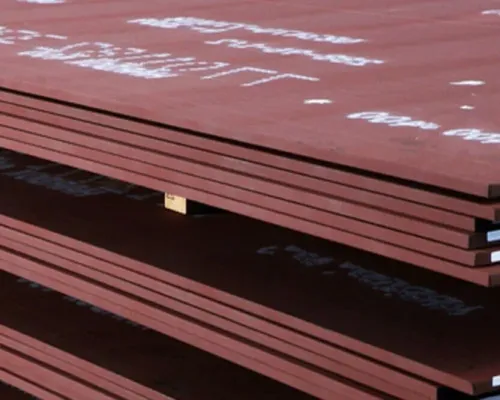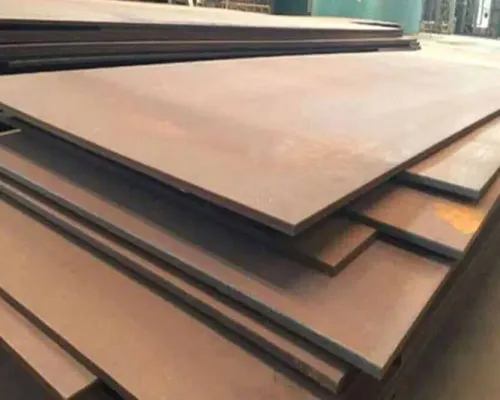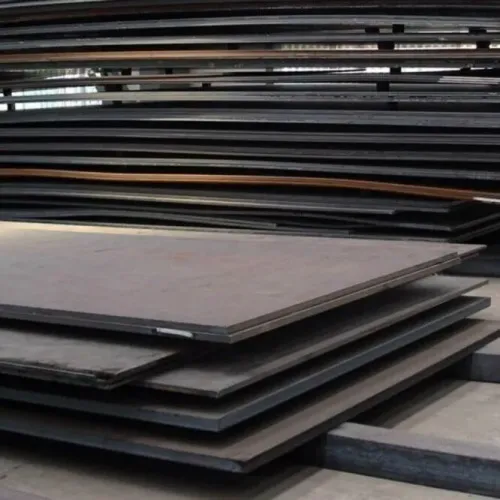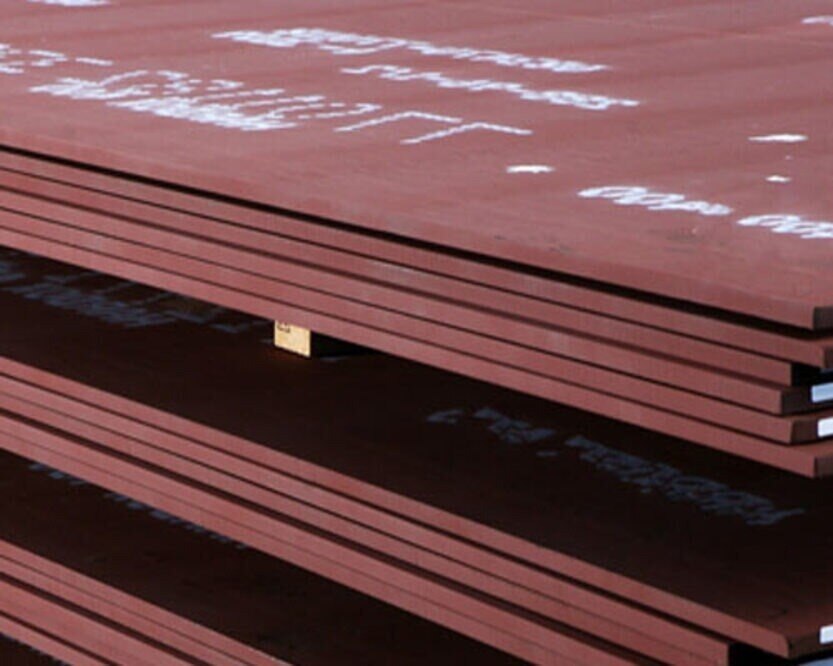
Choosing S690QL is not a matter of searching for the highest tensile-strength number. You need to confirm the EN 10025-6 designation, thickness-specific properties, −40 °C impact performance, +QT delivery condition, fabrication limits and the documents that prove the plate matches your order.
Key takeaways
- Confirm EN 10025-6, S690QL grade, delivery condition and impact-test temperature.
- Check chemistry, yield strength, tensile strength and Charpy results on the certificate.
- Use controlled preheating, low-hydrogen consumables and a qualified welding procedure.
- Reject suppliers who cannot provide heat traceability, inspection documents and plate markings.
What EN 10025-6 S690QL actually means
1. Start with the governing standard: EN 10025-6 covers flat products made from high-yield-strength structural steels in the quenched-and-tempered condition. A generic “690 MPa plate” is not automatically S690QL.
2. Read the designation as a specification, not a catalogue name. “S” means structural steel; “690” identifies the nominal minimum yield strength in MPa for thinner products; “Q” means quenched and tempered; and “L” specifies Charpy V-notch toughness at −40 °C. The +QT delivery mark confirms the required condition.
3. Do not substitute S690QL1 for S690QL. The suffix changes the impact-toughness requirement: S690QL is specified for −40 °C, while S690QL1 is specified for a lower test temperature. The grade on the order and certificate must match exactly. S890QL is a separate, higher-strength grade, not another name for S690QL.
4. Before comparing quotations from an S690QL plate supplier in India, request the exact EN 10025-6 edition, grade, ordered thickness, +QT delivery condition and EN 10204 inspection document. Check that the document identifies the plate’s heat number and test results.
5. Treat “supplier,” “manufacturer” and “stockist” as commercial descriptions, not compliance evidence. A manufacturer produces the plate, a stockist holds or distributes inventory, and a supplier may arrange either source. Only traceable documentation proves that the quoted plate meets S690QL.
Which chemistry, strength and toughness values belong on the certificate
A certificate that states only “690 MPa” is incomplete. Match the ordered thickness to the correct EN 10025-6 row:
| Thickness | Minimum yield strength | Tensile strength |
|---|---|---|
| Up to 50 mm | 690 MPa | 770–940 MPa |
| Above 50 to 100 mm | 650 MPa | 760–930 MPa |
| Above 100 to 150 mm | 630 MPa | 750–930 MPa |
| Above 150 to 200 mm | 600 MPa | 730–930 MPa |
Check elongation against the applicable EN 10025-6 table, not a generic catalogue value. The certificate must also identify carbon, silicon, manganese, phosphorus, sulphur, chromium, molybdenum, nickel, copper, niobium, titanium, vanadium and boron.
Common approximate maximum chemistry values are C 0.20%, Si 0.80%, Mn 1.70%, P 0.025%, S 0.015%, Cr 1.50%, Mo 0.70%, Ni 2.00% and Cu 0.50%. Treat these as screening figures only; accept the plate against the exact chemical table and EN 10025-6 edition stated in the order.
The L condition requires Charpy V-notch testing, commonly at −40 °C: 27 J minimum average, with no individual result below the standard’s permitted 19 J value. Ask an S690QL high tensile steel plate supplier in India to show the test direction, heat number, plate thickness and +QT condition. State whether supplementary transverse testing is required.
Tensile strength alone does not prove low-temperature toughness.
Where S690QL earns its weight saving—and where another grade is better
S690QL earns its weight saving in crane booms, lifting equipment, mobile machinery, transport structures, pressure-free structural frames and heavy fabricated assemblies. Its higher yield strength can reduce plate thickness or increase design resistance, but it does not make a beam proportionally stiffer.
The elastic modulus remains about 210 GPa. Check deflection, buckling, fatigue, local slenderness, connections, weld details, corrosion allowance and design loads before approving a lighter section.
| Grade or product | Main advantage | Better choice when |
|---|---|---|
| S355J2 | Lower cost and easier fabrication | Ordinary structures do not need 690 MPa yield strength |
| S500MC or S700MC | Different forming and delivery characteristics | The design depends on cold forming or a thermomechanically rolled product |
| S890QL | Higher yield strength | Weight reduction justifies tighter fabrication controls and availability risk |
| Hardox or Quard 400/450/500 | Abrasion resistance | Sliding, impact or severe wear governs service life |
Do not specify S690QL for a boiler or pressure vessel by strength alone. Structural S690QL under EN 10025-6 is different from pressure-vessel plate under EN 10028, and an ASME-approved material must meet the governing ASME code and approval route.
A lower grade is the better engineering choice when it passes every design check. Ask an S690QL plate manufacturer in India for material and fabrication data before paying for unnecessary strength; higher grade does not erase welding, fatigue or connection requirements.
What welding, cutting and forming controls S690QL demands
S690QL cannot be fabricated safely with an ordinary mild-steel procedure. Its quenched-and-tempered microstructure and high hardenability increase the risk of hydrogen cracking, hardened heat-affected zones and lost toughness.
1. Qualify the welding procedure to EN 1011-2 and the producer’s recommendations. Calculate carbon equivalent from the actual heat analysis: C + Mn/6 + (Cr+Mo+V)/5 + (Ni+Cu)/15. Set preheat, interpass temperature, heat input and cooling limits from that procedure, not from a generic S355 weld schedule.
2. Control hydrogen at every stage. Use dry, low-hydrogen consumables, store them at the specified temperature, clean oil and moisture from the joint, and protect the weld from rapid cooling. A search for s690ql plate stockist in india does not establish that the supplied welding data is suitable.
3. Treat thermal cutting as a metallurgical operation. Flame or plasma cutting can harden the edge; critical parts may need edge conditioning, hardness checks or machining allowance before welding or forming. Check the cut plate for cracks, edge damage, dimensions, surface condition and the original heat number.
4. Cold forming requires larger, verified inside bend radii. Confirm the radius against thickness, rolling direction, edge condition and forming method; do not accept an unverified promise from a s690ql plate stockist in india.
5. Do not normalise, anneal, repair-heat or stress-relieve the plate without approval. An unsuitable thermal cycle can reduce yield strength or impact toughness. Keep the original heat traceability and confirm the +QT delivery condition on the inspection document.
How to vet an S690QL plate supplier, manufacturer or stockist in India
Put the purchase order ahead of the quotation. Specify S690QL to the exact EN 10025-6 edition, the +QT delivery condition, plate thickness, width, length, quantity, surface quality, dimensional tolerances, and whether the supplier may cut plates from larger stock.
- Require the original mill certificate tied to the plate heat number. It must show chemical analysis, the actual product thickness, thickness-specific tensile strength and yield results, elongation, Charpy V-notch results at −40 °C, dimensions, +QT condition, and EN 10204 Type 3.1 or 3.2 inspection status.
- Add EN 10029 thickness, flatness and dimensional tolerances, plus the required EN 10163 surface-quality class. Specify ultrasonic testing under the applicable acceptance level when the design or purchaser requires it.
- Confirm the test direction and whether supplementary transverse Charpy testing applies. Grade compliance alone does not establish flatness, surface condition, ultrasonic quality or every dimensional requirement.
A certificate for another thickness does not prove compliance with your plate. Reject a repacked trader document or any certificate that cannot trace the plate to its heat number.
Whether you search for an S690QL high tensile steel plate stockist in India, an S690QL plate supplier in India or an S690QL plate manufacturer in India, those labels describe a commercial role, not certification. Ask Shyam Metals & Alloys the same document and traceability questions; its name cannot replace your review of the mill records.
Related products
 | Alloy Steel Plate Grades View product → |
High Strength Plates View product → |
Frequently asked questions
What does EN 10025-6 S690QL mean?
EN 10025-6 specifies quenched-and-tempered high-yield-strength structural steel flat products. S690QL identifies a minimum 690 MPa yield-strength class, while Q denotes quenched and tempered delivery and L denotes Charpy impact toughness tested at −40°C.
Which values should an S690QL plate certificate show?
Request the heat number, plate dimensions, delivery condition, chemical analysis, yield strength, tensile strength, elongation and Charpy V-notch impact results at −40°C. The certificate should identify EN 10025-6 and the inspection document type.
When is S690QL a better choice than ordinary structural steel?
S690QL earns weight savings when its higher yield strength permits thinner load-bearing plates without violating buckling, fatigue, deflection or fabrication limits. Choose a lower-strength grade when weldability, forming, impact service or cost outweighs thickness reduction.
What welding controls does S690QL require?
Use a qualified welding procedure, low-hydrogen consumables, controlled heat input, suitable preheating and interpass temperatures, and documented hydrogen-control practices. Cutting and cold forming also require procedures that limit heat-affected-zone damage and cracking.
How do you vet an S690QL plate supplier in India?
Ask for EN 10204 3.1 inspection certificates, heat-number traceability, plate markings, dimensional inspection records and test reports. Confirm that the supplier can provide the required thickness, impact-tested condition and cutting or fabrication controls.
Related product
High Tensile Plates High Tensile Plates En10028 S690Ql View product → |