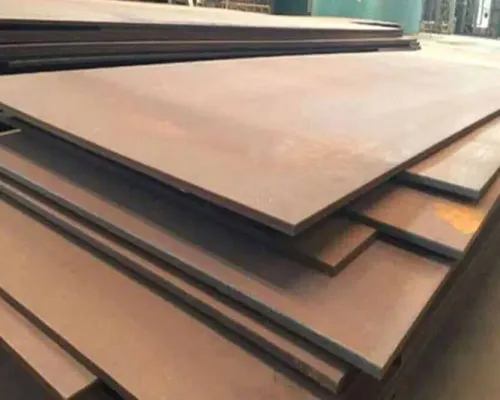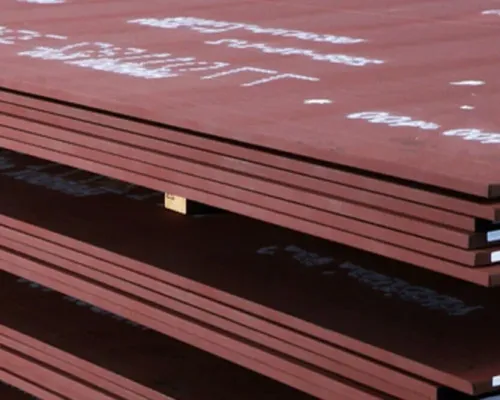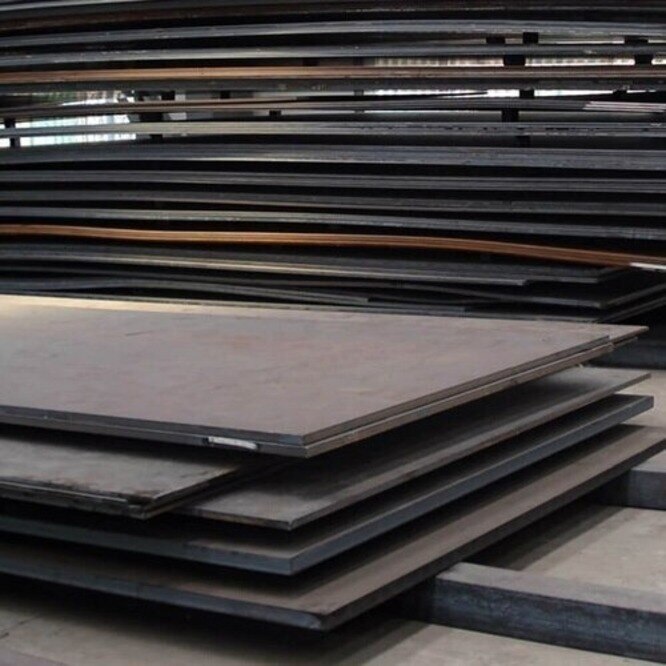
Recovering a worn bucket, chute, hopper or dump body starts with identifying the wear mechanism, not choosing the highest hardness label. By the end, you will know how to compare Abrex 500 with Abrex 400, verify a genuine plate, plan fabrication and decide whether a full replacement, repair insert or another wear system is the safer investment.
Key takeaways
- Treat 500 HBW as a nominal class, not an exact hardness result.
- Match the plate to abrasion, impact and fabrication conditions.
- Request thickness-specific hardness, chemistry and traceability documents.
- Measure the worn component before ordering a replacement plate.
What the Abrex 500 designation tells you—and what it does not
ABREX 500 is a manufacturer grade designation associated with nominal Brinell hardness of approximately 500 HBW. ABREX 400 and ABREX 450 indicate lower nominal classes, about 400 and 450 HBW. Treat those figures as labels, not exact results: use the mill’s certified, thickness-specific acceptance range, hardness scale, test method and test location.
A 500 plate is not twice as wear-resistant as 250 or 400. Service life changes with particle size, sliding distance, impact energy, moisture, corrosive chemistry, plate support and the counter-body. An abre x 500 plates manufacturer in india should be judged on traceable certificates, not the number alone.
ABREX 500 suits low-stress sliding abrasion, mineral handling, rock gouging and repeated abrasive contact.
Use extra caution when severe impact, cracking, low-temperature service, pressure-boundary duty or tight-radius forming dominates. Abrex 400 can give a more forgiving balance of toughness, weldability, machinability, forming effort and impact tolerance; Abrex 500 may reduce wear-driven replacement.
An abre x 400 plates manufacturer in india must provide the same thickness-specific hardness, chemistry, welding guidance and certification. Neither designation automatically equals ASTM, IS 2062 or another structural grade.
Which wear mechanism justifies Abrex 500 in heavy machinery
Abrex 500 earns its place where persistent sliding abrasion or mineral flow removes softer steel: excavator bucket floors and side cutters in abrasive soil, dump-body floors carrying rock, ore chutes, hoppers, conveyor wear strips and transfer points.
| Wear condition | Suitable direction | Main limitation |
|---|---|---|
| Sliding abrasion and mineral flow | Abrex 500 plate | Severe shock can cause cracking or fracture |
| High-energy impact and gouging | Tougher, lower-hardness grade, cast wear part or reinforced design | Faster loss under persistent rubbing |
| Fine sliding abrasion | Ceramic liner | Can chip under shock |
| Extreme surface wear | Chromium-carbide overlay | Poorer tolerance of forming |
| Noise and impact absorption | Rubber liner | Lower resistance to sharp, abrasive rock |
| Frequent replacement | Bolted liner | Requires sound mounting and access |
Use loader edges and shovel liners only after separating rubbing from impact. A hard plate suits steady contact; repeated heavy drops favour toughness over maximum hardness.
Choose a repair insert or local wear pad when damage stays within a known impact zone, the parent structure retains adequate thickness, and the detail avoids an unsafe weld or stress concentration. Replacing the whole plate is safer when cracks, thinning or distortion extend beyond that zone.
Abrex 500 is not stainless steel. Wet slurry, chemicals or elevated temperature can require a corrosion-resistant alloy, liner, overlay or composite system. Compare those limits before accepting a quote from an abrex 500 plates supplier in india.
How to verify hardness, chemistry and fabrication suitability before purchase
Release an order only after the paperwork, markings and fabrication plan agree. An Abrex 500 plates manufacturer in India should provide a mill test certificate tied to the exact material, not a quotation that merely says “500 BHN plate.”
1. Check that the certificate names the manufacturer and original mill, heat number, plate number, thickness, delivery condition, applicable Abrex product standard and edition. It must state hardness as HBW or another approved scale, the test method, test location and acceptance range.
2. Reconcile every certificate detail with the plate markings. For critical service, request a hardness map or independent test at defined locations; an untraceable handheld reading does not replace certified results.
3. Request chemical analysis and carbon-equivalent information, plus yield strength and tensile strength. Add impact-test requirements when the fabrication drawing or service temperature calls for them.
4. Confirm the grade is not being substituted by assuming equivalence with Hardox 500, Quard 500, JFE Everhard 500 or Rockhard 500. Nominal hardness alone proves no equivalence.
5. Obtain mill welding guidance covering thickness, restraint, hydrogen control, preheat, interpass temperature, heat input, joint design and inspection. Ask for oxygen-fuel, plasma and laser cutting limits, edge-zone treatment and distortion controls.
6. For drilling, milling or tapping, specify rigid fixturing, carbide or high-performance tooling, controlled speed, coolant and chip evacuation. A blunt tool can work-harden the surface. Confirm cold-forming radii, and never assume hot forming preserves the supplied quenched-and-tempered condition.
How to measure a worn component and turn it into a recoverable plate order
Start by mapping the component, not by ordering a standard plate. Measure remaining wall thickness at unworn areas, worn zones and transitions, then compare it with the original plate thickness.
- Record wear pattern, impact points, crack locations, bend radii, rolling direction where known, bolt holes, welds, stiffeners and access limitations.
- Identify whether the replacement is a flat liner, formed insert, wear strip, edge segment or full structural panel.
- Compare a local insert with full replacement using downtime, access, remaining parent-metal strength, weld length and the risk of placing a softer welding heat-affected zone in the wear path.
| Option | Best fit | Main check |
|---|---|---|
| Flat liner | Broad, even wear | Confirm support and bolt or weld layout |
| Formed insert | Curved bucket, chute or hopper | Verify thickness-, direction- and process-dependent bend radius |
| Wear strip or edge segment | Local impact or edge loss | Keep seams away from peak impact where design permits |
| Full structural panel | Widespread thinning or cracking | Recheck stiffeners, access and load path |
Add cutting kerf, dimensional tolerance, camber, machining allowance and welding-heat movement before releasing dimensions. Nest against the actual available plate size: a nominal 6,000 mm minimum length wastes material on a small repair unless cut pieces or remnants are offered, while a 2,500 mm maximum width may require a joint and qualified weld plan.
Ask an ABREX 500 plates stockist in India or ABREX 500 plates supplier in India whether the quotation covers mill plate, cut blanks, bevelled edges, drilled holes, formed parts or a wear kit. Transfer the heat number and plate identification after cutting so every component remains traceable.
How to compare an Indian manufacturer, stockist and supplier without buying an untraceable plate
Cutting or profiling a plate does not make a company the original manufacturer. An Abrex 500 plates manufacturer in India must identify its own mill; an authorised channel, importer, stockist or domestic processor must identify the mill it represents and the exact route.
| Option | Verify before ordering | Main risk |
|---|---|---|
| Original mill | Mill name, heat number, plate number, certificate and country of manufacture | A reseller presents itself as the mill |
| Importer or authorised channel | Import documents, mill certificate, live stock and replacement route | Traceability ends at the importer |
| Stockist or processor | Ex-stock status, actual dimensions, markings, remnants and cut-piece identification | Cutting removes identity |
| Supplier | Whether the offer is mill order, imported, stocked or processed; MOQ and lead time | Published size range is mistaken for inventory |
Compare an Abrex 500 plates stockist in India and an Abrex 500 plates supplier in India on hardness records, bevel quality, inspection history, cutting capability and replacement support. Require a certificate of conformity, dimensional report and ultrasonic-test report when the drawing or purchase order specifies them.
At delivery, reconcile the heat and plate numbers across the certificate, plate markings and transferred cut-piece identification. Quarantine material with missing or altered identity. Evaluate Shyam Metals & Alloys by asking for evidence of its exact manufactured, imported, stocked or processed supply route.
- Confirm welding guidance, forming limits, machining support, packaging and storage protection.
- Price oversized plate, cutting, transport and handling separately.
- Ask for remnant policy and the cost of replacement if dimensions or documents fail.
Related product
 | Resistant Plates Abrex (400 / 450 / 500 ) Item Abrasion Resistant Plate Material Abrex 400 /450 /500 /600 Thickness 6mm to 100mm Width 1,500mm to 2,500mm Length... View product → |
Frequently asked questions
What does the Abrex 500 designation mean?
Abrex 500 identifies a nominal Brinell hardness class of approximately 500 HBW. Abrex 400 and Abrex 450 indicate lower nominal classes. Confirm the certified hardness range, test method, scale, thickness and test location on the mill documentation.
Which wear mechanism justifies Abrex 500 in heavy machinery?
Use Abrex 500 when sliding or gouging abrasion demands higher hardness, such as contact with ore, rock, sand or scrap. Check impact loading and fabrication limits first; a harder plate is not automatically the best choice for severe shock or complex forming.
What documents should you request before buying Abrex 500 plates?
Request the mill test certificate showing heat or batch number, plate thickness, certified hardness results, chemical analysis, test method and test location. Match the certificate to the markings on the plate and retain the traceability record.
How do you order a replacement Abrex 500 plate for a worn component?
Record the original component dimensions, remaining thickness, wear pattern, hole locations, bend geometry, operating material and attachment method. Provide a dimensioned drawing or template so the supplier can quote the required grade, thickness, cut size and fabrication work.