The correct material is not identified by “700 MPa” alone: S700MC under EN 10149-2 has thickness-dependent properties, a defined delivery condition and traceability requirements. By checking the grade, certificate, physical stock and seller responsibility in that order, you can distinguish usable Indian inventory from a mill-order promise or an incorrectly substituted S690QL plate.
Key takeaways
- Match the certificate to S700MC and EN 10149-2, not “700-grade” wording.
- Choose S700MC for cold forming and S690QL for quenched-and-tempered service.
- Request certificates that trace each plate through cutting and fabrication.
- Confirm physical warehouse stock before comparing mill-order quotations.
Confirm that the plate is genuinely S700MC under EN 10149-2
A quoted “700-grade” plate is S700MC only when its mill certificate identifies S700MC and EN 10149-2. This standard covers thermomechanically rolled structural steel intended primarily for cold forming; “700 MPa” alone describes neither the grade nor its delivery condition.
Strenx 700 is a commercial product name and does not, by itself, prove compliance with EN 10149-2.
For an s700mc steel plate for stockist in india, check the certificate against the exact order:
- Grade designation: S700MC
- Standard: EN 10149-2
- Ordered thickness and the applicable thickness row
- Test direction and test location
- Applicable test standard
- Minimum yield strength: 700 MPa up to 8 mm, 650 MPa above 8 mm to 20 mm, and 600 MPa above 20 mm, subject to the applicable standard table
- Tensile strength: 750–950 MPa
- Elongation: the specified value from the applicable table
Reject a catalogue statement that the plate has “700 MPa” strength if the certificate does not report these thickness-specific results and the required elongation.
Do not approve a tight bend from strength data alone. Bend radius, bend direction, edge condition, thickness and the actual heat’s ductility determine whether the plate will form without cracking. Ask for the proposed minimum radius and forming direction, then confirm that the certificate’s elongation and test results support that operation.
A valid grade certificate does not guarantee unlimited cold-forming performance.
Choose between S700MC and S690QL by service requirement
Choose S700MC instead of S690QL when weight reduction and cold-formable high strength matter, and the governing project standard permits EN 10149-2. Choose S690QL when the design requires quenched-and-tempered plate or specified sub-zero impact performance.
| Grade | Delivery condition and standard | Toughness and forming implication | Choose it when |
|---|---|---|---|
| S700MC | Thermomechanically rolled, EN 10149-2 | “MC” identifies the delivery condition, not an equivalent toughness class; check bend radius, direction, edge condition and heat ductility | Cold forming and lower structural weight are priorities |
| S690QL | Quenched and tempered, EN 10025-6 | “QL” identifies a specified impact-toughness condition, commonly 27 J minimum at −40 °C, subject to the standard and thickness | Sub-zero Charpy performance or the Q&T condition is specified |
Both grades have thickness-dependent yield requirements. Require the certificate to identify the ordered thickness and its applicable property row; reject a thickness-independent claim of 700 MPa for S700MC or 690 MPa for S690QL. A buyer comparing an s690ql plate stockist in india with an S700MC source must compare more than nominal yield strength.
Before treating them as interchangeable, have the engineer review:
- Weldability and the qualified welding procedure
- Forming limits, bend radius and available thicknesses
- Required Charpy temperature and absorbed energy
- The governing project standard and dimensional requirements
S700MC’s high strength does not permit unlimited bending, while S690QL’s toughness designation does not make it a substitute for a thermomechanically rolled forming grade.
Demand a certificate trail that survives cutting and fabrication
Require an EN 10204 Type 3.1 inspection certificate that identifies the heat number, plate number, chemical analysis, mechanical-test results, ordered thickness, dimensions and delivery condition. Type 3.2 is necessary when an independent inspector or the purchaser’s representative must validate the results. “MTC supplied” proves neither certificate type.
| Evidence | Check | If it does not match |
|---|---|---|
| Certificate | Heat, plate, chemistry, mechanical results, thickness, dimensions and condition | Reject or quarantine the plate |
| Plate marking | Heat and plate numbers stamped or tagged on the delivered plate | Do not accept certificate-only traceability |
| Packing list and invoice | The same heat and plate numbers as the certificate | Hold delivery pending correction |
Match all four records before signing for delivery. After cutting, transfer the original heat number to every piece, or retain a controlled record linking each cut blank to its parent plate. A blank without that chain is not traceable material.
Use handheld XRF only to detect a wrong alloy family or mixed stock. It cannot prove yield strength, tensile strength, elongation, thermomechanical processing or impact performance.
If internal discontinuities matter, call for ultrasonic testing separately and name the EN 10160 acceptance class, such as S1, S2 or S3. Grade certification does not mean that ultrasonic testing was performed.
For welded work, require an appropriate qualified WPS/PQR. The certificate does not qualify preheat, interpass temperature, heat input, consumable strength or hydrogen control.
Separate warehouse stock from a mill-order quotation
“Available” is not proof of physical stock. A genuine stockist physically holds identified plate and can show its markings; a future mill lot has no plate numbers to inspect.
- Ask for the warehouse location, quantity available by heat, exact thickness, width and length, plate numbers, reservation status and realistic dispatch lead time.
- Ask whether the material is mill-produced plate held in India, imported plate already in inventory, or cut from coil. Cut blanks must retain the parent plate or coil identification.
- Match the heat and plate numbers on the offered material with the EN 10204 certificate, packing list and invoice. A certificate without matching physical identity is not traceability.
- Confirm who issued the mill certificate, who controls cutting and testing, and who accepts responsibility for a nonconformity claim.
A distributor may manage supply without owning the warehouse. A trader may arrange a transaction between parties, while a manufacturer may produce or process material without making the original steel mill plate. Therefore, a company calling itself an s700mc steel plate manufacturer in India is not automatically the plate producer.
Make warehouse evidence, heat-specific documents and dispatch timing conditions of the purchase order for an s700mc steel plate supplier in India. Do not rely on verbal assurances given after ordering; state that unidentified, unreserved or late material permits rejection.
Use a documented technical and commercial comparison before ordering
Compare quotations on evidence, not on the seller’s label. An s700mc steel plate manufacturer in india and a stockist should answer the same technical questions.
| Item | Put in the enquiry |
|---|---|
| Grade and standard | S700MC to EN 10149-2; state ordered thickness and delivery condition |
| Dimensions and quantity | Exact thickness, width, length, tolerance and quantity by heat |
| Documents | EN 10204 Type 3.1; specify Type 3.2 for independent or purchaser inspection |
| Performance | Charpy energy, test temperature and direction, if required by the design |
| Condition | Surface acceptance for scale, pitting and laminations; name any EN 10160 ultrasonic class |
| Processing | Cutting method, dimensional tolerance, heat-number transfer and inspection records |
Ask whether thermal cutting leaves a hardened or altered edge zone. If the pieces will be formed immediately, used in fatigue-critical service or welded at the cut edge, state the required grinding, machining or other edge conditioning; “laser cut” and “plasma cut” do not establish mechanical-property acceptance.
Require a qualified fabricator to control preheat, interpass temperature, heat input, consumable strength and hydrogen levels through the WPS/PQR. The plate certificate does not qualify welding.
Shyam Metals & Alloys belongs in the same due-diligence comparison: request the heat-specific certificate, physical stock details, cutting traceability and written conformity responsibility. Match the heat and plate numbers on the certificate, markings, packing list, invoice and every cut piece.
The strongest supplier connects the specified plate, warehouse identity and final cut piece without a gap.
Related products
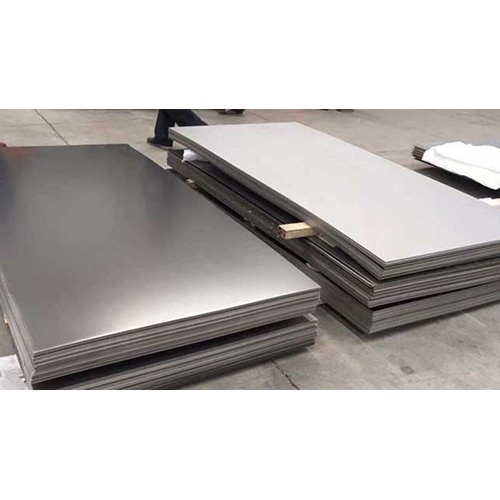 | Alloy Steel Plate Grades View product → |
 | Alloy Steel Plate Grades View product → |
Frequently asked questions
How do you confirm that a plate is genuinely S700MC?
Check that the mill certificate names S700MC and EN 10149-2, then match the heat number, plate dimensions, delivery condition and test results to the material offered.
Should you choose S700MC or S690QL?
Choose S700MC when cold forming and weight reduction drive the design. Choose S690QL when quenched-and-tempered plate performance and service requirements call for that grade.
What certificate trail should an S700MC stockist provide?
Request the original mill test certificate, heat and plate numbers, chemical and mechanical results, delivery condition, and traceability records linking the full plate to any cut pieces.
How can you tell warehouse stock from a mill-order quotation?
Ask for the warehouse location, available dimensions, heat numbers, inspection documents and dispatch lead time. A mill-order quotation must state the mill, production schedule, minimum order and delivery date.