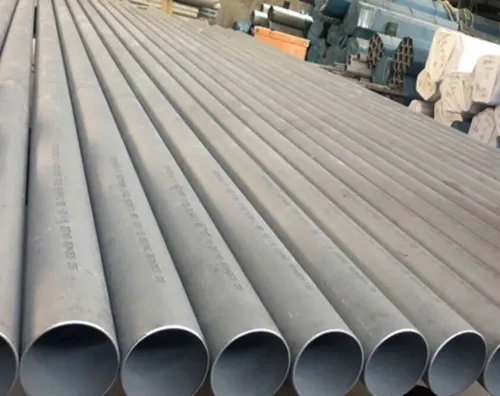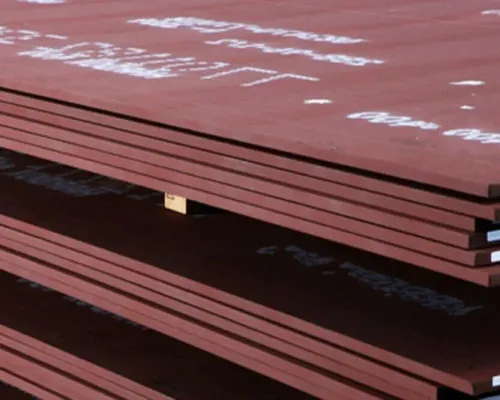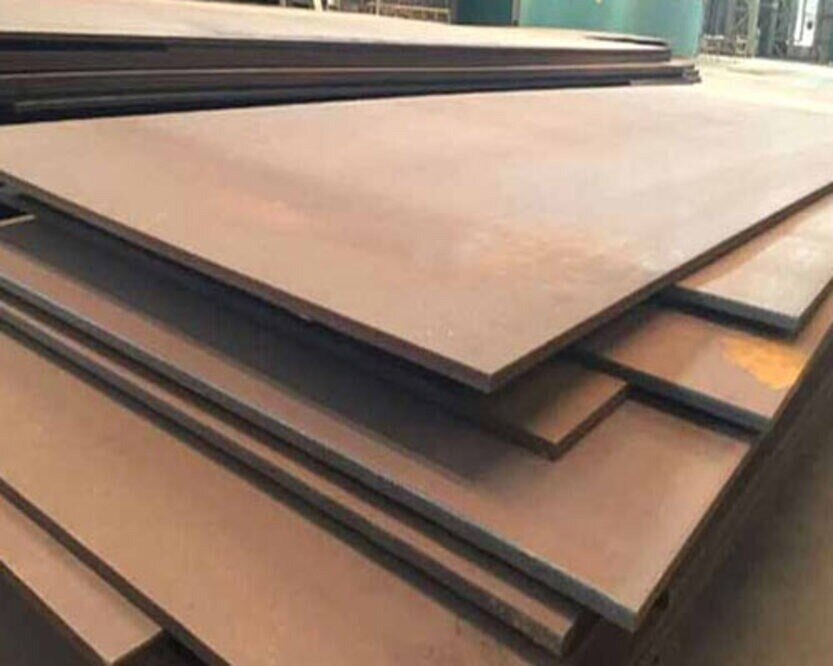
The numbers 450 and 500 usually point to nominal Brinell hardness, not yield strength, and they do not by themselves prove which plate will last longer. By comparing certified hardness, wear mechanism, impact exposure, fabrication limits, documentation and delivered service cost, you can choose between Rockhard 450 and Rockhard 500 with fewer failures and fewer quotation surprises.
Key takeaways
- Treat 450 and 500 as nominal Brinell hardness grades, not yield-strength ratings.
- Choose 500 for severe abrasion only when impact and fabrication conditions allow it.
- Compare certified hardness, plate dimensions, traceability and delivery before selecting a stockist.
- Calculate delivered cost per service hour instead of comparing price per kilogram.
What the 450 and 500 numbers actually prove
Rockhard 500 is not automatically a stronger or better plate than Rockhard 450. The numbers normally indicate nominal Brinell hardness in HBW, not yield strength in MPa. A rockhard plate comparison india therefore starts with certified acceptance limits, not the larger number printed in a quotation.
Ask the manufacturer or supplier for the exact grade designation, guaranteed hardness range, permitted tolerance, plate thickness and test method. The quotation must identify the applicable HBW standard, such as ISO 6506-1 or ASTM E10, plus the test location, individual hardness results and delivery condition.
- Confirm that the certificate states chemical composition, tensile strength, yield strength, elongation and Charpy impact value where specified.
- Do not infer structural design values, allowable stress, weld qualification or code compliance from hardness alone.
- Require the heat number linked to the supplied plate and plate identification on the documents.
- Request an EN 10204 3.1 material test certificate when that documentation forms part of the purchase requirement.
- Reject a generic certificate for Rockhard 450 or Rockhard 500 as proof of traceability; it identifies a commercial grade, not the particular plate.
Nominal hardness alone cannot establish composition, tensile performance, elongation, impact toughness or compliance with a named code. Compare the manufacturer’s certified range, thickness-dependent limits, test records and inspection documents, because products carrying the same commercial grade do not necessarily share identical acceptance limits.
Choose by wear mechanism, impact and support conditions
Rockhard 450 is often the safer choice for mixed abrasion and heavy impact; Rockhard 500 earns its premium when sliding abrasion dominates, support is continuous, and impact is controlled.
| Mechanism | Rockhard 450 or 500 | What to compare |
|---|---|---|
| Sliding abrasion | Rockhard 500 is generally the stronger candidate when abrasive particles travel repeatedly across the surface. | Particle size, abrasive hardness, sliding distance, plate thickness and expected replacement interval |
| Gouging abrasion | Choose 500 for severe cutting and ploughing only when the backing prevents plate movement. Choose 450 when large chunks strike and bend the plate. | Particle size, impact energy, support spacing, concentrated loads and thickness |
| Erosion | Compare both grades against fine particles carried by air, water or slurry; hardness alone does not predict the longer life. | Particle velocity, particle hardness, flow direction, angle of attack and thickness |
| Impact-driven wear | Rockhard 450 can be preferable because greater toughness may tolerate shock loading, distorted supports and repeated impact more reliably. | Impact energy, drop height, support condition, weld-zone condition and replacement interval |
A Rockhard plate comparison India buyers can use must separate abrasion from impact. A harder plate can crack or chip, or deliver no service-life gain, when failure comes from poor backing support, concentrated loads or weld-zone damage.
For buckets, crusher components, liners and chutes, request:
- An application-specific grade recommendation
- An impact-toughness requirement where shock loading governs
- The proposed thickness, support spacing and welding procedure
- Expected tonnes handled or service interval before replacement
Compare fabrication limits before ordering Rockhard 500
A harder plate can lose its wear-life advantage if fabrication causes cracking, distortion, rejected edges or excessive workshop time. Rockhard 500 normally demands more from flame cutting, drilling, machining, beveling, cold forming and welding than Rockhard 450.
| Grade | Fabrication implication | Approval question |
|---|---|---|
| Rockhard 450 | Wider forming and tooling tolerance than 500, subject to the manufacturer’s table | Does the proposed process match the certified grade and thickness? |
| Rockhard 500 | Higher forming force and tighter control of cutting, drilling and welding heat | Can the workshop meet the specified radius, tooling load and procedure limits? |
Before approving a formed liner or chute, request the grade-specific bending-radius table, forming direction, maximum thickness guidance and available tooling capacity. A radius accepted for Rockhard 450 can crack or distort Rockhard 500.
Tell the supplier the intended thickness and cutting process. Confirm the thermal-cutting procedure and edge-quality requirements; an excessive heat-affected zone can cause inspection rejection. For drilling, verify carbide tooling or specialised drilling practice, and allow for work hardening that blunts tools and slows holes.
Require the manufacturer’s welding guidance or a qualified procedure covering joint restraint, hydrogen-controlled dry low-hydrogen consumables, preheat, interpass temperature, heat input and delayed cold-cracking control. Do not transfer a Rockhard 450 welding procedure to Rockhard 500 without review.
Identify every coating or shop finish as temporary primer, permanent coating or customer-specified finish. Confirm whether it must be removed before welding, inspection or wear service.
How to evaluate a Rockhard stockist in India or Hyderabad
Compare a Rockhard 500 stockist with a Rockhard 450 supplier by verifying the actual plate offered, not the grade printed in an advertisement. A Rockhard 500 stockist in Hyderabad should answer these questions in writing:
1. What exact thickness, width, length, plate condition, quantity and remaining allocation are available? Is each piece a full original plate or a cut remnant? Request the heat number, plate identification, mill origin, material test certificate (MTC), hardness-test results, cutting capability and delivery time to your project site.
2. For a search for Rockhard 500 plates for stockist in India, identify the supply route: ex-stock, imported, or mill-made-to-order. That route changes the minimum order quantity, available dimensions, documentation, replacement handling and exposure to freight or import delays. Confirm whether the quoted quantity remains reserved until your purchase order is accepted.
3. For a Rockhard 450 plates supplier India quotation, request chemical analysis, guaranteed hardness range and test method, dimensions, flatness, surface condition, cut-edge quality, ultrasonic testing when specified, and the inspection level. Match the heat number and plate identification on the delivered material to the certificate.
Ask Shyam Metals & Alloys to separate full-plate stock from remnants and to state the certificate package and cutting route against each line item. A generic Rockhard 450 or Rockhard 500 certificate proves the advertised grade, not traceability to your plate.
Reject the quotation if the supplier cannot connect the delivered piece to its heat and inspection records.
Related products
 | Resistant Plates Rockhard(400 / 450 / 500 ) Thickness : 6mm to 100mm Width : 1,500mm to 2,500mm Length : 6,000mm to 12,000mm Production : Hot-Rolled (HR) /... View product → |
 | Abrasion resistant steel plate Plate is a type of high-strength, wear-resistant steel plate designed for demanding applications that require excellent durability and impact... View product → |
Calculate delivered cost per service hour, not price per kilogram
Calculate cost per service hour as (delivered plate cost ÷ usable cut yield + fabrication + installation + downtime) ÷ expected service hours. Use actual thickness, not nominal price per kilogram: a thicker plate can increase life while reducing usable yield and adding weight, freight and handling.
| Cost factor | Rockhard 450 | Rockhard 500 |
|---|---|---|
| Delivered plate and freight | Lower entry cost; compare site-delivered tonnes | Higher purchase cost; freight follows weight and route |
| Cut yield, forming and drilling | Usually easier and faster | Stricter bending radius; slower drilling and higher tooling wear |
| Welding and installation | Lower consumable and repair burden | More procedure control, consumables and repair complexity |
| Downtime and replacement interval | Repeated shutdowns if sliding abrasion is severe | Longer interval when abrasion, support and impact conditions suit it |
Include forming and drilling hours, welding consumables, tooling wear, installation labour, removal and refitting, and the production lost during each replacement. Rockhard 500 earns its premium only when the added service interval exceeds those extra costs; choosing 450 for severe sliding abrasion can make repeated shutdowns more expensive.
Ask both suppliers for:
- Lead time, replacement policy, certificate package, cut-piece availability and delivery terms
- Ex-stock, imported or mill-made-to-order status, plus minimum order and freight exposure
- Heat-linked hardness results, plate dimensions and the proposed fabrication procedure
Compare cost per hour or tonne handled, then match certified data and the manufacturing procedure to the failure mechanism before selecting either grade.
Frequently asked questions
What do the Rockhard 450 and 500 numbers prove?
They normally indicate nominal Brinell hardness in HBW. Ask for the mill certificate and check the stated hardness range, test method and heat or batch number; the figures do not prove yield strength in MPa.
How should you choose between Rockhard 450 and Rockhard 500?
Match the grade to the wear mechanism, impact energy and support conditions. Rockhard 500 suits severe sliding abrasion when impact is controlled, while Rockhard 450 can be the safer choice where repeated impact, bending or variable support raises cracking risk.
What fabrication limits should you compare before ordering Rockhard 500?
Confirm the supplier's minimum bending radius, preheating and interpass-temperature requirements, cutting method, welding procedure and consumables. Harder plate can demand tighter fabrication controls and increase processing time.
How do you evaluate a Rockhard 500 stockist in India or Hyderabad?
Request the material test certificate, heat number, plate dimensions, actual stock location, inspection records and traceability from plate to certificate. Confirm whether the stockist can cut, pack and deliver the required sizes without breaking identification.
How do you calculate delivered cost per service hour?
Add plate price, freight, cutting, fabrication, installation, downtime and replacement costs, then divide the total by expected service hours. Compare that result with Rockhard 450 rather than using price per kilogram alone.