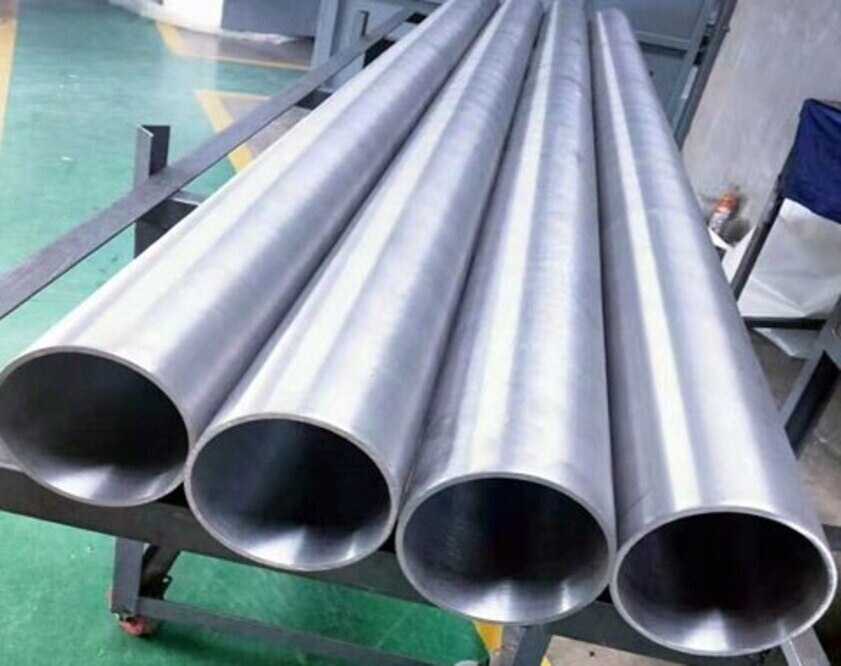
A failed wear plate is evidence of a service problem, not an automatic instruction to install a harder grade. You will be able to identify the wear mechanism, compare ABREX 400, 450 and 500, prepare a replacement specification, and screen an Indian supplier for traceable material and workable fabrication requirements.
Key takeaways
- Identify sliding, gouging, impact or abrasive wear before selecting plate hardness.
- Use ABREX 400, 450 or 500 according to service severity and fabrication needs.
- Build the replacement specification from liner thickness, dimensions, holes and failure evidence.
- Request test certificates, heat numbers and fabrication guidance from the supplier.
Identify the wear mechanism before choosing ABREX 500
A failed liner does not prove that harder steel is the answer. Sliding abrasion occurs when coal, ore or aggregate travels across chutes and hopper liners; gouging abrasion occurs when large, sharp rocks cut crusher components or dump bodies.
Impact wear comes from dropped material or repeated loading, while erosion comes from fast-moving fine particles or slurry.
| Mechanism | Typical evidence | Common location |
|---|---|---|
| Sliding abrasion | Long, directional grooves and even thickness loss | Chutes, hopper liners |
| Gouging abrasion | Deep cuts, torn metal and large grooves | Crushers, dump bodies |
| Impact wear | Dents, craters, cracking or displaced plate | Loading zones, transfer points |
| Erosion | Smooth thinning, channels or local breakthrough | Fine-particle or slurry systems |
Inspect the failed plate before ordering. Photograph the wear pattern, measure remaining thickness on a grid, and mark grooves, gouges, dents, cracking and local breakthrough. Record the abrasive material, particle size, moisture, temperature and loading cycle.
The 500 designation is primarily a nominal Brinell hardness class, not a complete design specification or guaranteed hardness at every point. Request certified hardness, test location, thickness and heat number, then assess impact toughness, support conditions, operating temperature, corrosion exposure and attachment method.
Generic descriptions such as abre x wear plate replacement india need this technical checking. A harder replacement will not fix misalignment, inadequate backing, loose bolts, poor welds, trapped fines or impact overload.
Choose between ABREX 400, 450 and 500 for the actual service
ABREX 500 is justified for severe sliding or gouging abrasion when the liner has continuous backing, low deflection and little need for aggressive forming. Choose ABREX 400 when impact, frequent welding, drilling or bending dominates; choose ABREX 450 when wear resistance and fabrication must be balanced.
| Grade | Nominal hardness class | Safer choice when |
|---|---|---|
| ABREX 400 | About 400 HB class | Impact severity, repeated repairs, drilling, bending or high joint restraint controls |
| ABREX 450 | About 450 HB class | Sliding wear and fabrication demands are both significant |
| ABREX 500 | About 500 HB class | Severe sliding or gouging wear acts on a well-supported, minimally formed liner |
Treat these as nominal Brinell hardness classes, not interchangeable ASTM or EN names. Compare the abre x 400 450 500 plates option against plate thickness, operating temperature, corrosion exposure, impact severity, backing support, joint restraint and whether attachment is welded or bolted.
Ask for the ABREX mill certificate showing the certified hardness range, test location, plate thickness and heat number. Hardness alone does not establish toughness, weldability or service life; thicker plate, elevated temperature, corrosion or restrained welds can change the decision.
Do not replace ABREX 500 with a generic AR500 label unless the seller identifies the producing mill, chemistry, toughness evidence, dimensional tolerances and certificate. A hardness number without that traceability cannot prove equivalent performance.
Build a replacement specification from the failed liner
Do not order an ABREX 500 replacement from the old drawing alone. Build the specification from the failed liner, its backing and the attachment system.
1. Inspect the liner and backing in place. Photograph wear, then measure remaining thickness on a grid covering worn and unworn areas. Record grooves, gouges, dents, cracks, breakthrough and distortion.
2. Record service conditions: abrasive type, particle size, moisture, temperature, flow speed, drop height and loading cycle. Note whether failure began in the plate, weld, bolt holes, support frame or a clearance gap.
3. Map the original outline from a template or controlled measurements. State nominal thickness, cut dimensions, hole diameter and coordinates, cut profile, tolerances, edge condition, weld access, bolt or weld attachment, and allowance for future wear.
4. For formed parts, state bend direction and the required minimum inside radius. Ask the fabricator to confirm the bend limits for the specific thickness from the mill’s documentation; do not invent a radius or heat the plate to force the shape.
Check clearances around chutes, hoppers, dump bodies and crusher components. A thicker liner can restrict flow, exceed the support design’s weight, or strike moving parts. Confirm access for inspection and maintenance.
The RFQ must state quantity, delivery location and whether cutting, drilling or forming is included. Require the attachment loads and support condition to be reviewed. A plate that fits the drawing but ignores bolt, weld or frame loads is not damage recovery.
Screen an ABREX 500 plates supplier in India before purchase
A traceable source links the plate marking, heat number and mill test certificate; a “500 BHN” claim alone proves little. Use this RFQ procedure before comparing an abrex 500 plates supplier in india:
1. State the ABREX grade, nominal thickness, finished dimensions and quantity. Request the certified hardness range, test location, chemical analysis, tensile properties and impact-test temperature where applicable.
2. Require the heat number, original plate markings and mill test certificate. Specify EN 10204 3.1 where applicable, and ask whether the certificate comes from the producing mill or a trader.
3. Ask whether ultrasonic testing is required, then name the acceptance standard before ordering. Do not leave “UT tested” undefined; the report must identify the method, area and acceptance level.
4. Confirm whether the plate is physically in Hyderabad, cut to size locally or procured from another location. Record cutting tolerance, edge condition, delivery basis, inspection access and the origin of every certificate.
A seller described as an abrex 500 plates supplier in hyderabad may hold local inventory without being the producing mill. Treat local stock and mill production as separate propositions. Shyam Metals & Alloys is relevant as a Hyderabad-based supplier only when it answers the same traceability and inspection questions as competing sources.
Use “abre x 500 plates supplier in india” as procurement wording, not as proof of stock, grade or certification.
Related product
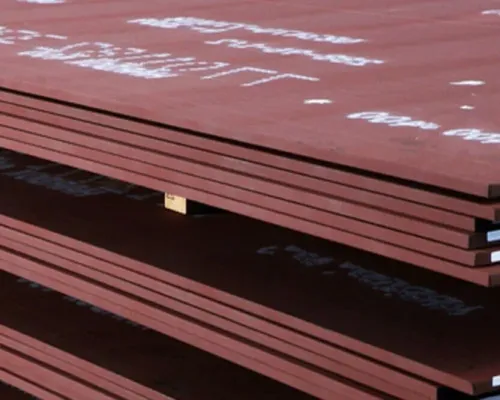
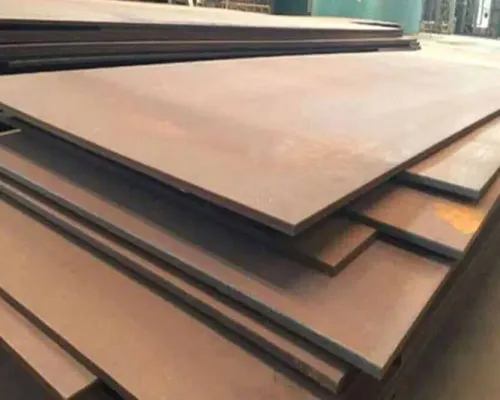
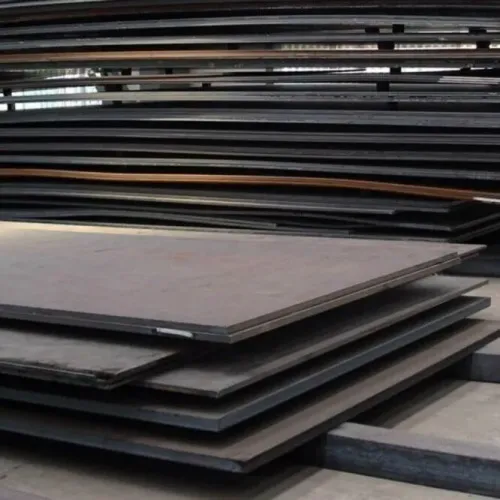
 | Resistant Plates Abrex (400 / 450 / 500 ) Item Abrasion Resistant Plate Material Abrex 400 /450 /500 /600 Thickness 6mm to 100mm Width 1,500mm to 2,500mm Length... View product → |
Verify, cut, drill and weld the delivered plate without creating a new failure
A replacement can fail before installation if receiving and workshop controls damage its edges, hardness or traceability.
1. Match the plate marking and heat number with the mill certificate. Confirm the ABREX grade and measured thickness, then inspect both faces and all edges for laminations, cracks, gouges and transport damage. Remove paint, primer or other coating where the cutting or welding procedure requires clean steel.
2. Use the mill’s fabrication guidance and the qualified welding procedure for the actual thickness and joint. Set preheat, interpass temperature, heat input and cooling limits from the carbon equivalent, restraint, hydrogen-control method and consumable strength; do not copy a mild-steel procedure. Use clean, dry low-hydrogen consumables and qualified weld sequencing.
Excessive heat input can soften the heat-affected zone, while inadequate preheat or cooling control can cause hydrogen-assisted cracking.
3. Treat thermal-cut edges as potential failure locations. Inspect critical edges for cracking and excessive hardening, then grind back or apply the specified edge treatment before welding or service.
4. Drill with tooling, speed, feed, coolant and clamping intended for wear-resistant plate. Standard high-speed-steel drills can fail rapidly and work-harden the hole. Do not heat ABREX 500 for forming or flame straightening unless the mill and qualified procedure permit it; local hardness and properties can change.
5. Before installation, verify cut dimensions, hole locations, flatness, fit and clearance around moving or flow-critical parts.
Frequently asked questions
How do you identify the wear mechanism before choosing ABREX 500?
Inspect the failed liner and service material for sliding abrasion, gouging, impact, or a combination of mechanisms. Coal and aggregate sliding across chutes differ from sharp rock cutting crusher components.
How do ABREX 400, 450 and 500 plates differ in selection?
Choose among ABREX 400, 450 and 500 by comparing abrasion severity with impact exposure, required service life, forming needs and weldability. Harder is not automatically better for every liner.
What belongs in an ABREX wear plate replacement specification?
Record the failed liner’s grade, thickness, length, width, hole pattern, countersinks, bends, attachment method, operating material and failure location before requesting a replacement.
How should you screen an ABREX 500 plates supplier in India?
Ask for the material test certificate, heat number, plate dimensions, hardness results, traceability documents, cutting capability and delivery inspection process. A Hyderabad buyer can also confirm local fabrication and logistics support.
What must you verify before cutting, drilling or welding ABREX 500 plate?
Match the heat number and certificate to the delivered plate, check thickness and surface condition, then follow the mill’s stated procedures for cutting, hole-making, preheating, consumables and welding.