A quotation for Strenx 700 or 16Mo3 is incomplete until it identifies the exact standard, product variant, delivery condition and inspection documents. You will be able to match each grade to its service, check the properties that affect design and fabrication, and test whether an Indian supplier has genuine, traceable plate rather than only a catalogue listing.
Key takeaways
- Match Strenx 700 or 16Mo3 to the design temperature and service duty.
- Compare yield strength, tensile strength, impact toughness and elongation—not grade names alone.
- Control preheating, heat input, forming radius and machining tools before fabrication.
- Request mill test certificates, heat numbers, inspection reports and traceability records.
Start with the grade, standard and service duty
Strenx 700 and 16Mo3 identify different engineering decisions, not equivalent alloy plates. Strenx 700 is a high-strength structural steel family from SSAB, selected for load-bearing capacity and weight reduction. The exact designation matters: Strenx 700MC, Strenx 700 E/F and other variants follow different product requirements, so confirm the applicable SSAB datasheet.
16Mo3 is an alloy steel for pressure purposes specified in EN 10028-2. Its principal alloying addition is molybdenum, and its service value lies in pressure equipment and elevated-temperature performance—not in matching Strenx 700’s room-temperature structural strength.
| Grade or service duty | Strenx 700 | 16Mo3 |
|---|---|---|
| Identity | High-strength structural steel family; exact SSAB designation required | Low-alloy pressure-vessel steel |
| Governing reference | Applicable SSAB Strenx product specification; verify whether it is 700MC, 700 E/F or another grade | EN 10028-2, 16Mo3 |
| Primary duty | Cranes, vehicles, frames and other structures where lower mass supports design capacity | Boilers, pressure vessels, heat exchangers and piping exposed to elevated temperature |
| Selection basis | Yield-strength class nominally associated with 700 MPa; the guaranteed minimum changes with thickness | Code allowable stress at the design temperature, plus pressure-vessel requirements |
A quotation for high strength alloy steel plates India can mislead if it groups both grades under “alloy steel.” Do not approve either plate from the name alone: require the grade designation, thickness range, delivery condition and governing design code.
For 16Mo3, compare the allowable stress at the actual design temperature; for Strenx 700, use the thickness-specific minimum properties in the product datasheet.
Read the property data instead of the grade name
A grade name is not design data. Before approval, obtain the original mill test certificate for the exact heat, plate thickness and delivery condition. A listing that calls a seller a strenx 700 plates manufacturer in india proves neither that the plate was made in India nor that it is genuine Strenx material.
| Data to check | Strenx 700 | 16Mo3 |
|---|---|---|
| Product identity | Exact SSAB designation, such as Strenx 700MC or Strenx 700 E/F, plus the applicable SSAB datasheet | EN 10028-2 grade designation, delivery condition and heat-treatment condition |
| Chemical analysis | Heat-specific C, Si, Mn, P, S and alloying limits stated for that designation | Heat-specific C, Si, Mn, P, S, Mo and other EN 10028-2 limits |
| Mechanical results | Thickness-specific minimum yield strength, tensile strength and elongation | Thickness-specific yield strength, tensile strength and elongation |
| Impact test | Test temperature, absorbed energy, specimen direction and whether testing is required for the selected Strenx grade | Test temperature, absorbed energy, specimen direction and test method required by EN 10028-2 or the design code |
Do not treat “700” as a guaranteed yield value for every thickness; use the grade-specific table. For 16Mo3, use the governing pressure-vessel code’s allowable stress at the design temperature, not its room-temperature strength.
Approve the plate only when these records match the marking and heat number:
- Confirm impact results meet the specified temperature and energy, not merely that “impact tested” appears.
- Check the certificate’s chemical and mechanical values against the purchase specification.
- Reject substitution between the grades without written approval from the designer or code-responsible party.
Choose weight reduction or elevated-temperature performance
Select Strenx 700 when structural capacity, not pressure containment, drives the design and a thinner plate can reduce dead weight. Its 700 designation identifies a nominal yield-strength class; it does not guarantee 700 MPa for every thickness, so use the applicable SSAB datasheet for minimum yield strength, tensile strength, elongation and impact requirements.
| Option | What it provides | When it fits |
|---|---|---|
| Strenx 700 | High-strength structural performance and weight-reduction potential | Cranes, booms, frames, transport structures and machinery where section size or mass controls the design |
| 16Mo3 | Pressure-purpose steel with specified elevated-temperature properties under EN 10028-2 | Boilers, pressure vessels, heat exchangers and other coded equipment exposed to sustained heat and internal pressure |
Do not replace a pressure plate with Strenx 700 because its room-temperature yield strength looks higher. The pressure-vessel code must accept the material and its design-temperature allowable stress; 16Mo3 is selected for that service, not for approaching Strenx 700’s structural strength.
A weight-saving redesign also needs checks for buckling, fatigue, local yielding, weld-detail classification, connections and forming radius. Welding controls differ as well: follow Strenx preheat, interpass, hydrogen and heat-input limits, while 16Mo3 may require pressure-code post-weld heat treatment.
The phrase high strength alloy steel plates India can obscure this end-use distinction. A 16Mo3 alloy steel plates supplier in India must provide the stated EN 10028-2 grade, delivery condition, heat number and temperature-based design data before approval.
Control welding, forming and machining before fabrication
Do not release either plate for bending, cutting, drilling or welding until the supplier provides a grade-specific fabrication sheet and the design office approves it. A listing called “Strenx 700 plates manufacturer in India” or “16Mo3 alloy steel plates manufacturer in India” is not fabrication guidance.
1. Record the exact grade designation, product standard, thickness, delivery condition, heat number and mill certificate. For Strenx, confirm whether the plate is Strenx 700MC, Strenx 700 E/F or another SSAB grade. For 16Mo3, require EN 10028-2 and the stated heat-treatment condition.
2. Obtain the approved forming limits: minimum inside bend radius, bend-line orientation, permitted forming temperature, springback allowance and any edge-conditioning requirement. Using a Strenx radius on 16Mo3, or reversing that assumption, can crack the bend or distort the part.
3. Obtain cutting instructions covering oxy-fuel, plasma or laser use, preheating, cut-edge hardness and the required removal or inspection of the heat-affected zone. Ask for drilling and machining recommendations, including tool material, cutting speed, feed and coolant, because excessive heat can damage the hole or edge.
4. For welding, obtain the qualified WPS and supporting PQR. It must state preheat, interpass-temperature limit, consumable classification, hydrogen-control method, heat input and cooling controls for the exact Strenx grade.
5. For 16Mo3, confirm pressure-code requirements, design-temperature allowable stress and whether post-weld heat treatment, impact testing or hardness checks apply. A statement that the plate is “weldable” is not a qualified procedure.
Verify an Indian supplier through documents and traceability
A listing calling itself a Strenx 700 plates manufacturer in India does not prove that the plate was melted or rolled in India, or that it is genuine Strenx material.
Verify the supply route before comparing prices: ask whether the seller manufactured the plate, holds stock from an identified mill, or is sourcing it after receiving your order.
Request these documents and physical checks:
- The exact SSAB grade designation, such as Strenx 700MC, Strenx 700 E or Strenx 700 F; the heat number; original mill test certificate; certificate of conformity; and a traceability record linking the plate marking to the certificate.
- For an 16Mo3 alloy steel plates supplier in India, EN 10028-2 grade identification, delivery condition, heat-treatment condition, thickness and dimensions, surface condition, tolerances, impact-test requirement and ultrasonic-testing class.
- An EN 10204 3.1 certificate, or 3.2 certificate when the project requires purchaser-authorised or third-party inspection. A generic chemical-analysis sheet does not replace an EN 10028-2 product certificate.
- Photographs or inspection records showing heat numbers and grade markings before cutting, plus packing and dispatch records for the supplied plates.
Shyam Metals & Alloys can be assessed by the same evidence: request the mill-origin documents and confirm that markings remain traceable after any cutting or resale. Reject a quotation that gives only a grade name, thickness and price; two plates with the same name can carry different standards, delivery conditions and inspection status.
Related products
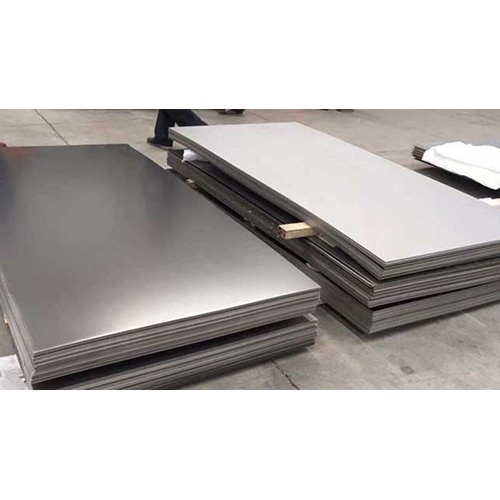 | Alloy Steel Plate Grades View product → |
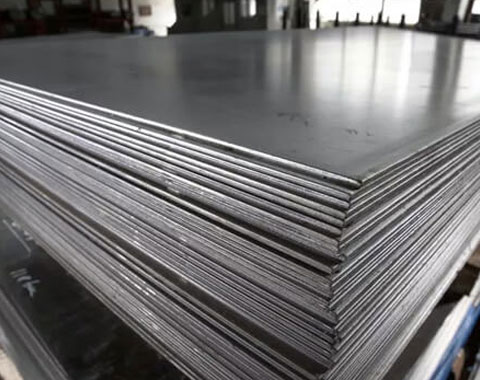 | Sheet and Plates Range : 3 mm to 100 mm thick in upto 2500 mm width upto 12500 mm length available with NACE MR 01-75s Carbon Steel : ASTM / ASME A 516 / 517 GR. View product → |
Frequently asked questions
Are Strenx 700 and 16Mo3 equivalent alloy steel plates?
No. Strenx 700 targets high-strength structural applications and weight reduction, while 16Mo3 is intended for elevated-temperature pressure equipment service.
How should you choose between Strenx 700 and 16Mo3?
Choose Strenx 700 when load-bearing strength and lower structural weight drive the design. Choose 16Mo3 when the plate operates in elevated-temperature pressure service and the applicable pressure-equipment standard requires it.
What should you control when welding or forming these plates?
Confirm the exact grade variant, thickness, welding procedure, preheat, interpass temperature, heat input, forming radius and machining method before fabrication.
Which documents should an Indian supplier provide?
Ask for the mill test certificate, heat number, applicable standard, chemical and mechanical test results, inspection records, dimensions, and traceability from plate to documents.