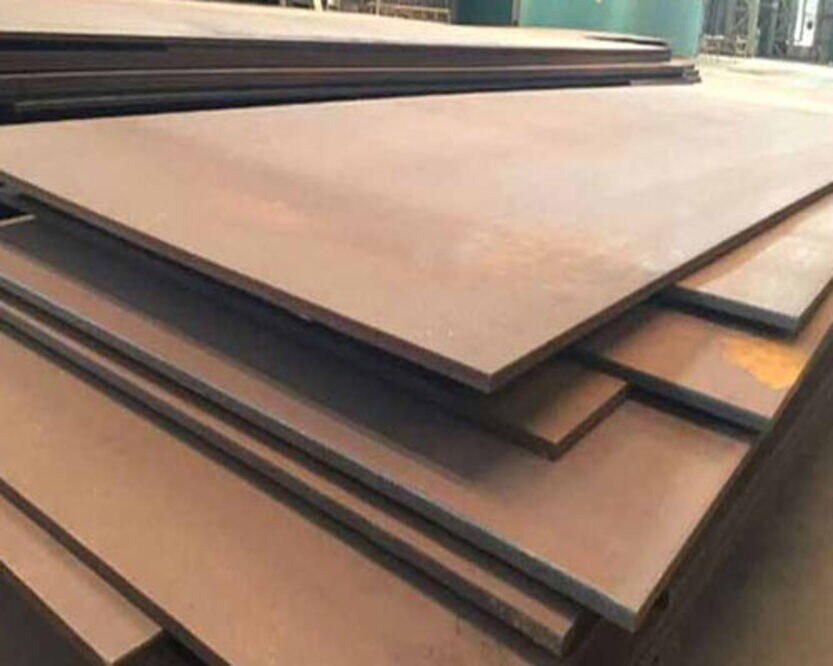
Choosing Rockhard 500 by hardness number alone can leave you with a plate that resists sliding wear but cracks during fabrication or fails under impact. By the end, you will be able to select among Rockhard 400, 450 and 500, compare branded alternatives, specify fabrication controls and check whether an Indian supplier has delivered traceable material.
Key takeaways
- Choose Rockhard by wear mechanism, impact, support and machine-part geometry.
- Request hardness, heat number, chemistry, dimensions and fabrication guidance with every plate.
- Compare Rockhard against Hardox, JFE Everhard, Abrex and Quard by evidence, not brand name.
- Pay for Rockhard 500 when longer service offsets added forming and welding constraints.
Which Rockhard grade fits the wear mechanism and machine part?
Choose the grade from the wear mechanism and machine part, not from the number alone. Sliding mineral abrasion favours higher hardness; repeated impact, gouging and poor support demand toughness as well. A Rockhard 500 plate can resist wear longer yet crack during forming or welding if the part design and procedure are unsuitable.
| Grade | Practical balance | Typical machine-part choice |
|---|---|---|
| Rockhard 400 | Better formability, weldability and impact tolerance with useful abrasion resistance | Dump bodies, hoppers, chutes and conveyor parts facing moderate sliding wear |
| Rockhard 450 | Middle ground between wear life, toughness and fabrication effort | Crusher liners, excavator buckets, transfer chutes and heavily loaded conveyor wear plates |
| Rockhard 500 | Maximum abrasion resistance among the three, with greater forming and fabrication risk | Severe sliding abrasion in chutes, hopper liners, crusher zones and bucket wear components where impact is controlled |
Use Rockhard 400 when impact damage or repair welding matters more than maximum wear life. Choose Rockhard 450 for mixed abrasion and impact. Specify Rockhard 500 only when abrasive replacement is the dominant cost and the component can be designed, cut, drilled and welded accordingly.
Ask any rockhard 400 plates supplier in india or rockhard 450 plates seller for the governing datasheet, thickness-dependent hardness range, test method, impact requirement and minimum bend radius. A rockhard 500 plates supplier in india that quotes only “500 grade” has not established chemical composition, toughness, weldability or equivalence to EN, ASTM or BIS steel.
How Rockhard compares with Hardox, JFE Everhard, Abrex and Quard
A nominal 400, 450 or 500 does not prove that Rockhard matches Hardox, JFE Everhard, Abrex or Quard. Treat Rockhard designations as commercial grades until the seller identifies the governing standard and current datasheet. Hardness can change through the thickness and between test locations.
| Option | What to compare | Decision point |
|---|---|---|
| Rockhard 400/450/500 | Full thickness-specific hardness range, test method, chemistry, impact requirement, forming limits and certificate level | Do not approve equivalence from the grade number alone |
| Hardox 400/450/500 | Manufacturer datasheet, guaranteed hardness range, tolerances, weldability and minimum bend radius | Match the actual grade and thickness, not just “500” |
| JFE Everhard | Designation, mill data, hardness distribution, impact performance and fabrication guidance | Confirm the quoted Rockhard plate meets the same duty |
| Abrex or Quard | Grade-specific chemistry, hardness, delivery condition and traceability | Compare test certificates heat by heat |
| IS 2062 | Grade, yield strength, tensile strength and impact class | Use it as structural steel unless abrasion performance is separately demonstrated |
An RFQ sent to a rockhard 400 plates supplier in india should state:
- Thickness, width, cut-size tolerance, quantity by heat and delivery location
- Hardness range, test method, surface condition and impact-test requirement
- Governing standard or proprietary datasheet revision
- Heat number, plate number, original mill and required inspection certificate
For rockhard 450 plates, ask for the minimum inside bend radius, bending direction and edge condition before fabrication approval. A harder plate can resist abrasion longer but increase drilling, forming and weld-cracking risk. A stockist’s availability does not establish consistent manufacture.
What fabrication data must accompany Rockhard 400, 450 and 500 plate?
Approve no plate from the grade number alone. Fabrication depends on the certified hardness range, thickness, plate direction and the manufacturer’s process limits.
- Rockhard 400: obtain the datasheet limits for cutting, drilling, cold bending, rolling and welding; do not assume structural-steel behaviour.
- Rockhard 450: confirm whether the higher hardness changes the permitted bend radius, hole-making method or preheating requirement.
- Rockhard 500: expect greater forming and welding difficulty until the actual datasheet proves otherwise; higher hardness does not automatically mean longer service life.
- Thickness: request hardness readings through the relevant thickness range, not one nominal value. Thick plate can show different results at different test locations.
- Bending and rolling: obtain the minimum inside radius for that grade and thickness, plus longitudinal or transverse bending direction and edge-condition limits. A missing radius can turn a good plate into a cracked component.
- Cutting and drilling: state the method, cut-to-size tolerance, hole diameter and tooling. Plasma or thermal cutting, for example, can create a hardened heat-affected edge that affects drilling and machining.
- Welding: provide carbon equivalent or chemistry, preheat and interpass-temperature limits, consumable class, heat-input range and post-weld handling instructions.
A buyer searching for a rockhard 500 plates supplier in india should also request the governing standard or proprietary datasheet revision, mill certificate, impact-test requirement and heat number. Hardness does not establish yield strength, tensile strength, elongation or design-code suitability; check those separately before using wear plate as a structural member.
How to verify an Indian Rockhard supplier, stockist or manufacturer
Do not accept a Rockhard 500 plate delivery on the seller’s label alone. Match the purchase order, markings and certificates before unloading it into production. A Rockhard 500 plates stockist in India may be holding imported or locally produced material, so stock availability does not prove one consistent mill specification.
Require these documents and checks:
- Purchase order and proforma invoice naming grade, thickness, dimensions, quantity by heat, cut-size tolerance, delivery location and applicable datasheet revision.
- Packing list showing each plate number, heat number, actual dimensions and bundle contents.
- Material test certificate linked to the heat and plate markings. EN 10204 Type 3.1 is a common format, but review the actual chemistry, hardness results, test method, mechanical results and impact tests rather than accepting the certificate title.
- Original mill name, country of melt or manufacture where required, and a clear statement identifying who melted, rolled, heat-treated, tested and marked the plate.
- Dimensional, surface-condition and hardness inspection records, including test locations and the complete thickness-dependent hardness range.
- Fabrication data stating minimum inside bend radius, bending direction and edge-condition requirements.
| Document | Check before acceptance | Failure consequence |
|---|---|---|
| Mill certificate | Heat and plate numbers match markings | Traceability is lost |
| Hardness report | Results use the specified method and locations | Nominal “500” proves nothing |
| Datasheet | Revision, bend radius and impact requirement are stated | Fabrication approval remains incomplete |
A phrase such as “Rockhard plates manufacturer in India” does not prove the seller made the steel. Ask Shyam Metals & Alloys, or any Rockhard 500 plates supplier in India, to state contractual responsibility for nonconforming material in the quotation.
Related products
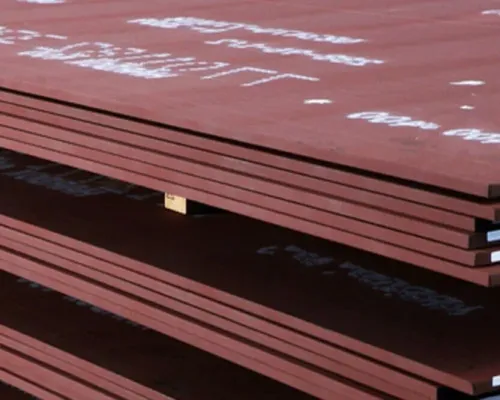
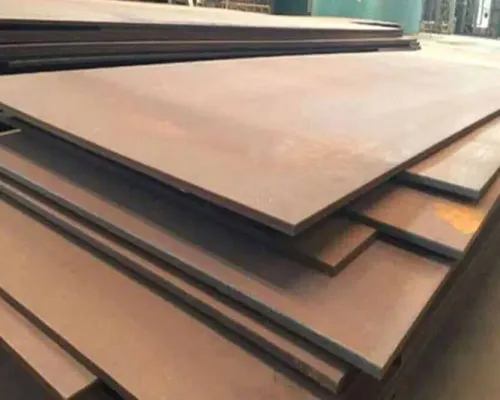
 | Resistant Plates Rockhard(400 / 450 / 500 ) Thickness : 6mm to 100mm Width : 1,500mm to 2,500mm Length : 6,000mm to 12,000mm Production : Hot-Rolled (HR) /... View product → |
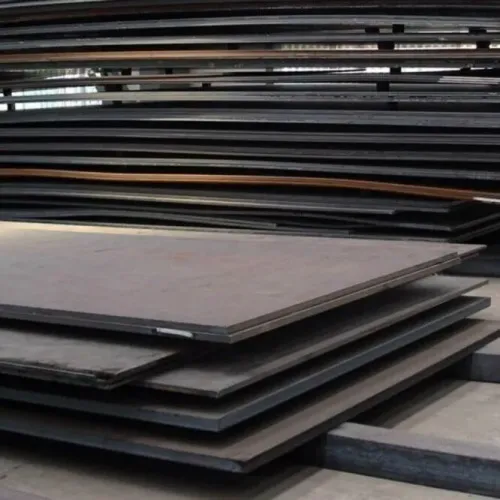
 | Abrasion resistant steel plate Plate is a type of high-strength, wear-resistant steel plate designed for demanding applications that require excellent durability and impact... View product → |
When does Rockhard 500 justify its fabrication and purchase premium?
Rockhard 500 justifies its premium when the reduction in wear-related shutdowns exceeds its extra plate, fabrication and inspection cost. Estimate the replacement interval from measured thickness loss: (current thickness − minimum allowable thickness) ÷ annual loss rate. Use readings from the same wear zones, not an average across unworn edges.
| Option | Cost and service effect | Select it when |
|---|---|---|
| Ordinary structural steel | Lowest purchase and fabrication cost; fastest wear | Abrasion is light and replacement is simple |
| Rockhard 400 | Balanced wear resistance and fabrication effort | Impact, forming or welding risk matters |
| Rockhard 450 plates | Longer wear interval with higher fabrication controls | Abrasion is sustained and downtime is costly |
| Rockhard 500 | Highest wear potential, purchase and fabrication premium | Severe abrasion dominates and the part can be fabricated without cracking |
- Record plate cost, cutting, drilling, bending, welding, machining, transport and installation for each grade.
- Multiply each replacement event by labour, lost production and disposal cost. Include the cost of an unexpected failure.
- Divide total annual cost by predicted service years, then test the result against a conservative wear-rate estimate.
- Ask a rockhard 500 plates supplier in india for thickness-specific hardness results and mill data before using the estimate. A nominal 500 designation does not prove consistent hardness through the plate.
- Reject the upgrade if its minimum bend radius, welding controls or cracking risk adds more cost than the avoided replacement. Choose Rockhard 400 or ordinary steel when abrasion is not the limiting failure mode.
Frequently asked questions
Which Rockhard grade fits a machine part’s wear mechanism?
Match the grade to the dominant damage: sliding mineral abrasion favours higher hardness, while impact, gouging and poor support require toughness and suitable part design.
How does Rockhard compare with Hardox, JFE Everhard, Abrex and Quard?
Compare certified hardness, chemistry, impact data, plate dimensions, fabrication guidance and traceability rather than treating brand names as interchangeable grades.
What fabrication data should accompany Rockhard 400, 450 and 500 plate?
Ask for the material test certificate, heat number, chemistry, hardness range, thickness and dimensions, plus the supplier’s forming, cutting, preheating and welding guidance.
When does Rockhard 500 justify its purchase premium?
It earns the premium when its added wear life reduces replacement downtime and total operating cost without exceeding the part’s forming, welding or impact limits.