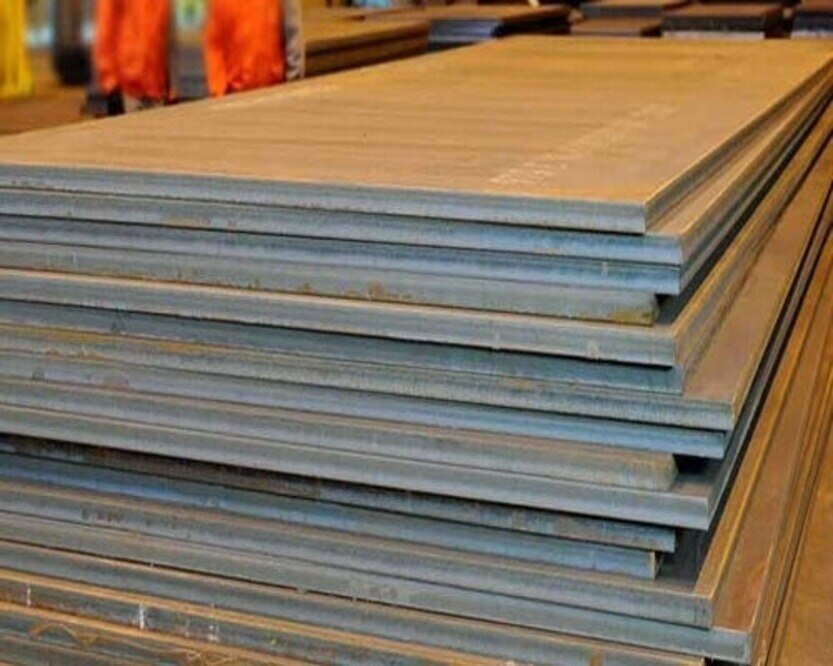
Choosing Rockhard 400 for a bucket liner, hopper, chute or crusher face requires more than matching a hardness number to a thickness. You will be able to verify what the 400 designation means, select the plate for the actual wear mechanism, assess fabrication risks and compare an Indian stockist’s offer without confusing a market name with a complete material specification.
Key takeaways
- Treat 400 as a nominal Brinell hardness class, not 400 MPa tensile strength.
- Match plate thickness and hardness to impact, sliding or gouging wear.
- Control heat input, cutting methods and forming limits before fabrication.
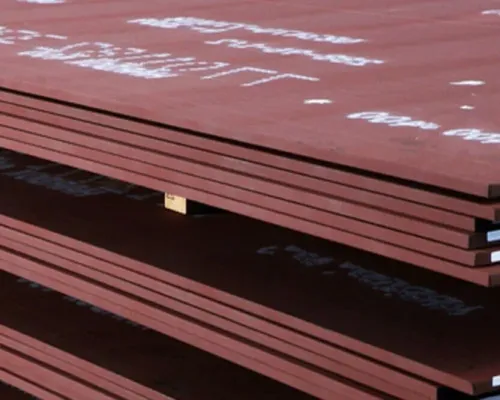
- Demand the mill certificate, heat number, origin and plate markings.
What Rockhard 400 hardness actually guarantees
“400” identifies a nominal Brinell hardness class, not 400 MPa tensile strength. Rockhard 400 is therefore a hardness designation, not automatically a strength grade. The producer’s permitted range controls; do not assume a universal 370–430 HBW band.
1. Ask the Rockhard 400 plates supplier in India for the producer’s datasheet and certificate. Confirm that the result is reported as HBW under ISO 6506-1 or under a named ASTM method, with ball diameter, test force where applicable, test location and the thickness band covered.
2. Check whether the result applies to the surface, quarter-thickness, mid-thickness or a defined test grid. One surface indentation does not prove uniform hardness through the plate, particularly after heat treatment or across thick sections.
3. Treat Rockhard 400 as a commercial designation unless the seller identifies the governing EN, ASTM or IS product specification, chemical limits, delivery condition, heat-treatment condition and delivery thickness. Two plates carrying “400” are not equivalent without those details.
Hardness alone cannot predict abrasion life. Particle size, impact toughness, microstructure, backing support and loading pattern can change service life more than a small hardness difference. A certificate that shows only “400 HBW” is incomplete for a heavy-machinery wear face; compare the full test basis, permitted range and thickness-specific data before comparing prices.
Match grade and thickness to the wear mechanism
Rockhard 400 suits bucket liners, hopper and chute liners, crusher wear parts, conveyor transfer points, dump-body liners and excavator attachments where sliding abrasion combines with moderate impact. It gives a useful balance between wear resistance, impact tolerance and fabrication effort.
Choose thickness from the actual duty, not hardness alone:
- Identify the abrasive type, particle size and sliding speed.
- Record drop height, impact energy and loading frequency.
- Check unsupported span, backing stiffness and target service life.
- Increase thickness for large particles, high impact, long unsupported spans and heavy loading.
- Confirm the producer’s thickness-specific hardness and toughness data before ordering.
A buyer searching for Rockhard 400 plates for stockist in India should compare those inputs against measured wear, not select the lowest quotation.
| Grade | Advantage | Limitation |
|---|---|---|
| Rockhard 400 | Balanced sliding-abrasion and moderate-impact performance | Usually requires more frequent replacement than harder grades in pure sliding wear |
| Rockhard 450 | Longer life in predominantly sliding abrasion | More demanding cutting, bending and welding; less forgiving under repeated impact |
| Rockhard 500 | Maximum wear resistance for suitable sliding duties | Highest fabrication difficulty and greater risk of impact-related cracking or premature failure |
Use a qualified impact-resistant design for severe impact, a temperature-rated material for sustained high heat, and a corrosion-resistant alloy for corrosive slurry. Fatigue-critical members need fatigue-designed structural grade; where the drawing requires structural-steel compliance, specify certified structural steel instead of wear plate.
Control cutting, welding and forming damage
1. Obtain the mill’s cutting procedure before touching the plate. Oxy-fuel, plasma and laser produce different heat-affected zones, edge-hardness changes and distortion risks. Follow the specified speed, gas, power, preheat and cutting allowance; inspect every cut edge for cracks, excessive hardness and warpage. Set preheat from carbon equivalent, thickness, restraint and process—not from “400” alone.
2. Weld only to a qualified welding procedure specification and WPQR. Use low-hydrogen consumables, dry storage and documented hydrogen control; calculate preheat, control interpass temperature and heat input, then cool gradually. Excessive heat can soften the wear zone, while poor hydrogen control can cause delayed cracking.
Post-weld heat treatment is neither automatically prohibited nor required: the mill specification, thickness, restraint, governing code and qualified procedure decide it. Never copy a procedure for another branded wear plate.
3. Cold-form only within the producer’s minimum inside bend radius for the plate thickness and rolling direction. Prepare and inspect cut edges, confirm press capacity, support the plate correctly and examine the bend for cracks. A Rockhard plates stockist in India should provide these forming limits rather than promise bending from hardness class alone.
4. Drill and machine Rockhard 400 as wear plate, not mild steel. Use carbide or cobalt tooling, rigid clamping, the reduced cutting speed specified by the tool or mill, and frequent tool inspection; blunt tools raise heat and damage the edge.
Record the actual parameters so replacement work does not repeat a cracking or distortion failure.
Verify an Indian stockist’s plate, origin and traceability
A quotation that repeats “Rockhard 400” proves nothing about the plate’s identity or suitability. Ask the rockhard plates stockist in india for:
- Original mill, country of origin, producer grade designation, governing standard, and Q+T or normalized condition.
- Full-plate dimensions, thickness tolerance, and confirmation that the material is a full plate, cut plate, or remnant.
- Markings that remain linked to the heat number after cutting.
Require an EN 10204 3.1 certificate showing chemical analysis, hardness results, dimensions, heat-treatment condition, and governing specification. Require EN 10204 3.2 when an independent inspector or purchaser-appointed body must verify the material.
Check the certificate against the physical plate before cutting.
| Document | What it must establish | What to reject |
|---|---|---|
| 3.1 certificate | Manufacturer’s results for chemistry, hardness, dimensions and condition | Certificate with no heat number or producer identity |
| 3.2 certificate | Manufacturer’s data plus independent or purchaser-appointed inspection | “Third-party checked” with no named inspector or inspection body |
| Hardness report | ISO 6506-1 or named ASTM method, test location and result | HBW value with no location or method |
Ask for EN 10029 tolerances, or another explicitly named hot-rolled-plate standard, covering thickness, flatness, edge condition, surface repairs and cut-edge allowance. A buyer seeking a Rockhard 400 plates supplier in India can use Shyam Metals & Alloys to compare certificates, stock, cutting needs and delivery rather than rate alone.
A seller calling itself a rockhard plates manufacturer in india must support that claim with original mill documents, not a trading description.
Write a purchase specification that prevents costly substitutions
Put Rockhard 400 on the purchase order as a complete technical product, not as a hardness label. Require the supplier to state:
- Producer’s full grade designation, governing EN, ASTM or IS product standard, delivery condition such as quenched and tempered, country of origin, nominal thickness and tolerance, width, length, flatness and surface condition.
- Permitted hardness range, HBW method under ISO 6506-1 or the named ASTM method, ball diameter and force, test location, thickness band and heat number.
- EN 10204 3.1 certification with chemical analysis, hardness, dimensions and heat-treatment condition; specify 3.2 certification when independent inspection is required.
- Impact testing when repeated or high-energy impact occurs. Accept only when every reported hardness reading meets the stated range and location rule; do not accept one average value that hides an outlier.
- Whether the supplier provides nesting, cut-to-size parts, marked orientation, edge grinding, hole preparation and dimensional inspection reports.
| Purchase item | State on the order | Reject or clarify |
|---|---|---|
| Fabrication | Cutting allowance, edge condition, hole tolerance and cut-edge inspection | Unmarked parts or cracked edges |
| Design | Supported backing, no unsupported spans, bolt holes and weld ends away from peak stress | Plate used as an unsupported structural bridge |
| Service record | Abrasive, particle size, speed, impact height, loading cycle and inspection interval | Replacement judged without measured wear |
Before dispatch, match markings to the certificate and heat number; inspect dimensions, flatness, warpage, repaired or ground areas and cut-edge cracking. This makes imported, Indian-made and stockist alternatives technically comparable.
Frequently asked questions
What does Rockhard 400 hardness actually guarantee?
Rockhard 400 identifies a nominal Brinell hardness class. It does not mean 400 MPa tensile strength, and you must confirm the producer’s permitted hardness range on the certificate.
How should you match Rockhard 400 plate to the wear mechanism?
Select thickness and grade according to whether the component faces sliding abrasion, impact, gouging or a combination of these loads. Do not choose on hardness alone.
How can you reduce cutting, welding and forming damage?
Follow the producer’s cutting, preheating, interpass-temperature and forming limits. Use controlled heat input and inspect edges for cracking or excessive heat-affected damage.
What should you verify with an Indian Rockhard plates stockist?
Request the mill test certificate, heat number, plate markings, country-of-origin details and a traceable link between the supplied plates and their documents.