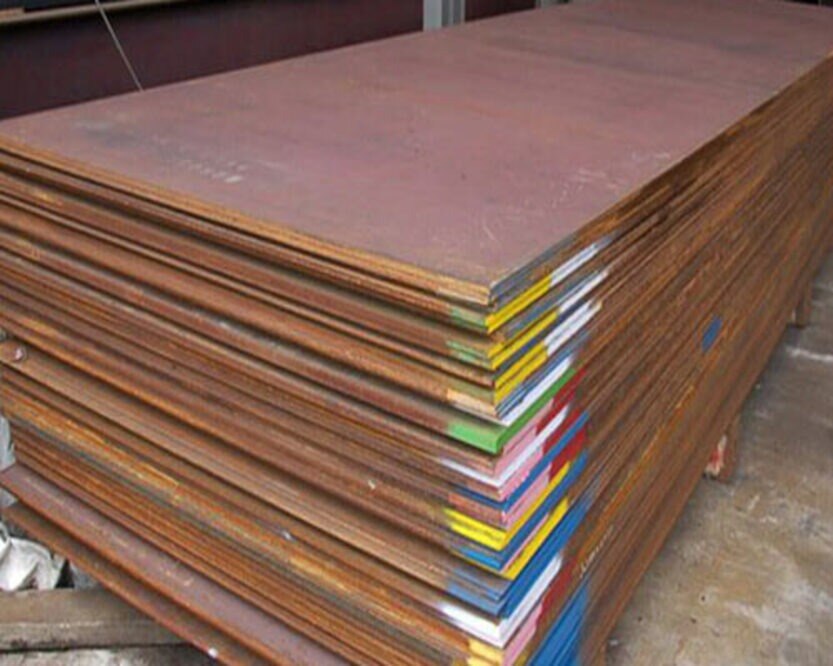
The name JFE EH 400 does not by itself tell you the mill, certificate, hardness range or service life you will receive. By checking the exact grade documents, wear mechanism, fabrication limits and supplier traceability, you can decide whether JFE EH-C400 or another 400, 450 or 500 HBW plate is the sounder purchase.
Key takeaways
- Match the quotation to the original mill certificate and exact EH-C400 designation.
- Compare hardness, impact testing, thickness range and delivery—not grade names alone.
- Choose 400, 450 or 500 by wear severity, fabrication limits and replacement cost.
- Check cutting, welding, forming procedures and traceability before approving the supplier.
What does JFE EH 400 mean on a supplier quotation?
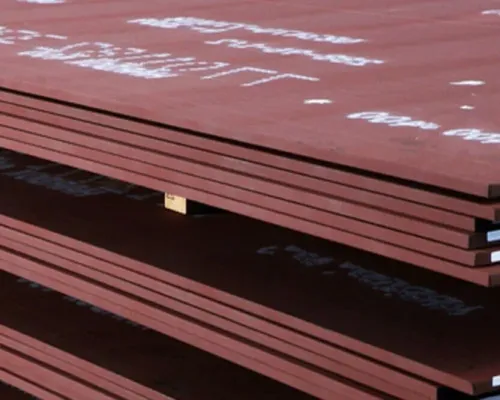
“JFE EH 400” is usually shorthand for JFE Steel’s EH-C400 abrasion-resistant plate, but the quotation alone does not prove that identity. Confirm the exact designation against the original mill certificate; a local listing can use “JFE EH 400” loosely or omit the grade actually supplied.
The 400 indicates an approximate nominal Brinell hardness class of 400 HBW, not a tensile-strength value. Do not treat EH-C400 as interchangeable with IS 2062 structural steel: IS 2062 is a weldable structural-steel standard, while EH-C400 is selected for abrasion resistance, hardness, chemistry, toughness and fabrication limits.
Ask the supplier to state these items in writing:
- Exact JFE designation and applicable product standard
- Supplied thickness range and hardness acceptance range
- Delivery condition and inspection standard
- Heat number and original JFE mill test certificate
- Chemistry, hardness results and any impact or ultrasonic-test results
A jfe eh 400 plates supplier in india or jfe eh 400 plates stockist in india may hold imported JFE plate locally or arrange an import against your order. An Indian processor may only cut, level, blast, prime or fabricate that imported plate; processing does not make it the steel mill.
For every cut piece, require the heat number to be transferred visibly and recorded on the packing or traceability report. Keep the original certificate, cutting record and reissued document as one certificate chain; a local certificate that omits the original heat number is weaker evidence.
How do JFE EH-C400, Rockstar 400, Abrex 400 and other options compare?
A 400 HBW reading does not make six wear plates interchangeable. Approve a substitution only after comparing the product datasheet with the heat-specific MTC.
| Option | What to verify | Practical position |
|---|---|---|
| JFE EH-C400 | ISO 6506-1 hardness method, sampling location, chemistry, impact requirement and delivery condition | Imported availability, strong documentation; often higher landed cost |
| Rockstar 400 | Hardness range, chemistry, flatness, UT class and welding limits | Local stock can reduce lead time and freight |
| Abrex 400 | Grade designation, heat-to-heat hardness consistency, impact data and certificate chain | Compare the exact datasheet; the search phrase “abre x 400 plates supplier in india” does not define a universal grade |
| Rockhard 400 | Test standard, thickness range, flatness and UT results | Price and availability depend on stockist and origin |
| Quard 400 | Manufacturer’s hardness acceptance range, chemistry and forming guidance | Imported premium can buy tighter processing consistency |
| Hardox 400 | Mill certificate, impact data, weld-preheat limits and plate tolerances | Predictable processing performance, usually at a premium |
Ask where Brinell impressions were taken: plate surface, quarter-thickness or another specified location. A bare “400 BHN” result is inadequate.
Similar hardness can produce different life in sliding or gouging abrasion, impact loading, corrosive slurry and elevated temperature because chemistry, microstructure, toughness and softening resistance differ. Flatness and ultrasonic testing also affect fabrication and defect risk.
Treat “rockstar 400 plates supplier in india” as a commercial search, not a grade definition. Confirm chemistry, toughness, welding guidance and UT level before approval; local stock may cut delay and freight, while imported material may provide tighter documentation.
When should you choose 400, 450, 500 or a softer structural plate?
Choose 400, 450 or 500 HBW only after identifying the wear material, sliding speed, impact energy, applied load, support spacing, liner size and allowable wear allowance. The highest hardness number is not automatically best: a hard plate can crack, distort supports or become difficult to repair.
| Option | Best fit | Main trade-off |
|---|---|---|
| 400 HBW | Mixed sliding wear, impact, moderate load and repairable liners | Better balance of toughness, welding and field repair |
| 450 HBW | More abrasive sliding wear with controlled impact and adequate support | Less forgiving forming and fabrication |
| 500 HBW | Severe sliding or fine-particle abrasion with low impact | Greater machining, forming and welding demands |
| Softer structural plate | Low abrasion, high impact, extensive bending, drilled or machined parts | Shorter liner life but better toughness and weldability |
Start thickness with a structural check based on support spacing and load, then add the permitted wear allowance. Increase it for impact, deflection, corrosion or slurry loss; a thin, hard liner can fail sooner than a thicker 400 HBW plate if it flexes between supports.
Choose softer structural steel when impact dominates, the component needs extensive bending or drilling, or weldability and toughness outweigh liner life. Confirm the grade’s forming and welding procedure before ordering.
Laboratory hardness alone cannot predict field life. Sliding abrasion, gouging, impact, corrosive slurry and elevated temperature can rank the same plates differently, so validate the selection against actual service conditions.
What cutting, welding and forming limits must be checked before fabrication?
Treat a selected wear plate as a controlled fabrication material, not as mild steel. Cutting, welding and forming limits depend on its thickness, hardness, chemistry and manufacturer’s procedure.
| Method | Edge condition | Main limit |
|---|---|---|
| Plasma cutting | Narrow heat-affected edge | Control speed and cooling; inspect hardened edges |
| Oxy-fuel cutting | Wider thermally altered zone in thick plate | Higher cracking and distortion risk |
| Abrasive sawing | No thermal edge | Adds time and wheel wear; cut size is constrained |
Control preheat, cut speed and cooling when thickness or joint restraint raises cracking risk. Machine or grind the cut edge before critical welding or forming if the procedure requires removal of the heat-affected zone.
For welding, set preheat and interpass temperature from the actual thickness, restraint, heat input, consumable hydrogen level and calculated carbon equivalent. The number “400” does not establish a safe temperature range. Copying a mild-steel procedure can create cold cracks.
Before press-brake forming, complete these checks:
- Obtain the manufacturer’s minimum inside-radius table for the exact grade and thickness.
- Confirm whether the bend runs with or across the rolling direction.
- Inspect both surfaces for laminations, gouges, edge cracks and other defects.
- Verify that the grade is approved for a formed component, not only a flat liner.
Do not bend from nominal hardness alone. A plate can meet its hardness class yet fail during forming if the radius, direction, surface condition or forming approval is wrong.
How do you qualify an Indian supplier before placing the order?
Approve the supplier only after the quotation states who made the steel, who processed it and who is reselling it. A claim such as “jfe eh 400 plates manufacturer in india” is incomplete unless the company identifies itself as the steel mill or as an Indian processor of imported plate.
- Original mill manufacture: name the producing mill and exact JFE designation.
- Indian service-centre processing: state that imported plate was cut, levelled, blasted, primed or fabricated locally.
- Trader supply: identify the upstream mill and preserve its certificate chain.
2. Ask whether the plate is physically in stock or will be imported against your order. Confirm available thicknesses, full-plate dimensions, remnants, thickness tolerance, flatness, cut-size tolerance, surface condition, plate identification, heat number and delivery date.
3. Require the original mill certificate, or an unbroken certificate chain, showing the heat number, chemistry, delivery condition, inspection results and hardness readings tested to ISO 6506-1 or an equivalent standard. Reject a reissued certificate that removes the original heat number or gives “400 BHN” without the test method and sampling location.
4. At receipt, match every plate or cut piece to the certificate and verify identification, dimensions, surface condition and quantity. Shyam Metals & Alloys is relevant when you need clarification on mill origin, traceability, cut-to-size supply and fabrication compatibility; approve the documents, not the label.
Related products
 | Resistant Plates JFE Everhard(400 / 450 / 500 ) JFE Everhard(400 / 450 / 500 ) Item Abrasion Resistant Plate Material JFE EVERHARD Thickness 6mm to 50mm Width 500mm to 3000mm Length 1,0000mm to... View product → |
 | Resistant Plates Hardox (400 / 450 / 500 ) Item Hardox Plate Material HARDOX 500/ 400/450/600 ,SUMIHARD ,NICRODUR,BRINAR ,DUROSTAT ,DILLIDUR ,JFE EVERHARD Thickness... View product → |
Frequently asked questions
What does JFE EH 400 mean on a supplier quotation?
It usually refers to JFE Steel’s EH-C400 abrasion-resistant plate, but confirm the exact designation, heat number and grade on the original mill certificate before ordering.
How do JFE EH-C400, Rockstar 400 and Abrex 400 compare?
Compare the certificate-backed hardness range, impact requirements, chemical composition, thickness availability, tolerances and fabrication guidance rather than relying on the 400 label.
When should you choose 400, 450, 500 or a softer structural plate?
Choose by abrasion severity, impact loading, required toughness, weldability, forming needs and replacement cost; higher hardness is not automatically the best choice.
What fabrication limits must be checked before cutting, welding or forming wear plate?
Check the mill’s preheat and interpass temperatures, consumable requirements, heat-input limits, minimum bend radius, cutting method and post-cut edge treatment.
How do you qualify an Indian wear-plate supplier before placing an order?
Request the original mill certificate, heat and plate traceability, inspection records, dimensions, test reports, stock photographs and a clear replacement policy for nonconforming material.
Related products
 | Resistant Plates Quard (400 / 450 / 500 ) Item: Abrasion Resistant Plate Thickness : 10 - 20 mm Length : Up to 12000 mm Width : 1500 - 2500 mm Production : Hot-Rolled... View product → |
 | Resistant Plates Rockhard(400 / 450 / 500 ) Thickness : 6mm to 100mm Width : 1,500mm to 2,500mm Length : 6,000mm to 12,000mm Production : Hot-Rolled (HR) /... View product → |
 | Resistant Plates Abrex (400 / 450 / 500 ) Item Abrasion Resistant Plate Material Abrex 400 /450 /500 /600 Thickness 6mm to 100mm Width 1,500mm to 2,500mm Length... View product → |
 | Hardox plate ₹170 Hardox plate is a high-strength, wear-resistant steel plate widely used in heavy-duty industrial applications. View product → |