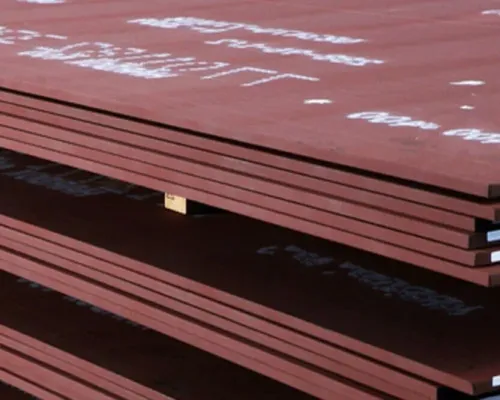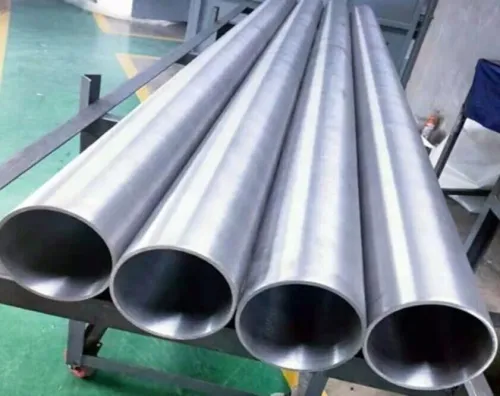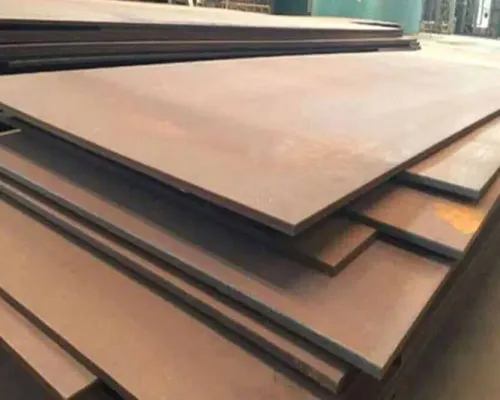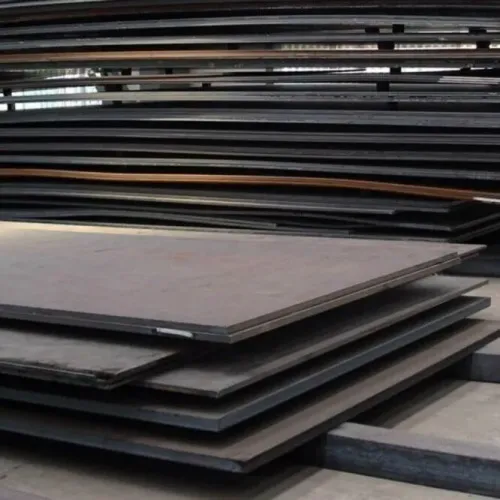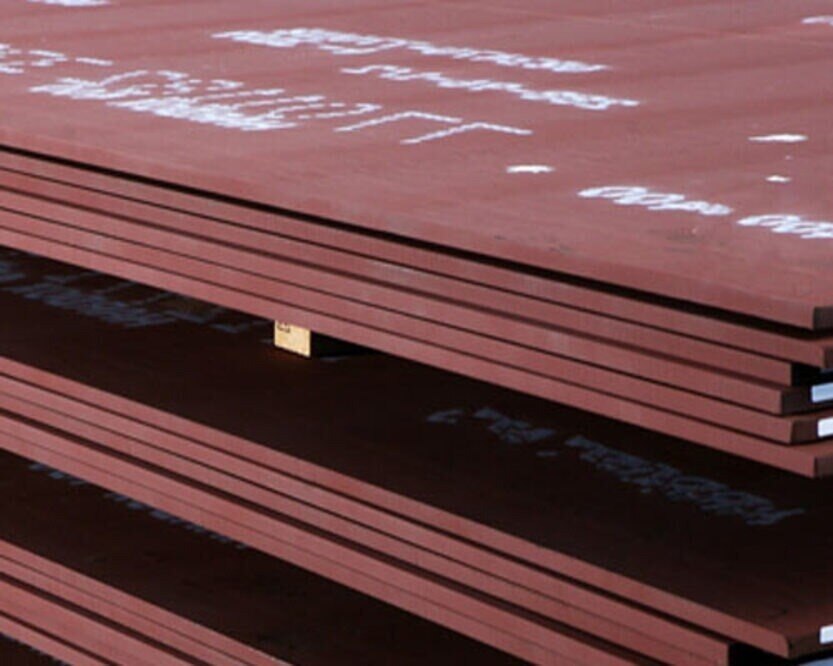
A Rockhard label alone does not tell you whether a plate will survive sliding abrasion, impact, gouging or erosion, nor does it prove who rolled and tested the steel. By the end, you will be able to compare grades, specify the documents and tests that matter, and separate a traceable manufacturer from a supplier or stockist using an unsupported trade name.
Key takeaways
- Match plate hardness to sliding abrasion, impact or gouging.
- Compare certified HBW, toughness, chemistry and fabrication limits.
- Request the governing specification and complete material test certificate.
- Verify heat traceability, mill source and fabrication support before buying.
Start with the wear mechanism, not the Rockhard number
Sliding abrasion, impact, or gouging determines the plate you need—not the Rockhard number alone. Sliding wear favours higher hardness; repeated impact demands toughness so the surface does not chip or crack. A 500 HBW-class plate is not automatically better than a 400 class if forming, drilling, welding, or high restraint governs the job.
| Grade | Best fit | Main advantage | Main trade-off |
|---|---|---|---|
| Rockhard 400 | Mixed abrasion with impact, bending or fabrication | Better toughness, forming and welding margin | Lower sliding-wear resistance |
| Rockhard 450 | Balanced abrasion and impact duty | Middle ground for hardness and toughness | Requires tighter fabrication control than 400 |
| Rockhard 500 | Severe sliding or gouging abrasion with limited impact | Highest wear resistance of the three | Narrower welding, drilling and forming margin; greater cracking risk |
Treat 400, 450 and 500 as approximate Brinell hardness classes, not complete specifications. Ask for the certified HBW range, tested under ISO 6506-1 or the named governing standard, plus tensile strength, yield strength, elongation and impact results where impact loading matters.
Plate design matters as much as grade. Use a through-hardened plate for uniform wear and structural fabrication; specify an overlay or composite design when a sacrificial wear face is needed over a tougher backing.
A credible rockhard plates manufacturer in india will state the chemical limits, delivery condition, heat treatment and fabrication limits on its datasheet and certificate. Compare those documents with the actual chute, liner or bucket duty before ordering.
Compare Rockhard 400, 450 and 500 using certified properties
A grade number is not a certified property. Compare Rockhard 400, 450 and 500 only after confirming the governing mill specification, because “Rockhard” is a commercial designation rather than a universal steel standard.
| Grade | Certified hardness | Strength, toughness and chemistry | Fabrication implication |
|---|---|---|---|
| Rockhard 400 | Brinell hardness, approximately 400 HBW; verify the stated minimum and maximum using ISO 6506-1 or ASTM E10 | Compare yield strength, tensile strength, elongation, Charpy V-notch energy and test temperature; check carbon and alloy limits | Usually offers the widest margin for forming, drilling and welding |
| Rockhard 450 | Approximately 450 HBW; accept only the product datasheet’s range | Require the same tensile, elongation, impact and chemical results as the other grades | A middle option when 400 lacks wear life but 500 reduces fabrication tolerance |
| Rockhard 500 | Approximately 500 HBW; do not treat “500” as an exact reading | Confirm chemistry, carbon equivalent, impact performance and delivery condition, not hardness alone | Better suited to severe sliding abrasion, but demands tighter heat input, fit-up and preheating control |
Ask the Rockhard 400 plates manufacturer in India or Rockhard 500 plates manufacturer in India for one certificate covering your supplied heat and thickness. Check these entries:
- Heat number, plate or bundle identification and dimensions
- Hardness readings and test location, not a single untraceable value
- Yield strength, tensile strength and elongation
- Charpy test temperature and absorbed energy, when specified
- Chemical analysis, carbon equivalent, delivery condition and heat-treatment record
A Rockhard 500 certificate without impact, chemistry or traceability data does not prove it is the safer choice. Compare the complete certified package against the original mill standard.
Demand a governing specification and a complete test certificate
“Rockhard 400” or “Rockhard 500” is not a complete material specification. Require the purchase order to name the governing mill standard or manufacturer’s technical delivery condition, chemical limits, hardness range, delivery condition and inspection requirements.
Compare the quoted document with the original standard, such as EN 10025, EN 10083, ASTM or JIS, rather than accepting a trade name alone.
| Document | What it proves | Acceptance decision |
|---|---|---|
| EN 10204 Type 3.1 certificate | Manufacturer’s inspection results for the supplied product or inspection lot | Preferred for identified industrial plate |
| EN 10204 Type 2.2 report | Compliance declaration based on non-specific test results | Reject when heat-specific evidence is required |
| Generic certificate | No reliable link to the supplied plate | Reject unless replaced with traceable mill documentation |
A Rockhard plates supplier in India must link every plate or bundle to its heat number. The certificate should show:
- Chemical analysis, tensile or yield results, elongation and hardness values, with the hardness method identified, such as Brinell HBW under EN ISO 6506-1.
- Plate dimensions, quantity, heat-treatment or delivery condition, applicable standard and certificate type.
- Original mill marking, bundle identification and cutting records when a stockist supplies cut pieces.
- Ultrasonic test results to a named standard and acceptance class, such as EN 10160, when laminations could threaten service. Surface appearance alone cannot prove conformity.
Verify the mill, traceability and fabrication support
A genuine manufacturer is identified by the rolling mill named on the mill test certificate, not by a website or the word “manufacturer” on a quotation. Ask whether the seller controls melting, rolling and heat treatment, or sources the plate; require the actual mill name and prohibit substitution without your written approval.
- Match every plate or bundle to a heat number, bundle label and plate identification.
- Check that the mill test certificate states chemical analysis, hardness or mechanical results, dimensions, delivery condition, governing specification and certificate type.
- Reject generic certificates with no heat or plate reference.
- For an authorised source, request a current mill authorisation naming the product range and confirm it with the mill.
- For cut plates, demand the original mill markings, cutting record and proof that the heat identity stayed attached after cutting.
A stockist can sell genuine material without rolling it. For a rockhard plates supplier in India, verify that the certificate covers your supplied thickness and dimensions, not merely the parent plate. A rockhard plates manufacturer in India should also show hardness mapping, dimensional inspection, laboratory competence and a defined replacement process for nonconforming plates.
Fabrication support is another useful test. Request a grade-specific welding recommendation covering carbon equivalent, preheat, hydrogen control and restraint, then qualify it for your joint and process. Shyam Metals & Alloys should be evaluated on this evidence when you compare its documentation with another seller’s, not on the Rockhard name alone.
Related product
 | Resistant Plates Rockhard(400 / 450 / 500 ) Thickness : 6mm to 100mm Width : 1,500mm to 2,500mm Length : 6,000mm to 12,000mm Production : Hot-Rolled (HR) /... View product → |
Choose between direct manufacture, authorised supply and ready stock
Buy direct from a manufacturer for repeat volumes, unusual thicknesses, or a specification that needs controlled rolling and heat treatment. Choose an authorised supplier when the original mill is approved but cannot serve your delivery location or quantity. Choose ready stock when shutdown timing matters more than custom dimensions.
| Route | When it fits | Checks that change |
|---|---|---|
| Direct manufacturer | Repeat orders, custom sizes or controlled delivery condition | Confirm the actual rolling mill, process or heat-treatment records, hardness mapping, dimensional inspection, laboratory competence and replacement terms |
| Authorised supplier | Approved mill material without direct mill purchasing | Require the mill name, no-substitution clause, EN 10204 Type 3.1 certificate and heat-specific results; do not accept a generic Type 2.2 report |
| Ready stockist | Immediate replacement or small quantity | Match original mill markings, bundle labels, cutting records, remaining heat identity and supplied dimensions to the certificate |
A credible Rockhard plates manufacturer in India must prove more than a quoted 400 or 500 hardness value. Ask for the applicable specification, chemical limits, HBW hardness range, delivery condition and inspection standard; “Rockhard” alone is a commercial designation, not a complete grade.
With a Rockhard plates stockist in India, inspect the plate and paperwork together. The certificate must identify the heat and inspection lot, include chemical analysis, hardness or mechanical results, dimensions and certificate type, and cover the exact cut pieces supplied.
For any Rockhard plates supplier in India, put the approved mill and substitution prohibition in the purchase order. If the seller cannot preserve heat identity after cutting, reject the route regardless of price.
Frequently asked questions
How do you choose between Rockhard 400, 450 and 500 plates?
Start with the wear mechanism. Sliding abrasion favours higher hardness, while repeated impact requires toughness. Compare certified hardness, chemistry, toughness and fabrication limits instead of choosing by number alone.
What documents should you request from a Rockhard plates supplier in India?
Request the governing product specification and a complete material test certificate showing the heat number, dimensions, chemical composition, hardness results and applicable mechanical test results.
How can you verify a Rockhard plates manufacturer or stockist in India?
Check the mill identity, heat and batch traceability, inspection records, cutting and forming capability, welding guidance and the supplier’s ability to support fabrication.
Should you buy directly from a manufacturer, an authorised supplier or a stockist?
Choose direct manufacture for project-specific grades and documentation, authorised supply for dependable technical support, and ready stock when standard sizes and fast delivery matter most.