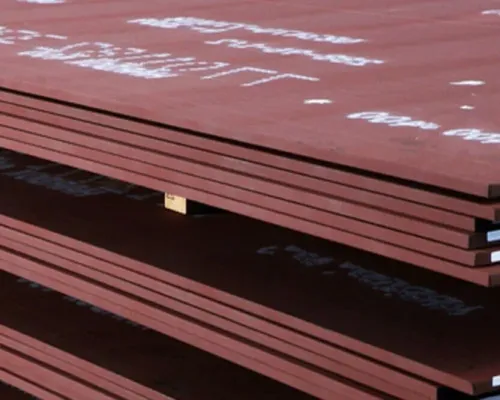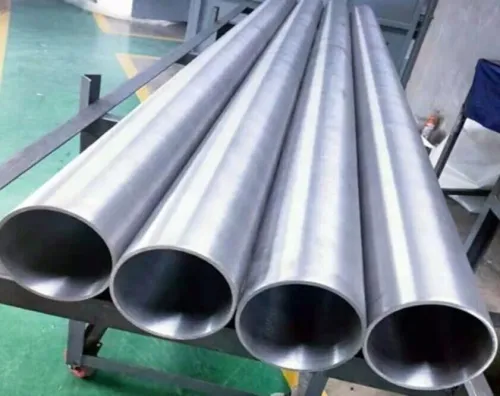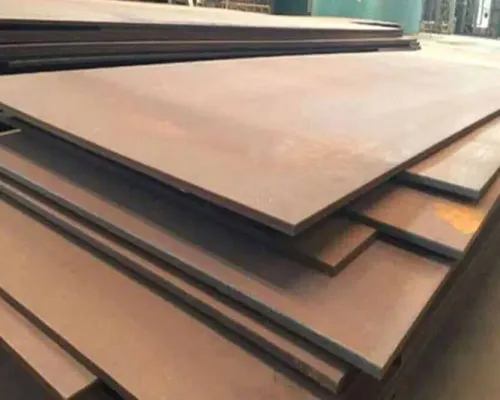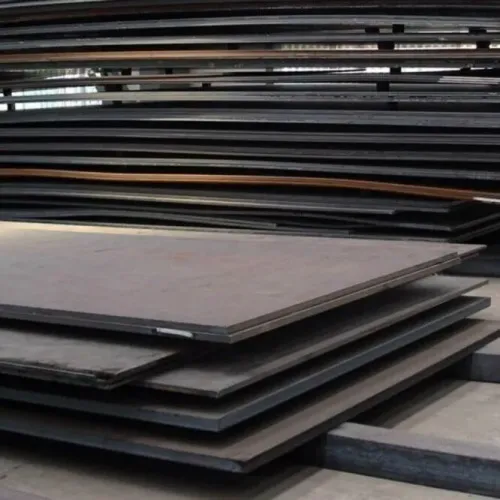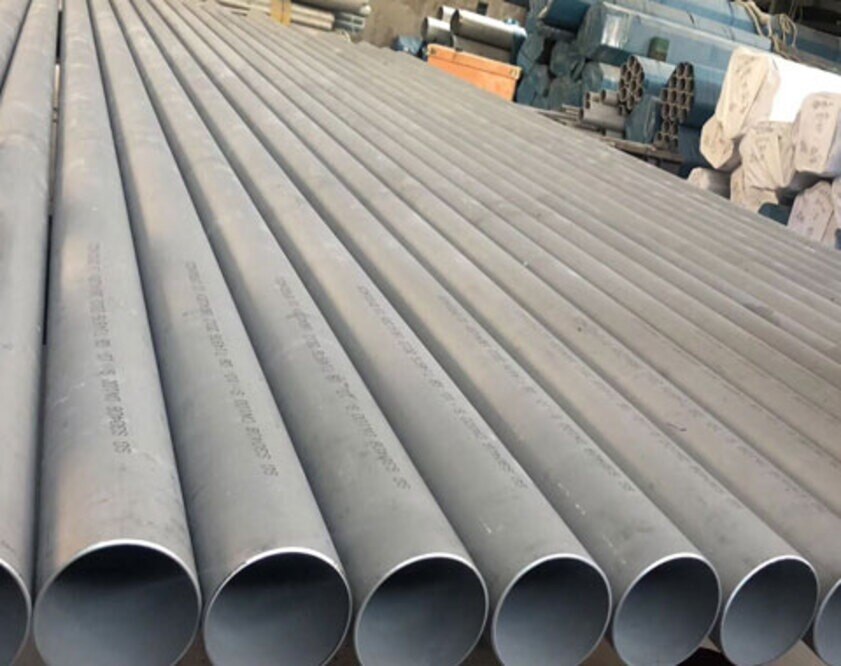
A Rockhard 400, 450 or 500 plate is the result of controlled steel chemistry, slab casting, hot reduction, cooling and inspection—not a hardness number stamped onto ordinary plate. By following the route from ladle refining to dispatch, you can distinguish a properly documented wear plate from material whose grade, heat treatment or traceability is unclear.
Key takeaways
- Ask for the heat number linking each plate to chemistry and production records.
- Confirm whether the grade is Rockhard 400, 450 or 500 before ordering.
- Check quenching, tempering and inspection records against the supplied plate.
- Compare certificates, dimensions and defect findings before accepting stocked plate.
From molten steel to a rolled wear plate
Liquid steel becomes a wear plate through a controlled sequence, not a single pouring operation. The producer refines the heat in a ladle, casts it as a slab, and tracks it by heat number. That traceability links the finished plate to its chemistry and manufacturing records.
1. Reheat the slab to the mill’s specified rolling temperature, then pass it through roughing and finishing stands. Controlled reduction sets thickness, improves uniformity and refines the austenitic structure.
2. Apply controlled cooling after rolling to influence grain size and strength. Heavy wear plate is normally made by controlled hot rolling; cold rolling is not the usual route for thick abrasion-resistant plate. A catalogue label alone does not prove which route was used.
3. Quench the rolled plate with water when the grade requires a hardened structure. Follow with tempering if the approved grade schedule calls for it, balancing hardness against toughness and weldability.
4. Level the plate and cut it to ordered dimensions. Quenching can create residual stress, edge waves and distortion, so levelling is a production step, not cosmetic finishing.
5. Inspect thickness, flatness, surface condition, dimensions and hardness, with ultrasonic testing when the purchase specification requires internal examination. Thermal cutting creates a heat-affected zone that is not identical to the parent plate.
6. Mark and dispatch accepted plates with their heat number, grade identification and inspection documentation. Cutting a large plate later can release residual stress and cause movement, especially in high-hardness material.
What 400, 450 and 500 mean before the plate enters service
The numbers 400, 450 and 500 indicate approximate Brinell hardness in HBW, not yield strength or tensile strength in MPa. A Rockhard 500 plate is therefore not a 500 MPa plate, and hardness alone cannot prove toughness, weldability or service life.
| 400 | Lower hardness, greater forming and impact tolerance | Chutes, dump bodies and structures with mixed abrasion and shock |
|---|---|---|
| 450 | Intermediate wear resistance and fabrication tolerance | Liners, buckets and handling equipment with balanced loading |
| 500 | Highest sliding-abrasion resistance, least fabrication forgiveness | Crusher liners and severe sliding-wear zones with adequate support |
Before selecting the class, use this procedure:
1. Match the plate to the failure mechanism. Choose 500 for abrasive sliding, but choose 400 or 450 when impact, bending or frequent repair dominates. Particle size, plate thickness and support conditions can change the decision.
2. Read the manufacturer’s datasheet for the thickness-dependent hardness range, chemistry, delivery condition and test method. The nominal number is not a universal steel grade like an EN or ASTM designation.
3. Confirm the rolling route and alloy design. Heavy wear plate is normally controlled hot-rolled, then heat-treated; cold rolling is not a substitute for that route. Carbon, manganese, chromium, molybdenum and boron additions raise hardenability, but excessive alloying can reduce weldability and bendability.
Ask a Rockhard 400 plates manufacturer in India to identify the actual mill, country of melt and rolling, applicable datasheet and traceability method. Use the specified forming radius and bend direction; tight radii or damaged cut edges can initiate cracks.
How quenching, tempering and process controls set the final properties
Hardness, toughness, flatness and through-thickness performance are fixed by the heat cycle after controlled rolling, not by the grade number alone. The mill reheats the plate into the austenitic range, finishes rolling at a controlled temperature, then uses accelerated cooling or direct quenching to transform the full section into a hard microstructure.
1. Control the quench. Water temperature, flow, pressure, nozzle condition and cooling rate must remain stable across the plate width. A cold, fast-cooled surface over a slower-cooled core can produce a hard face but inadequate through-hardness.
2. Match the cycle to thickness. The austenitizing temperature, finish-rolling temperature, alloy content and plate thickness determine how deeply the transformation proceeds. Check the specified hardness range by thickness; one surface Brinell reading cannot prove uniform performance through a heavy plate.
3. Temper when the datasheet requires it. Tempering relieves quench stresses, improves toughness and dimensional stability, and normally reduces as-quenched hardness. The producer must confirm the final HBW range rather than applying the nominal 400, 450 or 500 label after heat treatment.
4. Correct shape without damaging properties. Controlled cooling, run-out-table settings and roller levelling limit bow, crown and residual stress. Excessive levelling force can distort edges or alter flatness after cutting, so measure the finished plate.
For a rockhard 500 plates manufacturer in india, request the heat-treatment route, thickness-specific hardness results and any sectioned hardness traverse or qualification record. Also confirm Charpy impact results when toughness matters; hardness alone does not establish impact resistance, weldability or service life.
How producers find defects before the plate is released
A plate is suitable for fabrication only when its test results, surface condition and traceability agree with the purchase specification. Hardness alone cannot release a Rockhard 400, 450 or 500 plate: the stated HBW range does not prove toughness, weldability or freedom from internal laminations.
- Inspect both faces and edges for rolling cracks, laps, seams, deep pitting, gouges and repaired areas. Reject visible cracks or weld repairs unless the specification expressly permits an approved repair procedure.
- Use ultrasonic testing to find laminations, sizeable inclusions and internal separations that visual inspection cannot detect. Record the test standard, coverage and any reportable indications.
- Check thickness, length, width, flatness, edge condition and hardness at the locations required by the mill’s datasheet. A result outside the thickness-dependent hardness range needs technical disposition, not a relabelled certificate.
- Match the heat number and plate mark to the mill test certificate. If cutting has removed those marks, retain a traceable cut map; otherwise a cut piece from a Rockhard 400 plates stockist in India cannot be confidently tied to the tested plate.
| Inspection result | Release decision | Fabrication consequence |
|---|---|---|
| Clean surface, acceptable UT and in-range HBW | Release | Proceed with the specified forming and welding procedure |
| Local dimensional or flatness deviation within agreed tolerance | Accept by specification | Allow for correction during fit-up |
| Crack, unaccepted weld repair, serious lamination or missing traceability | Hold or reject | Do not form, weld or install the plate |
A thermal-cut edge also needs review: its heat-affected zone can carry altered hardness and residual stress, so grind, preheat or leave a cutting allowance when the fabrication procedure requires it.
What to verify when buying Indian-made or stocked plate
A certificate proves the plate only when its identity follows the steel. “Rockhard 400,” “450” and “500” are commercial hardness classes, not universal EN or ASTM grades; confirm the supplier’s stated HBW range, thickness limits, chemistry, impact requirement and delivery condition.
Ask for these records and checks:
- The purchase specification naming the actual mill, country of melt and rolling, product datasheet, inspection standard and traceability requirement.
- An EN 10204 type 3.1 certificate showing heat number, plate number, dimensions, grade designation, chemical analysis and delivery condition.
- Brinell results under ISO 6506-1 or ASTM E10, including test location, prepared surface, plate thickness and number of readings. A catalogue certificate is not plate-specific evidence.
- Matching heat and plate numbers on the certificate, packing list, stencil or tag, and the surviving piece after cutting.
- Written confirmation of ultrasonic testing, flatness, dimensions, visual condition and any repair history when your specification requires them.
| Seller status | Evidence to request | Warning sign |
|---|---|---|
| Actual rolling mill | Mill certificate and rolling-route statement | Certificate names another producer |
| Authorized processor | Mill traceability plus cutting or heat-treatment records | New markings without original heat number |
| Trader or stockist | Complete chain of custody and packing-list match | “Rockhard 500” with no plate-specific records |
A rockhard 500 plates supplier in india must also disclose whether the stock is full plate, remnant or imported material. Reject pieces with erased traceability, active corrosion, repeated thermal-cutting damage or unauthorized weld repairs. Shyam Metals & Alloys should be asked the same questions; supplier reputation does not replace plate-level evidence.
Related products
 | Resistant Plates Rockhard(400 / 450 / 500 ) Thickness : 6mm to 100mm Width : 1,500mm to 2,500mm Length : 6,000mm to 12,000mm Production : Hot-Rolled (HR) /... View product → |
 | Resistant Plates Rockstar(400 / 450 / 500 ) Width : 1,500mm to 2,500mm Surface Paint : EP, PE, HDP, SMP, PVDF Production : Hot-Rolled (HR) / Cold-Rolled (CR) Material... View product → |
Frequently asked questions
How does molten steel become a Rockhard wear plate?
The producer refines liquid steel in a ladle, casts it into a slab, rolls the slab to plate thickness and tracks it by heat number.
What do Rockhard 400, 450 and 500 mean?
The numbers identify the plate’s hardness class before service; they are not interchangeable grades and must match the application’s wear requirements.
How do quenching and tempering affect wear plate properties?
Quenching rapidly cools the rolled plate to develop hardness, while tempering adjusts the balance between hardness, toughness and service performance.
What should you verify when buying Indian-made or stocked plate?
Check the heat number, material certificate, stated grade, dimensions, heat-treatment records and inspection results, then confirm they match the delivered plates.
Related products
 | Resistant Plates Hardox (400 / 450 / 500 ) Item Hardox Plate Material HARDOX 500/ 400/450/600 ,SUMIHARD ,NICRODUR,BRINAR ,DUROSTAT ,DILLIDUR ,JFE EVERHARD Thickness... View product → |
 | Abrasion resistant steel plate Plate is a type of high-strength, wear-resistant steel plate designed for demanding applications that require excellent durability and impact... View product → |
 | Resistant Plates JFE Everhard(400 / 450 / 500 ) JFE Everhard(400 / 450 / 500 ) Item Abrasion Resistant Plate Material JFE EVERHARD Thickness 6mm to 50mm Width 500mm to 3000mm Length 1,0000mm to... View product → |
 | Hardox plate ₹170 Hardox plate is a high-strength, wear-resistant steel plate widely used in heavy-duty industrial applications. View product → |