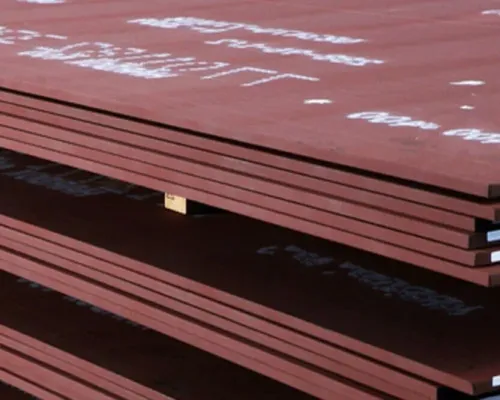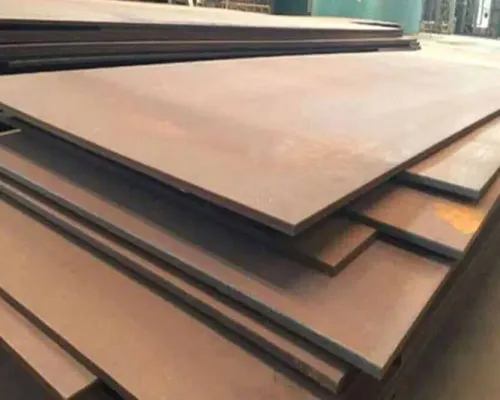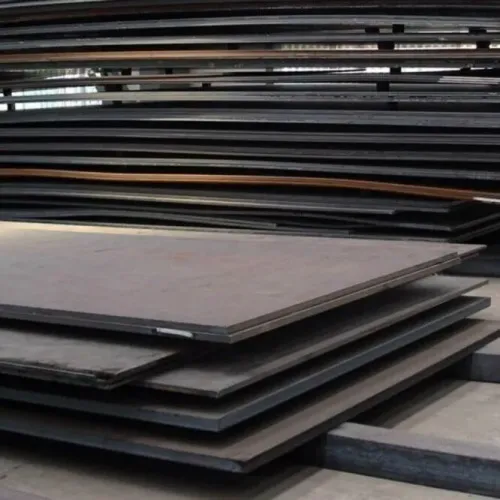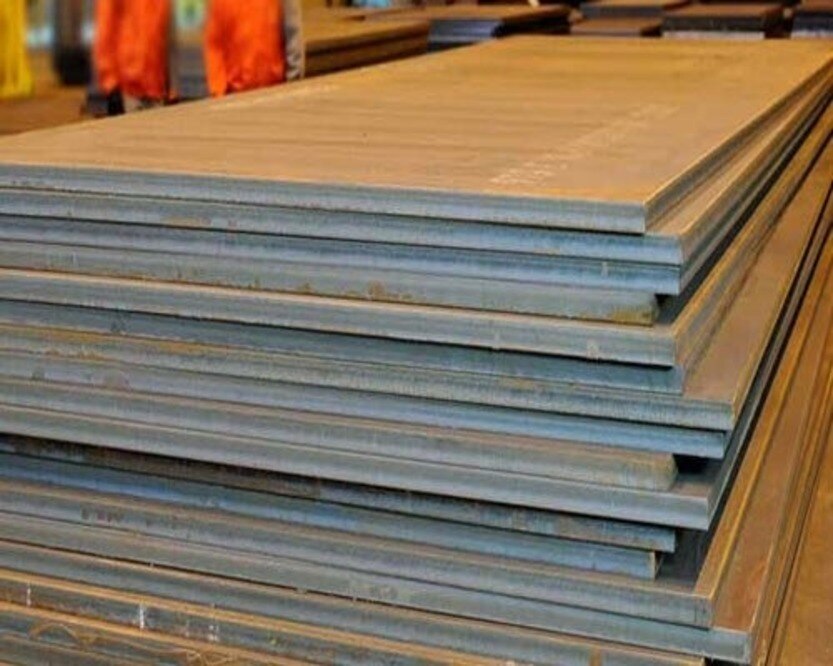
Hardox 400 is a wear-resistant plate, not a universal oil-and-gas material. Your decision depends on whether the plate faces abrasive solids, carries pressure, enters sour service, or becomes part of a welded structure. By the end, you will know how to match the grade to the equipment, verify mill documentation, and distinguish genuine Hardox from AR400-equivalent, Rockhard 400 and Rockstar 400 offerings.
Key takeaways
- Use Hardox 400 for wear zones, not pressure-retaining equipment.
- Choose 400, 450 or 500 by impact, abrasion and fabrication needs.
- Check mill certificates, heat numbers, hardness results and traceability.
- Specify cutting, welding, dimensions and inspection documents before ordering.
Where Hardox 400 fits in oil-and-gas equipment
Hardox 400 fits best where loose solids or sliding parts wear a non-pressure component: replaceable liners, chutes, hoppers, mud-tank wear zones, solids-handling components, wear pads, pipe supports and non-pressure skids.
| Equipment | Suitable use | Main boundary |
|---|---|---|
| Replaceable liner | Protects a shell, chute or hopper from abrasion | Liner is not the pressure boundary |
| Mud tank or solids-handling zone | Resists drilling solids and sliding wear | Confirm impact, temperature and weldability |
| Wear pad or pipe support | Limits contact wear under pipe movement | Check load, support spacing and corrosion |
| Separator or process skid | Only as a non-pressure wear attachment | Do not substitute it for code-approved shell material |
The approximate 370–430 HBW range identifies abrasion resistance, not pressure-vessel suitability. It does not make the plate acceptable for a separator shell, hydrocarbon containment, process piping or sour service.
Separate the wear function from the pressure boundary: a Hardox 400 liner can protect a code-designed shell made from another material, while hardness alone establishes neither allowable stress, impact toughness, corrosion resistance nor NACE MR0175/ISO 15156 compliance.
Before asking a Hardox 400 plates manufacturer in India for a quotation, answer these screening questions:
- What material causes wear: sand, cuttings, gravel, scale or another solid?
- Does the component retain pressure?
- Is hydrogen sulfide present?
- What are the operating and shutdown temperatures?
If pressure, sour gas or low-temperature shutdown conditions apply, send the design code and service conditions to the design authority before selecting the plate.
How to select 400, 450, 500 or another plate
Choose hardness from the damage mechanism, not the grade number. For fine particles and long sliding distances, compare Hardox 400, 450 and 500 by expected wear rate; for large particles and high impact energy, favour toughness over maximum hardness. Check operating temperature, corrosion exposure, support spacing, plate thickness and required design life before selecting.
| Option | Main advantage | Selection caution |
|---|---|---|
| Hardox 400 | Balanced abrasion resistance, toughness and fabrication margin | Suitable for mixed wear and impact |
| Hardox 450 | Better sliding-abrasion resistance | More demanding drilling, welding and forming |
| Hardox 500 | Highest abrasion resistance of these three | Narrower fabrication margin and potentially lower impact tolerance |
| Carbon structural plate | Lower cost and easier fabrication | Rapid wear in abrasive service |
| Quenched-and-tempered low-alloy plate | Strength and toughness for structural duty | Not automatically a wear plate |
| Stainless steel | Corrosion resistance | Does not replace abrasion resistance |
| Clad plate | Separate corrosion-resistant and wear-resistant layers | Joint quality, repair and fabrication need control |
Higher hardness does not cure corrosion. Stainless or clad construction addresses corrosion more directly, while wear plate addresses abrasion; neither property substitutes for the other. A thinner plate can reduce weight but fail sooner between widely spaced supports, so compare initial plate cost, fabrication time, replacement frequency and calculated service life.
Obtain the actual datasheet and mill certificate, not just “400.” Check hardness distribution, carbon equivalent, sub-zero impact results where required, flatness, surface condition, thickness tolerance and permitted repair. Compare any Hardox 400 plates supplier in India against the brand owner’s guarantees and traceability. The number alone is not a universal specification.
Which oil-and-gas standards and approvals must be checked
Start with the equipment code, not the plate brand. Confirm whether the item falls under ASME Section VIII for pressure vessels, ASME B31.3 for process piping, or the project’s specified fabrication code.
1. Identify the material specification permitted by that code, then verify allowable stress, impact-toughness rules, design temperature and inspection category. A 370–430 HBW wear classification does not establish any of these values.
2. Check every referenced requirement, including API equipment specifications, NACE MR0175/ISO 15156 for sour service and applicable NORSOK requirements. None is granted by the name Hardox; high hardness can conflict with sour-service limits.
3. Confirm that the plate manufacturer and fabricator appear on the project-approved vendor or manufacturer list. Obtain written acceptance from the design authority and end user before purchase.
4. For welded equipment, request the qualified welding procedure specification, procedure qualification record and welder qualifications. The documents must define the actual joint’s consumable, preheat, interpass temperature, hydrogen control and heat-input limits.
| Approval stage | Evidence to check | Failure if omitted |
|---|---|---|
| Design basis | Code, material specification and allowable stress | The plate cannot support the design calculation |
| Service conditions | Temperature, impact requirement and sour-service decision | Brittle fracture or environmental cracking risk |
| Fabrication | WPS, PQR and welder qualification | Unqualified welds can invalidate the equipment |
| Procurement | Approved-list status and traceable certificates | The project can reject the supplied material |
Use a wear plate only when the design authority and end-user specification permit it for that exact function. “Oil and gas grade” is a sales description, not an approval.
How to verify a Hardox, Rockhard or Rockstar supplier in India
Hardox 400 is an SSAB proprietary designation, not a generic name for every 400-HBW abrasion-resistant plate. Rockhard 400 and Rockstar 400 are commercial names, so substitution requires the brand owner’s datasheet and written guarantee, not a catalogue description.
| Product | Evidence to verify | Do not assume |
|---|---|---|
| Hardox 400 | SSAB plate markings, heat number and original mill certificate | An Indian AR400 plate is genuine Hardox |
| Rockhard 400 | Brand-owner datasheet, guaranteed properties and warranty | Hardox-equivalent performance without comparison |
| Rockstar 400 | Brand-owner datasheet, test results and delivery condition | The name defines chemistry or hardness |
| AR400 equivalent | Complete EN 10204 type 3.1 certificate and stated specification | “400” gives one universal grade |
Ask the supplier for:
- Original plate markings, heat number and mill certificate
- Guaranteed hardness range, chemistry and impact results where specified
- Delivery condition, heat treatment, thickness limits and dimensional tolerances
- Welding guidance, warranty and the brand owner’s identity
- Physical confirmation that the required dimensions are in stock, rather than only listed in a catalogue
An EN 10204 type 3.1 certificate must identify the supplied product and inspection results, validated by the manufacturer’s authorised inspection representative. Reject an internally generated certificate presented as the only evidence. A hardox 400 plates stockist in india is not automatically the mill.
For a rockhard 400 plates manufacturer in india or rockstar 400 plates manufacturer in india, compare every guaranteed value before approving substitution. Shyam Metals & Alloys can clarify whether it is supplying original branded material, an equivalent grade or another mill’s stock, and preserve heat-number traceability after cutting.
Related products
 | Resistant Plates Hardox (400 / 450 / 500 ) Item Hardox Plate Material HARDOX 500/ 400/450/600 ,SUMIHARD ,NICRODUR,BRINAR ,DUROSTAT ,DILLIDUR ,JFE EVERHARD Thickness... View product → |
 | Hardox plate ₹170 Hardox plate is a high-strength, wear-resistant steel plate widely used in heavy-duty industrial applications. View product → |
What to specify before cutting, welding and accepting the plate
Put the exact brand or approved equivalent, grade, thickness, width, length, quantity, cut size, delivery condition, surface condition, dimensional tolerances and required design life on the purchase order.
| Purchase-order field | Specify | Do not leave as |
|---|---|---|
| Identity | Brand, grade, mill, heat number and approved equivalent | “AR400” alone |
| Condition | Quenched-and-tempered delivery condition, surface condition and permitted repairs | “As supplied” |
| Dimensions | Plate and cut dimensions, tolerances, quantity and flatness requirement | Catalogue size |
| Performance | Hardness method, test location, acceptance range and permitted variation | “400 HBW” |
Request the heat number, chemical analysis, tensile results, impact results where specified, hardness report, heat-treatment record, dimensional inspection and full traceability documents. Match every cut piece to its source heat before fabrication.
For welding, use the brand owner’s welding guidance or calculator for plate thickness, combined thickness, joint type, consumable, hydrogen level, ambient temperature and heat input. Do not assume that preheating is unnecessary; the wrong assumption can produce hydrogen cracking or an unacceptable heat-affected zone.
Control thermal cutting and later heating because both can change local hardness in the heat-affected zone. Inspect cut edges for cracking and excessive softening, then inspect welds and repaired areas using the project’s specified methods.
Record which heat entered each component, including replacement pieces and repairs. That record turns a dimensionally correct plate into traceable equipment rather than an undocumented field problem.
Frequently asked questions
Where does Hardox 400 fit in oil-and-gas equipment?
Use it for non-pressure wear components such as replaceable liners, chutes, hoppers, mud-tank wear zones, wear pads and solids-handling parts. Do not substitute it for pressure-vessel plate without design approval.
How do you choose between 400, 450 and 500 wear plate?
Compare abrasive severity, impact loading, required service life and fabrication limits. Hardox 400 is easier to process than harder grades; select 450 or 500 only when the extra wear resistance justifies more demanding cutting and welding.
Which standards and approvals must you check?
Check the equipment design code, project specification, plate manufacturer’s datasheet, inspection and test plan, and any required material certificates. Confirm whether the item is pressure-retaining, sour-service, offshore or safety-critical before accepting a wear grade.
How can you verify a Hardox, Rockhard or Rockstar supplier in India?
Request the manufacturer or brand name, original mill certificate, heat number, plate markings, hardness results, material test report and chain of custody. Match every document to the delivered plate before cutting.
What must you specify before cutting, welding and accepting the plate?
Specify grade, brand, thickness, width, length, tolerances, hardness range, heat number, certificate type, cutting method, preheating and welding procedure. Inspect dimensions, surface condition, markings and documents on receipt.
Related products
 | Resistant Plates Rockhard(400 / 450 / 500 ) Thickness : 6mm to 100mm Width : 1,500mm to 2,500mm Length : 6,000mm to 12,000mm Production : Hot-Rolled (HR) /... View product → |
 | Resistant Plates Rockstar(400 / 450 / 500 ) Width : 1,500mm to 2,500mm Surface Paint : EP, PE, HDP, SMP, PVDF Production : Hot-Rolled (HR) / Cold-Rolled (CR) Material... View product → |