A quotation that says “690 MPa plate” does not prove that the material is S690QL, correctly certified, or physically available from stock. You will be able to verify the grade, read the mill test certificate, specify the order precisely, and separate a traceable Indian stockist from a broker working against an unconfirmed supply.
Key takeaways
- Demand EN 10025-6 identification, not only “690 MPa” or “Q&T steel.”
- Match certificate values to plate thickness and impact-test temperature.
- Compare chemistry, delivery condition, test records and fabrication evidence.
- Request heat numbers, current photographs and dispatch-ready inventory proof.
Confirm the plate is S690QL before comparing stockists
A quotation for “high-tensile steel” does not prove the grade. A buyer searching s690ql high tensile steel plate for stockist in india should accept the material only when the documents identify S690QL to EN 10025-6, not merely “690 MPa plate” or “Q&T steel.”
1. Request the original mill test certificate before comparing prices. Check that it names S690QL, states the plate thickness, records the heat number and identifies the delivery condition as Q, meaning quenched and tempered.
2. Match the certificate to the required thickness. The minimum yield strength is 690 MPa up to 50 mm, 650 MPa above 50 to 100 mm and 630 MPa above 100 to 150 mm. Check the tensile range, elongation and Charpy V-notch result as well; S690QL records 27 joules at −40°C.
3. Do not treat S690QL1 as an interchangeable label. S690QL1 is the lower-temperature impact grade, with the design basis requiring Charpy testing at −60°C. Use it when the structure, service temperature or fracture-control specification demands that temperature.
4. Compare the heat number stamped or painted on the plate with the MTC and dispatch documents. A cut piece is acceptable only when its original heat identity remains transferred and auditable.
A thinner S690QL plate is not an automatic substitute for thicker lower-strength steel. Buckling, fatigue, weld design, connection resistance or local slenderness can govern, so obtain the designer’s approval before changing thickness.
Read the EN 10025-6 certificate against thickness and temperature
Read the EN 10025-6 mill certificate, not just the quoted “690 MPa” figure. Acceptable evidence includes the grade designation, Q or QL delivery condition, plate thickness, heat number, chemical analysis, yield strength, tensile-strength range, elongation and Charpy V-notch results. A tensile result above 690 MPa does not prove 690 MPa yield strength.
| Grade | Impact result required | Certificate values to compare |
|---|---|---|
| S690QL | 27 J minimum at −40 °C | Yield, tensile range, elongation, chemistry and heat number |
| S690QL1 | 27 J minimum at −60 °C | The same values, with the lower test temperature recorded |
Thickness changes the minimum yield requirement:
- 3 to 50 mm: 690 MPa minimum yield strength
- Over 50 to 100 mm: 650 MPa minimum
- Over 100 to 150 mm: 630 MPa minimum
The tensile-strength range also changes by thickness, so compare the certificate with the thickness band in the ordered edition of EN 10025-6. Check the stated minimum elongation, commonly 14%, alongside the applicable tensile range rather than accepting yield strength alone.
Ask the S690QL plate stockist in India for an EN 10204 Type 3.1 certificate showing the original mill, heat number and test results. Match that heat number to the plate marking and dispatch documents; a generic certificate or an untraceable cut piece is not adequate for safety-critical work.
Choose S690QL1 only when the design basis requires Charpy performance at −60 °C.
Check chemistry and fabrication evidence before accepting the material
Do not release the plate for fabrication until its heat-specific chemistry, welding controls and any specified internal-quality tests are documented. A quotation stating “high tensile” proves nothing about the steel’s weldability or traceability.
1. Match the EN 10204 Type 3.1 certificate to the plate heat number, thickness and EN 10025-6 edition. Check the ladle or product analysis for carbon, manganese, silicon, phosphorus, sulphur, chromium, molybdenum, nickel, copper and boron against the ordered grade’s limits.
Review the carbon-equivalent value used for welding control; a higher value increases preheat and cracking risk. Type 2.2 evidence is non-specific and cannot replace heat-specific results.
2. Require the fabricator’s qualified welding procedure specification and supporting procedure qualification record. It must state the process, consumable classification and hydrogen level, joint detail, preheat, interpass temperature, heat input, travel range and any post-weld treatment. An ordinary carbon-steel procedure can leave S690QL with hydrogen cracking, excessive hardening or a softened heat-affected zone.
3. Put extra tests in the purchase order, not in a later telephone instruction. For lamination control, specify ultrasonic testing to EN 10160 with the required class and acceptance level; “UT tested” is incomplete.
Ask for Charpy V-notch results when the design requires them, and require weld-metal and heat-affected-zone toughness evidence from the procedure qualification, because the parent-plate impact result does not qualify every joint.
Specify the stock request so suppliers quote the same material
Send a quote request that fixes the grade, size, quantity, cutting and evidence; otherwise two suppliers can quote different materials under “690 MPa plate.” State S690QL to EN 10025-6, Q and T delivery condition, required thickness, length, width, number of plates or pieces, and whether S690QL1 is acceptable. Include the design-approved Charpy test temperature.
- Required plate dimensions, quantity, surface condition and dimensional tolerances
- Cut-piece sizes, cutting method, kerf allowance and acceptable edge condition
- Whether cutting must be performed before dispatch, and the minimum purchasable quantity
- Original mill, available heat numbers and confirmation that stock is physically in India or imported against the order
- EN 10204 Type 3.1 MTC, including heat-specific chemical analysis, yield strength, tensile strength, elongation and Charpy V-notch results
- Inspection release date, packing, dispatch date and documents supplied with the shipment
Tell an s690ql plate supplier in india that every cut piece must retain the original heat number through plate marking, packing and dispatch documents. If marking each piece is impractical, require an auditable cutting map linking every piece to the parent plate, heat number and MTC.
Reject a Type 2.2 declaration when your specification requires manufacturer-specific, heat-based test results. Also ask the supplier to state the exact thickness range covered by the quotation, because the applicable minimum yield strength changes with thickness.
Test whether the Indian stockist has real, traceable inventory
A physical stockist can show the actual plate, its markings and a document trail before taking your order; a broker usually shows only a catalogue image, an old certificate or a small offcut.
Ask where the material is located in India, whether it is ready for dispatch or will be imported against your purchase, and who owns it now.
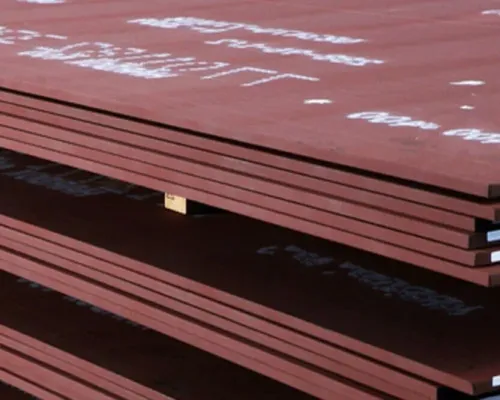
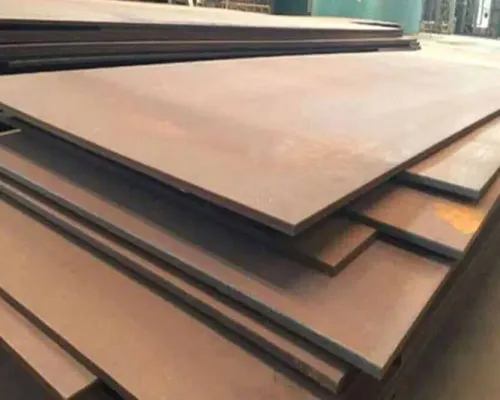
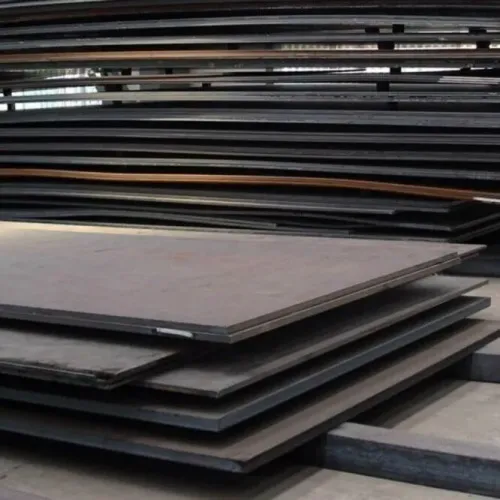
- Request a live photograph or video showing the plate’s heat number, grade marking, thickness and dimensions beside a current date or order reference. Match those details with the EN 10204 Type 3.1 MTC; reject a certificate that has no heat-specific identification.
- Ask for the available quantity by heat number, not merely “S690QL in stock.” Confirm the original mill, thickness range, full-plate dimensions, minimum purchasable quantity and the dispatch location.
- If cutting is required, require a marked cut plan and written confirmation that every piece will retain the original heat number. A loose offcut proves nothing if its parent plate cannot be identified.
- Get the inspection lead time, packing date and transport plan in writing. “Available” must mean physically held stock, not a mill allocation subject to a new production slot.
- Ask whether the quoted plate is S690QL or S690QL1 and who will issue the certificate and inspection records.
Shyam Metals & Alloys belongs on your comparison list only after it answers these same stock-and-traceability questions. A credible s690ql high tensile steel plate supplier in india will answer with heat numbers, quantities and documents rather than promises.
Related products
 | Alloy Steel Plate Grades View product → |
High Tensile Plates High Tensile Plates En10028 S690Ql View product → |
Frequently asked questions
How do you confirm that a plate is S690QL?
Check that the mill certificate names S690QL and EN 10025-6. Reject descriptions that only say “690 MPa plate” or “Q&T steel.”
What should you check on an S690QL EN 10025-6 certificate?
Match the certificate to the quoted thickness, yield and tensile values, impact-test temperature, heat number, dimensions and delivery condition.
Why do chemistry and fabrication evidence matter when buying S690QL?
The chemical analysis confirms the specified grade, while welding procedures, preheating controls and hardness checks show whether the material suits fabrication.
How should you request an S690QL plate quotation?
State S690QL to EN 10025-6, thickness, width, length, quantity, surface condition, delivery condition, testing documents, impact temperature and required delivery location.
How can you test whether an Indian S690QL stockist has traceable inventory?
Ask for heat numbers, matching certificates, current plate photographs, warehouse dimensions, quantity on hand and a dispatch timeline tied to the quoted material.
Related product
High Strength Plates View product → |