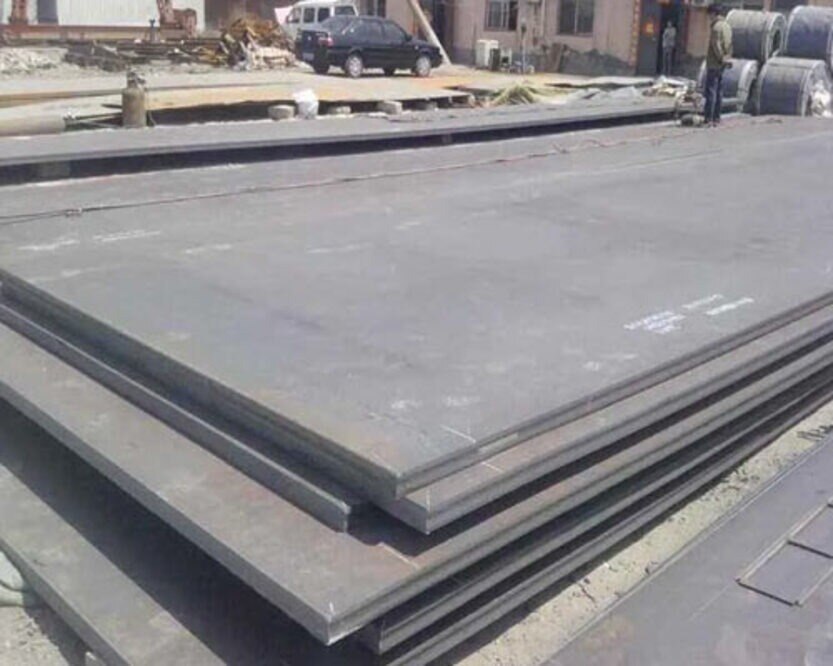
An ASME pressure-vessel plate requirement is incomplete if it names only an alloy grade. You need to reconcile the specification, class, delivery condition, dimensions, tests and traceability documents before accepting stock, especially when comparing SA387 with EN 10028-2 16Mo3.
Key takeaways
- Specify SA387 grade, Class 1 or Class 2, thickness, heat treatment and test requirements.
- Request the mill test certificate, heat number, traceability records and third-party inspection documents.
- Compare 16Mo3 with SA387 by chemistry, design code, temperature service and certification.
- Confirm welding, PWHT and delivery capabilities before selecting an Indian stockist.
What ASME SA387 means for elevated-temperature pressure service
SA-387 covers chromium-molybdenum alloy steel plate for welded pressure vessels designed for elevated-temperature service. Chromium and molybdenum support strength and resistance to degradation at heat, but the plate is only one part of the design; welding procedure, post-weld heat treatment and design temperature still control fitness for service.
A387, SA-387 and an ASME Section II reference are related, but they do not mean exactly the same thing.
| Term | Meaning | How to use it |
|---|---|---|
| A387 | ASTM specification for chromium-molybdenum pressure-vessel plate | Use it when the contract requires ASTM compliance |
| SA-387 | ASME material specification based on the adopted ASTM requirements | State the grade, class and metric or U.S. customary designation |
| ASME Section II | Code material section containing permitted material specifications and requirements | Confirm the exact SA specification cited by the design code or purchase order |
Specify the complete designation, such as SA-387/SA-387M Grade 11 Class 2. “A387 Grade 11” omits the class and leaves the required strength and heat-treatment category unclear. “Alloy steel plate” is a product description, not proof of ASME acceptability.
An alloy steel plates supplier in India should therefore identify the applicable SA-387 grade and class, provide the heat number and original mill test certificate, and show the rolling mill responsible for manufacture. Treat a stockist’s cutting or dispatch activity as supply-chain evidence, not as proof that the stockist produced code-compliant plate.
How to select the SA387 grade and distinguish Class 1 from Class 2
Choose the grade from the vessel design temperature, pressure, corrosion environment and welding procedure—not from the chromium percentage alone. Grade 1 contains about ½% chromium and ½% molybdenum; Grade 2 contains about 1¼% chromium and ½% molybdenum; Grade 5 contains about 5% chromium and ½% molybdenum; Grade 9 contains about 9% chromium and 1% molybdenum.
Higher chromium improves resistance to oxidation and hydrogen attack, but it does not make one grade an automatic substitute for another.
| SA-387 option | What changes | When it applies |
|---|---|---|
| Grade 1 or 2 | Lower chromium systems for defined elevated-temperature pressure service | Use only when the design specification permits that alloy and its corrosion resistance is adequate |
| Grade 5 | Approximately 5Cr-½Mo chemistry | Select for specified high-temperature, oxidation or hydrogen-service conditions |
| Grade 9 | Approximately 9Cr-1Mo chemistry | Select when the design calls for its higher chromium-molybdenum performance |
| Grade 5 Class 1 | 485–620 MPa tensile strength and 275 MPa minimum yield strength; annealed, normalized-and-tempered, or quenched-and-tempered delivery | Use when the design accepts the lower strength class |
| Grade 5 Class 2 | 485–620 MPa tensile strength and 310 MPa minimum yield strength; normalized-and-tempered or quenched-and-tempered delivery | Use when the design requires the higher yield class |
Do not accept “Grade 5” alone. The mill test certificate must state Class 1 or Class 2, heat-treatment condition, heat number, chemistry and mechanical results. Ask an alloy steel plates stockist in India for those records; a search for alloy steel plates for stockist in India does not establish code compliance.
The purchase-order checklist for ASME alloy steel plate
“ASME alloy steel plate” is not enough for a purchase order. State the complete governing designation, then define the documents and tests that will let you reject a mismatch.
1. Specify the material as SA-387/SA-387M Grade 11 Class 2, or the exact applicable grade and class, and name the ASME Section II edition or specification revision. Do not use “alloy steel plate” as the material description.
2. State nominal thickness, width, length, quantity, dimensional tolerances, plate surface condition and whether delivery is in as-rolled, normalized-and-tempered or quenched-and-tempered condition.
3. Require chemistry and mechanical properties conforming to the named specification. Include the required tensile strength, yield strength, elongation, hardness limit and impact-testing temperature when the design or project specification calls for impact tests.
4. Identify supplementary examination separately. For ultrasonic testing, write ASTM A578/A578M, acceptance level, scanning coverage and whether examination occurs before or after cutting; it is not automatic with SA-387 plate.
5. Require one original mill test certificate for each heat, showing rolling-mill name, heat number, plate identification, heat treatment, test results and certificate signer. An alloy steel plates supplier in India must preserve that link through cutting and dispatch.
6. State whether third-party inspection, positive material identification, retesting, stamping, marking and material certificates under EN 10204 Type 3.1 or 3.2 are required.
7. Make the supplier confirm manufacturer status or stockist status, original heat traceability and document submission before shipment. A cutting yard is not the rolling mill.
When EN 10028-2 16Mo3 is the right comparison
Specify 16Mo3 instead of SA387 Grade 5 only when the governing design code, purchaser and pressure-equipment authority accept EN 10028-2 material 1.5415 for the service. 16Mo3 is not an automatic equivalent to SA387 Grade 5: its chemistry, allowable stress, design-temperature limits and impact requirements must be checked against the code calculation.
Before approval, put these details in the purchase order:
- The exact EN 10028-2 edition and material designation, not only “16Mo3”.
- The plate thickness range, because minimum yield strength reduces as thickness increases.
- The delivery condition, such as normalized or normalized and tempered, where specified by the edition or design.
- The required inspection document, including EN 10204 Type 3.1 when the contract requires a certified mill report.
- Any supplementary ultrasonic examination, naming ASTM A578/A578M, acceptance level and scanning coverage.
A buyer searching for 16mo3 alloy steel plates stockist in india should request the original rolling-mill certificate, heat number, slab or plate identification, chemical analysis and mechanical-test results. Confirm that the proposed values include approximately 0.12–0.20% carbon and 0.25–0.35% molybdenum, with phosphorus and sulfur within the stated edition limits.
After cutting, transfer the heat number and plate identification to every piece before the original mark disappears. Keep a cut map linking each piece to the parent plate, retain the original certificate with the dispatch records, and issue a traceability statement listing dimensions and cutting method.
If cutting is part of fabrication, follow the contract’s requirements for post-cut inspection and heat-affected-zone examination.
How to evaluate an Indian stockist, supplier or manufacturer
Treat the seller’s role and the plate’s compliance as separate checks. An alloy steel plates stockist in India may store, cut and dispatch steel made elsewhere; those activities do not make it the rolling mill. An alloy steel plates manufacturer in India must identify the facility responsible for melting, rolling and heat treatment.
Use this verification procedure before accepting a quotation:
1. Request the rolling-mill name, plant location, heat number and slab or plate identification. A warehouse number alone cannot prove manufacturing origin.
2. Match the original mill test certificate to the plate markings and delivery documents. The certificate must state the exact designation, such as SA-387/SA-387M Grade 11 Class 2, not merely “alloy steel plate.”
3. Check the certificate for chemistry, tensile and yield results, heat-treatment condition, thickness, product form and applicable test standard. Missing class or delivery condition makes the offer incomplete.
4. Ask for heat-treatment records when the specification or purchase order requires them. Confirm the laboratory’s accreditation or the test method and equipment basis instead of accepting an unsigned internal summary.
5. If ultrasonic examination is specified, name ASTM A578/A578M, acceptance level, scanning coverage and examination stage in the order. Pressure-vessel service does not automatically include UT.
Shyam Metals & Alloys can be evaluated on the same evidence: whether its quotation links each supplied plate to the original mill certificate, heat number and stated SA-387 grade and class, rather than treating stock availability as proof of compliance.
Related products
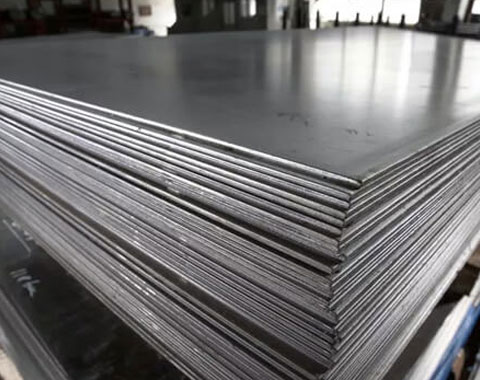 | Sheet and Plates Range : 3 mm to 100 mm thick in upto 2500 mm width upto 12500 mm length available with NACE MR 01-75s Carbon Steel : ASTM / ASME A 516 / 517 GR. View product → |
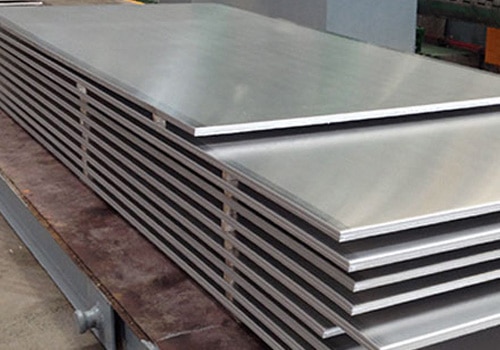 | Alloy Steel Plate Grades View product → |
Frequently asked questions
What does ASME SA387 cover?
ASME SA387 covers chromium-molybdenum alloy steel plates for welded pressure vessels operating at elevated temperatures.
How do SA387 Class 1 and Class 2 differ?
Class 2 has higher specified tensile-strength requirements than Class 1, so confirm the grade, class and mechanical test results on the certificate.
What should a purchase order specify for SA387 plate?
State the SA387 grade and class, thickness, dimensions, quantity, heat-treatment condition, impact-test requirements, inspection standard, certification and surface condition.
Is EN 10028-2 16Mo3 equivalent to SA387?
No. 16Mo3 is an EN 10028-2 pressure-vessel steel, while SA387 is an ASME specification; compare chemistry, mechanical properties, design-code acceptance and certification before substitution.
How can you evaluate an alloy steel plates supplier in India?
Check material traceability, mill test certificates, cutting accuracy, inspection support, stock visibility, packing, delivery controls and the supplier's ability to meet your welding and documentation requirements.
Related products
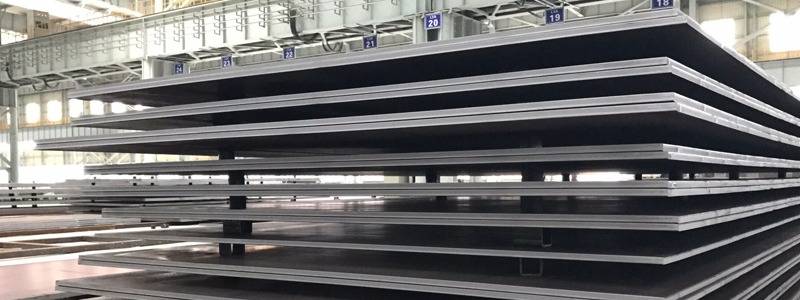 | Alloy Steel Plate Grades View product → |
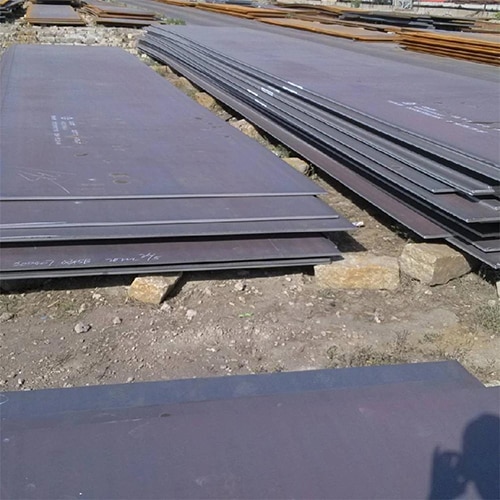 | Alloy Steel Plate Grades View product → |
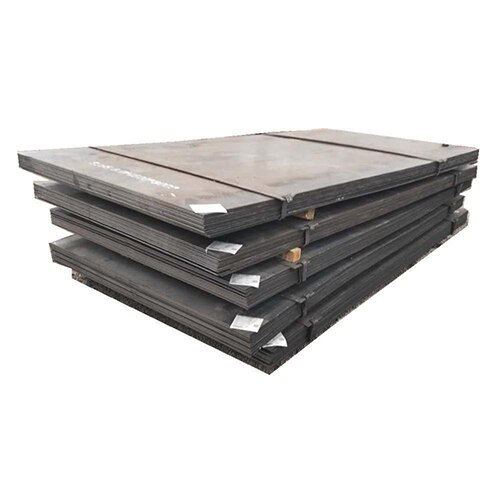 | Alloy Steel Plate Grades View product → |
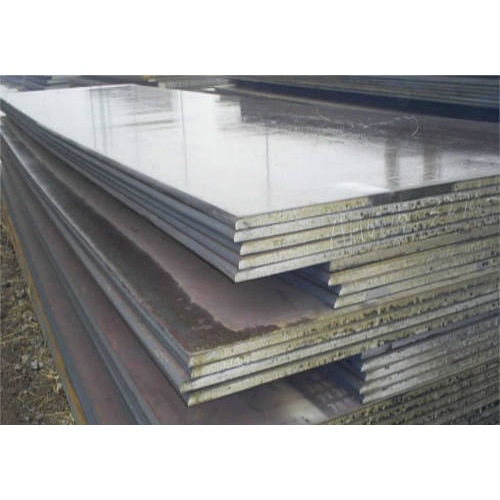 | Alloy Steel Plate Grades View product → |