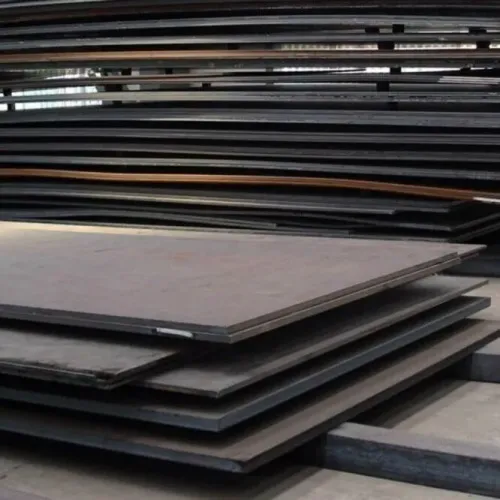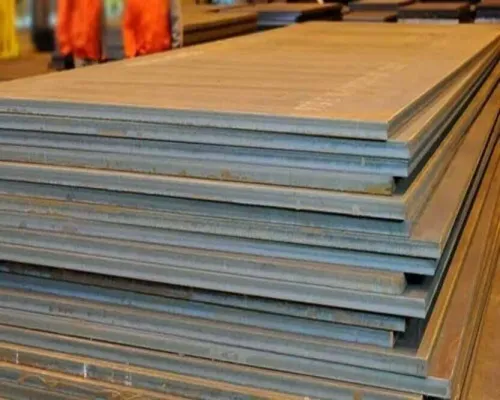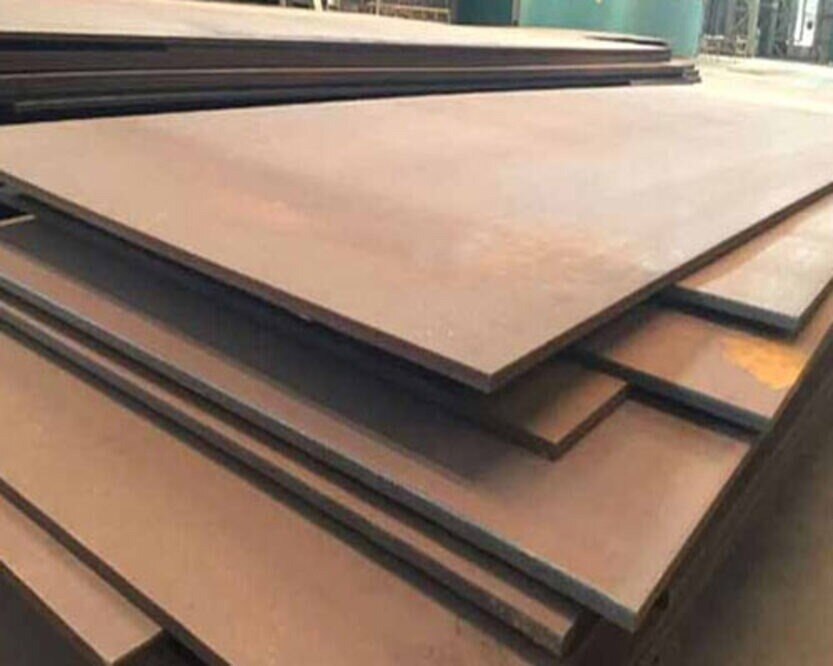
Choosing a Rockhard 400 plate is not a matter of matching the number 400 to a machine drawing. You need to connect the wear mechanism, plate dimensions, certified material properties, dimensional tolerances and fabrication method before approving a stockist or treating another AR400 product as interchangeable.
Key takeaways
- Choose thickness from impact, unsupported span and replacement access.
- Check the certificate for hardness results, standard, heat number and tolerances.
- Compare plates by failure mode, not hardness alone.
- Set cutting, forming and welding controls before fabrication begins.
Choose the plate dimensions from the machine’s wear zone
A 6 mm plate suits a sheltered conveyor skirt; it will not survive a rock-impact hopper. Choose dimensions from impact, unsupported span, and replacement access, not from the machine name alone. These are starting ranges, not a substitute for the fabricator’s load calculation or the mill’s available sizes.
| Wear zone | Starting thickness | Practical width × length | Selection point |
|---|---|---|---|
| Hopper wall | 10–20 mm | 1,500–2,500 × 3,000–6,000 mm | Use thicker plate at the feed lip and impact box; keep panels narrow enough for lifting. |
| Chute liner | 8–16 mm | 1,500–2,000 × 3,000–6,000 mm | Shorter replaceable panels reduce handling time and distortion. |
| Dump body floor | 10–20 mm | 2,000–2,500 × 6,000–12,000 mm | Match panel length to cross-members; add thickness where boulders land. |
| Crusher liner | 20–40 mm | 1,500–2,000 × 2,000–4,000 mm | Confirm curvature, bolt holes and impact loading before ordering. |
| Conveyor liner or skirt | 6–12 mm | 1,500–2,000 × 3,000–6,000 mm | Use narrower strips around fasteners and frequent replacement zones. |
For curved dump bodies and crusher liners, order a trial panel or bending sample before cutting the full plate. A rockhard 400 plates for stockist in india search does not confirm available dimensions, so ask for the actual mill width, length, thickness tolerance and cut-size allowance. Include bolt-hole margins and crane limits in the drawing.
What the 400 designation must prove on the certificate
400 normally denotes an approximate Brinell hardness level of 400 HBW; it does not mean a 400 MPa yield strength. Treat it as a commercial designation until the Rockhard 400 datasheet identifies the permitted hardness window, thickness range, delivery condition and governing standard.
| Certificate item | What must be stated | What it proves |
|---|---|---|
| Hardness | Guaranteed range, such as 360–440 HBW, with method and load: HBW 10/3000 or another specified combination | The grade meets its hardness requirement under ISO 6506-1 |
| Toughness | Charpy V-notch absorbed energy, test temperature, specimen direction and acceptance value | Resistance to impact cracking at the stated temperature |
| Strength | Guaranteed yield strength, tensile strength and elongation, with test direction and thickness applicability | The plate meets the declared mechanical limits; hardness alone cannot establish strength |
| Chemistry | Heat analysis and maximum or target limits for carbon, manganese, silicon, chromium, nickel, molybdenum, boron and other specified elements | The steel matches the declared alloy design and weldability controls |
A certificate that reports “400 HBW” without the test method, permitted range and sampling location is incomplete. The grade is established by the mill datasheet plus a heat-specific certificate, not by the number printed in a quotation.
A Rockhard plates stockist in India should provide an EN 10204 type 3.1 mill certificate showing the heat number, plate thickness, heat treatment, inspection status and original mill identity. Match that heat number to the plate marking; a generic certificate of conformity does not prove the plate’s chemistry or measured properties.
Check the governing standard, tolerances and traceability before buying
“Rockhard 400” is a commercial designation, not a complete EN, ASTM or Indian material grade. Before buying, write the governing mill specification into the order and require its hardness range, chemistry, delivery condition, thickness range and test methods; do not accept “AR400 equivalent” alone.
Request this evidence from the stockist:
- Plate heat number stamped or tagged on each plate, matching the original mill test certificate.
- EN 10204 Type 3.1 certificate naming the mill, country of melt, designation, thickness, heat treatment, chemistry, hardness results and inspection status.
- Agreed dimensional tolerances for thickness, width, length, flatness and squareness. EN 10029 is commonly used for hot-rolled plate, but your purchase specification can require tighter limits.
- Written surface and edge conditions: scale, pits, laminations, cut edges, rolled edges and bevels must be defined before dispatch.
- A repair rule stating whether grinding is allowed, the maximum repair depth, and whether weld repair is prohibited or requires mill approval and reinspection.
| Evidence | What it establishes | What it does not establish |
|---|---|---|
| Mill certificate with matching heat number | Traceable chemistry, hardness and delivery condition | That the seller produced the plate |
| Seller certificate of conformity | The seller’s stated compliance | Independent mill inspection or 3.1 status |
| Manufacturer claim | A valid claim only when the rolling mill and mill-issued traceability are identified | Proof that a listed stockist melts and rolls the steel |
A rockhard 400 plates supplier in india should identify its source. The phrase rockhard plates manufacturer in india is not proof of local production. Ask Shyam Metals & Alloys the same question: which mill issued this certificate, and can the plate trace back to its heat?
Related product
 | Resistant Plates Rockhard(400 / 450 / 500 ) Thickness : 6mm to 100mm Width : 1,500mm to 2,500mm Length : 6,000mm to 12,000mm Production : Hot-Rolled (HR) /... View product → |
Compare Rockhard 400 by service failure, not hardness alone
A rockhard 400 plates supplier in india cannot prove interchangeability by quoting “400” beside another brand. Rockhard 400 is a commercial designation; compare the certified delivery condition, hardness range, toughness, chemistry, thickness and failure pattern, not the nominal number alone. A single surface indentation does not establish uniform hardness across a large plate.
| Option | What the service failure tells you | What to verify before substitution |
|---|---|---|
| Rockhard 400 | Balanced choice where sliding abrasion and moderate impact dominate | Mill standard, hardness map, impact data and heat traceability |
| Rockhard 450 | Choose it when Rockhard 400 wears through too quickly under severe sliding abrasion | Confirm cutting, forming and welding limits; higher hardness can reduce fabrication margin |
| Rockhard 500 | Suits extreme sliding or gouging abrasion when impact is limited | Reject it for impact-heavy feed if cracking or spalling becomes the failure |
| Hardox 400 | Comparable only after grade, tolerance and certificate values match | Check the manufacturer’s datasheet, not the “400” label |
| Quard 400 | Compare resistance to the actual abrasive and the plate’s toughness | Match chemistry, delivery condition and fabrication procedure |
| Abrex 400 | Brand equivalence remains unproven without mill documentation | Require heat number, test results and thickness-specific limits |
| JFE Everhard 400 | Assess wear life against impact, pressure and trapped fines | Compare the same test methods and acceptance ranges |
| Other wear plates | A different hardness may outperform Rockhard 400 in a specific duty | Run a controlled trial or use measured wear data |
Choose the grade against the failed component: thinning indicates sliding wear, deep grooves indicate gouging, and broken corners or cracks indicate impact or fabrication stress. Ask the supplier to identify the original mill, country of melt and certificate type; a stockist is not automatically the manufacturer.
Set fabrication and welding controls before the plate reaches the shop
Do not release Rockhard 400 plate to fabrication until the mill data sheet or qualified welding procedure specification (WPS) states how heat-treated material is to be cut, machined, formed and joined. The “400” designation does not set safe temperatures, tool settings or bend radii.
1. Cutting: specify plasma, oxy-fuel, laser or saw cutting limits, preheat, maximum heat input and cooling method. Inspect thermally cut edges for cracking and excessive hardening before drilling or welding; cutting can alter the quenched-and-tempered structure locally.
2. Drilling and countersinking: state the approved carbide or high-speed-steel tool, cutting speed, feed, pilot-hole sequence, coolant and tool-wear limit. Give the countersink angle, depth and edge distance. A blunt tool can work-harden the hole and cause bolts or welds to fail at the edge.
3. Bending and forming: provide minimum inside radius by plate thickness, bend direction relative to rolling direction, allowable forming method and press capacity. Do not flame-straighten or hot-form unless the mill expressly permits it, because uncontrolled heating can destroy wear performance.
4. Welding: make the WPS control carbon equivalent, thickness, restraint, joint preparation, hydrogen-controlled consumable classification, preheat, interpass temperature, heat input, travel sequence, cooling and any post-weld treatment. Do not copy values from another AR400 grade.
5. Acceptance: define visual inspection, weld NDT, repaired-area limits and hardness checks after fabrication. Keep the original heat number and mill certificate attached to every cut part; a stockist search, including rockhard 400 plates for stockist in india, cannot replace grade-specific fabrication data.
Frequently asked questions
How do you choose Rockhard 400 plate dimensions?
Base thickness and size on the wear zone’s impact, unsupported span and replacement access. A 6 mm plate may suit a sheltered conveyor skirt but not a rock-impact hopper.
What must the Rockhard 400 certificate prove?
Request documented hardness results, the governing material standard, plate dimensions, heat or batch number and traceability to the supplied plates.
What should you check before buying Rockhard 400 plates in India?
Confirm the governing standard, dimensional and flatness tolerances, certificate details, heat-number marking and traceability from the plate to the mill documentation.
Why should you compare Rockhard 400 by service failure instead of hardness alone?
Hardness does not describe every service demand. Compare whether the wear zone fails through sliding abrasion, impact, bending, cracking or difficult replacement access.
What fabrication controls are needed for Rockhard 400 plate?
Set cutting, forming and welding procedures before the plate reaches the shop, including approved consumables, heat control, joint preparation and inspection requirements.