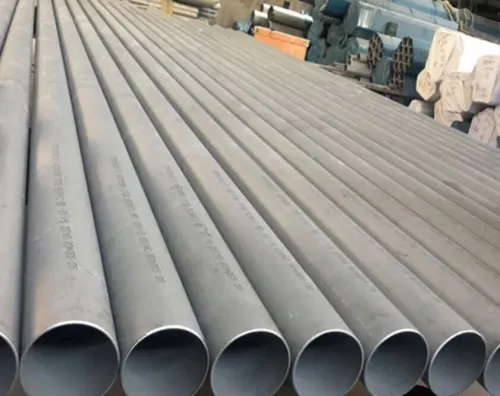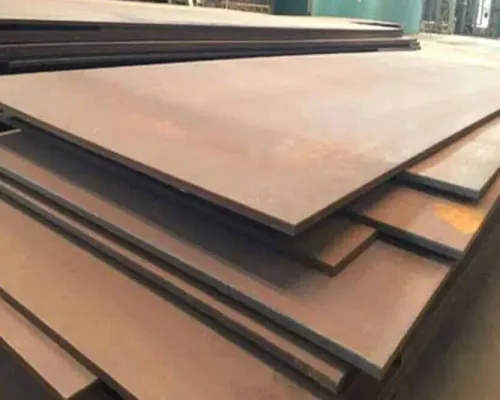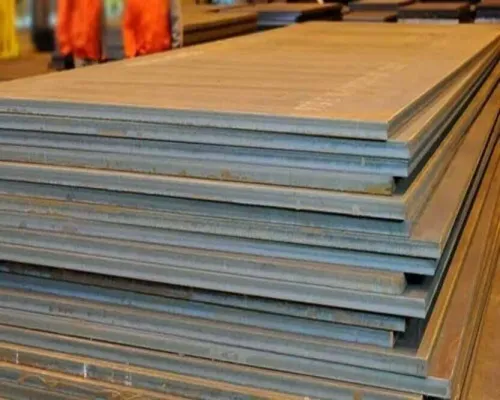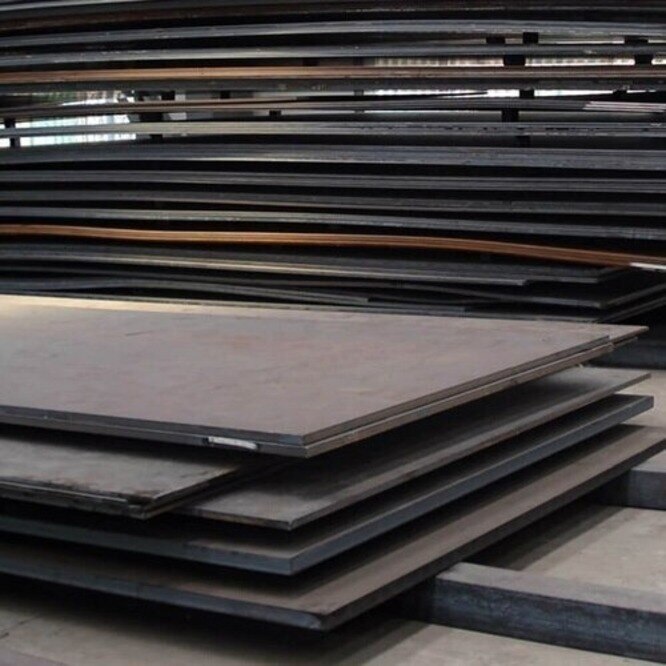
Choosing Rockhard 400, 450 or 500 by the number alone can produce the wrong balance of wear life, impact tolerance and fabrication risk. By the end, you will be able to match the grade to the wear mechanism, specify the documents and tests that make the material identifiable, and compare an Indian stockist’s offer without treating a commercial grade name as a complete specification.
Key takeaways
- Treat 400, 450 and 500 as nominal hardness labels, not complete steel grades.
- Match hardness to impact, sliding abrasion, temperature and forming requirements.
- Put chemistry, hardness, thickness, testing and certificates in the purchase order.
- Check stockists for traceability, fabrication guidance and producer documentation.
What Rockhard 400, 450 and 500 Actually Tell You
No: 400, 450 and 500 are not enough to compare plates. These commercial abrasion-plate designations generally indicate nominal Brinell hardness in HBW, not automatic EN or ASTM grades. A rockhard 400 plates supplier in india must provide the producer’s datasheet and certificate, not merely a label.
| Designation | Practical meaning | Main limitation |
|---|---|---|
| Rockhard 400 | Widest fabrication margin; suitable for moderate abrasion where impact, forming or repairability matters | Shorter life than harder grades in severe sliding or gouging wear |
| Rockhard 450 | Usual balance for serious sliding or mixed abrasion while impact still matters | Requires tighter fabrication control than 400 |
| Rockhard 500 | Greatest hardness; can extend life under severe sliding or gouging wear | Harder to cut, drill, machine and bend; not automatically safer under heavy impact |
Before comparing prices, require the manufacturer’s permissible hardness range and measured readings. The certificate must state:
- ISO 6506-1 or ASTM E10 as the test method
- Test location on the plate
- Sampling frequency
- Plate thickness and delivery condition
- Chemical composition, yield strength, tensile strength and elongation
- Toughness or impact-test requirements and results where specified
Hardness alone establishes none of those properties, and it cannot guarantee service life. Actual wear depends on abrasive size and hardness, load, sliding speed, impact and support conditions. A higher number is not automatically the better choice.
Match the Grade to Wear, Impact and Operating Conditions
Grade selection starts with the failure mechanism, not the highest hardness number. Record the:
- Abrasive material, particle hardness and particle size
- Sliding speed, load and contact pressure
- Gouging action and impact severity
- Support stiffness and plate thickness
- Plate temperature, moisture and corrosive exposure
- Planned replacement interval
| Wear and service condition | Practical choice | Why |
|---|---|---|
| Moderate wear, repeated impact, bending, structural loading or frequent repair | Rockhard 400 | It provides more fabrication and impact margin when cracking or forming failure matters more than maximum hardness. |
| Substantial sliding or mixed abrasion with meaningful impact | Rockhard 450 | It is the practical compromise between wear resistance, toughness and fabrication demands. |
| Severe sliding or gouging wear causing frequent replacement, with controlled fabrication available | Rockhard 500 | Higher hardness can reduce wear, but tighter cutting, drilling, bending and welding controls are needed, with a possible toughness trade-off. |
Sliding abrasion removes material as particles travel across the surface. Gouging wear involves larger or harder particles cutting into the plate, while impact abrasion adds repeated blows that can cause cracking or spalling. The hardest plate is not automatically best when impact, structural loading or crack resistance controls failure.
Chute liners, hoppers, buckets, truck bodies and other wear components can fall into any row; their grade depends on actual service conditions, not the equipment name. A rockhard 450 plates stockist in india is only a sourcing route, not a substitute for this assessment.
Establish expected wear life from comparable service history or controlled testing. Do not infer it from 400, 450 or 500 alone.
Documents and Acceptance Details to Put in the Purchase Order
Before accepting a quotation for rockhard 500 plates for stockist in india, require evidence that survives inspection, not merely an availability claim. A grade label alone does not establish chemistry, internal soundness or traceability.
1. Request the exact Rockhard manufacturer datasheet, grade standard or product specification, mill test certificate (MTC), inspection certificate and photographs of the original plate markings.
These records must identify the mill, country of origin, heat number, ordered thickness, delivery condition, chemical composition, hardness range and actual readings, yield strength, tensile strength, elongation, plus impact-test requirements and results where specified.
2. Write dimensional controls into the order. State thickness tolerance and flatness separately, along with width, length and delivery-condition tolerances. EN 10029 applies only when you incorporate it into the purchase order; the Rockhard designation does not automatically guarantee compliance.
3. If internal soundness matters, add ultrasonic testing with the agreed standard, test coverage and acceptance class. An MTC or abrasion-grade name does not imply UT.
4. Specify the hardness test method, test location and sampling frequency. Accept “500 hardness” only after the certificate states the method and reports the measured readings.
5. Ask whether the offer covers full plates, cut pieces or welded remnants. For remnants, verify heat-number continuity from the original mill and match every piece to its marking and certificate.
A credible rockhard 500 plates for stockist in india can produce grade-specific, traceable evidence before dispatch. Availability without that chain of proof is not acceptance evidence.
Control Fabrication Risk Before Cutting, Welding or Bending
A suitable Rockhard grade can be damaged before it reaches service if you apply ordinary mild-steel procedures or generic abrasion-plate values. Control fabrication in this order:
1. Before work starts, obtain the exact Rockhard grade datasheet and fabrication guide for the ordered thickness and delivery condition. Ask the supplier to state every limit in writing; never invent preheat, interpass-temperature, heat-input or minimum-bend-radius values.
2. Use a qualified welding procedure specification covering carbon equivalent, restraint, joint design, diffusible hydrogen, consumable condition, preheat, interpass temperature, heat input and inspection. Low-hydrogen consumables reduce risk but do not eliminate delayed hydrogen cracking; clean joints, dry consumables and post-weld inspection still matter.
3. Use rigid fixturing and suitable tooling for cutting, drilling and machining. Control cutting parameters and evacuate chips effectively. Confirm whether flame cutting, plasma cutting or another process will alter the edge condition, and specify any required edge treatment before fabrication.
4. Obtain the producer’s forming table before bending. The permitted inside radius depends on grade, thickness, rolling direction, bend angle, tooling and edge condition, so do not transfer a value from Rockhard 400, 450 or 500.
5. Prevent uncontrolled reheating and welding: excessive heat can change the quenched-and-tempered condition, hardness and heat-affected zone. If no official fabrication limit exists, require manufacturer approval before work begins.
Put thickness, cut size, delivery condition and fabrication process on the enquiry.
How to Evaluate an Indian Rockhard Stockist Before Ordering
Compare quotations on delivered suitability, not price alone. Ask the stockist to name the original manufacturer and mill, then match the heat number and plate marking to the MTC. A claim such as Rockhard plates manufacturer in India is unproven if it rests on a trading name or reseller inspection certificate.
| Quote item | Full plate | Remnant or cut piece |
|---|---|---|
| Traceability | Continuous heat number and markings | Confirm continuity after cutting |
| Quantity | Pieces, weight and available dimensions | Pieces, weight and remaining dimensions |
| Condition | Surface, corrosion allowance and packaging | Same checks plus unusable offcuts |
| Acceptance | Hardness, dimensions and replacement terms | Reject welded remnants or nonconforming pieces as agreed |
Put quantity by piece and weight, required cut sizes, permissible negative thickness tolerance, flatness, inspection documents, delivery condition and any ultrasonic testing requirement on the enquiry. Request actual hardness readings with the test method, location and sampling frequency, not “500 hardness” alone.
Check whether fabrication limits suit your thickness, cutting, drilling and bending process. A cheaper remnant can create traceability gaps, unusable offcuts or a shorter replacement interval. Shyam Metals & Alloys is useful when one supplier can discuss specified-grade abrasion plate alongside engineered wear components, but written mill evidence and service conditions remain decisive.
Use this checklist:
- Grade and hardness range; test method
- Heat number; chemistry and mechanical properties
- Dimensions, cut sizes and tolerances
- Delivery condition; surface and packaging
- Full plate or remnant status; corrosion allowance
- Fabrication guidance
- Inspection documents and UT requirement
- Replacement and rejection terms
Related product
 | Resistant Plates Rockhard(400 / 450 / 500 ) Thickness : 6mm to 100mm Width : 1,500mm to 2,500mm Length : 6,000mm to 12,000mm Production : Hot-Rolled (HR) /... View product → |
Frequently asked questions
What do Rockhard 400, 450 and 500 designations indicate?
They generally indicate nominal Brinell hardness levels in HBW. The designation alone does not identify an EN or ASTM grade, so request the producer’s datasheet and material certificate.
How do you choose between Rockhard 400, 450 and 500 plates?
Assess the dominant wear mechanism, impact load, operating temperature, plate thickness and fabrication method. Higher hardness is not automatically better when forming, welding or impact resistance controls the design.
What should a purchase order specify for Rockhard plates?
State the producer and grade designation, thickness, dimensions, chemistry limits, hardness range, testing requirements, heat or batch traceability, certificate type and acceptance criteria.
How can you evaluate a Rockhard plates stockist in India?
Ask for producer datasheets, certificates linked to the heat or batch, stock identification, inspection support and clear guidance on cutting, welding and bending. Reject material with missing or mismatched traceability.