A plate sold as EH 400 is not automatically equivalent to every 400-HBW wear plate, and a stockist is not necessarily the producing mill. By the end, you will be able to verify the grade, compare service and fabrication risks, and choose between imported JFE material and a documented standard wear plate on total cost rather than hardness alone.
Key takeaways
- EH 400 is JFE proprietary shorthand, not proof of every 400 HB plate’s grade.
- Compare abrasion performance, toughness, thickness and service conditions—not hardness alone.
- Ask suppliers for original mill certificates, heat numbers and traceable plate markings.
- Include cutting, welding, inspection and replacement costs before paying a grade premium.
What JFE EH 400 means—and what the 400 does not guarantee
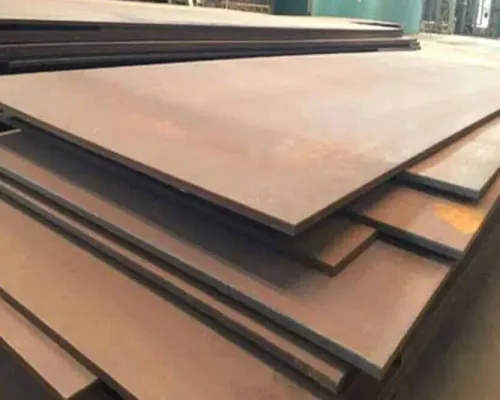
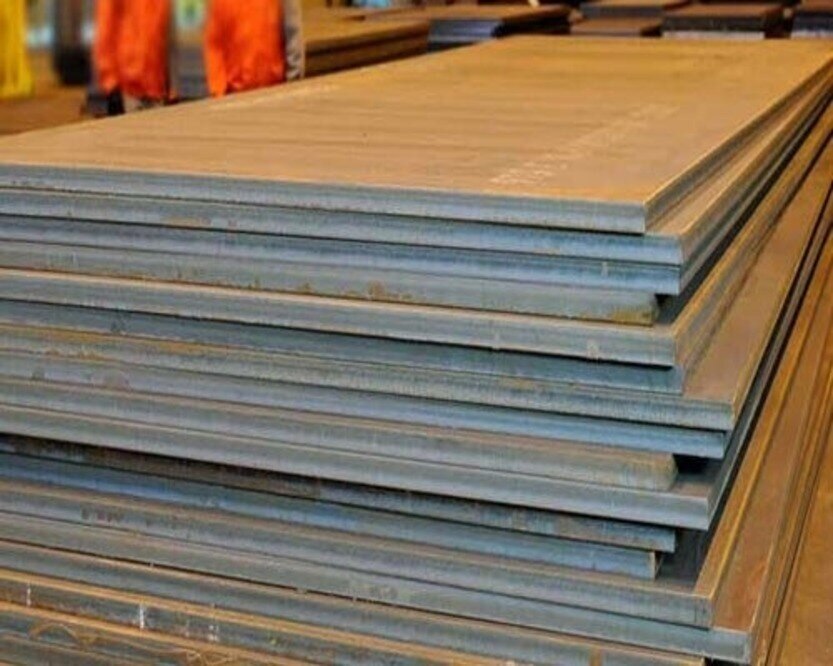
JFE EVERHARD 400 is a proprietary JFE Steel abrasion-resistant plate supplied in quenched-and-tempered condition. In Indian trading language, EH 400 is common shorthand, not a universal generic grade covering every plate sold as 400 HB wear plate.
The 400 does not mean every point measures exactly 400 HBW. The specified hardness range is typically 370–430 HBW, measured by the Brinell method under EN ISO 6506-1 or the named JFE product standard.
A result inside that range describes hardness; it does not by itself prove JFE origin, abrasion performance, chemistry, toughness or delivery condition.
For a purchase described as JFE EVERHARD 400 plates in India, obtain these details before comparing offers:
- The exact JFE datasheet edition and JFE steel designation
- Whether the plate is JFE EH 400, JFE EH 400LE or another grade
- Delivery condition and thickness applicability
- Hardness test method, test locations and results
- Chemical limits, plate dimensions and inspection documentation
A generic certificate stating 400 HBW proves only the reported hardness result. It does not establish that the steel is JFE EH 400, was quenched and tempered to the same specification, or meets the same chemistry, tolerances and traceability requirements.
Ask for the original mill certificate and match its heat or plate identification to the delivered material.
JFE EH 400 versus standard wear plate: compare the service, not the HB number
JFE EH 400 is the better choice only when its documented properties match the wear mechanism and loading; a higher HBW number alone does not predict service life.
“Standard wear plate” has no single international definition. It may mean a proprietary commercial grade, or a structural plate to EN 10025 or IS 2062; neither standard automatically substitutes for abrasion-resistant plate.
| Service factor | JFE EH 400 versus a generic alternative | What can change the decision |
|---|---|---|
| Hardness and abrasion | EH 400 offers a controlled hardness class, but a generic 400-HBW plate is not automatically equivalent | Sliding wear, gouging, particle size and impact angle |
| Impact and support | Hardness does not prove toughness or resistance to impact cracking | Severe impact, unsupported spans, support stiffness and plate thickness |
| Temperature and fatigue | Confirm performance at the actual operating temperature and cyclic load | Heat can reduce hardness; fatigue cracks can start at holes, welds or cut edges |
| Corrosion | EH 400 is not automatically corrosion-resistant | Corrosive slurry may require an alloy, liner or separate corrosion strategy |
Request yield strength, tensile strength, impact-test results, chemical limits, tolerances, delivery condition, thickness range and the hardness test method. Do not infer these from 400 HBW.
Higher hardness can make drilling, machining, forming and repair welding harder. Choose another grade when severe impact, corrosive slurry, high temperature, greater toughness or higher hardness governs the duty, unless the EH 400 datasheet supports those conditions.
How to verify an Indian supplier, stockist or claimed manufacturer
A stockist holds or distributes inventory; the manufacturer produces the steel. An Indian company that imports, cuts or supplies JFE plate is not the original JFE mill, even if it appears in a search for jfe eh 400 plates supplier in india.
| Role | Evidence you should expect | What it proves |
|---|---|---|
| Stockist or distributor | Stock record, invoice, original mill test certificate and plate identification | The seller handled identified inventory |
| Original producing mill | Mill name on the certificate, matching heat number and plate number | Where the steel was produced |
| Cut-material seller | Parent-plate certificate, cutting record and traceability to each cut piece | That the supplied piece came from the stated plate |
Require the original mill test certificate, not a seller-created certificate. Check the named producing mill, heat number, plate number or identification, ordered and actual thickness, dimensions, hardness results, chemical analysis, delivery condition and certificate-to-plate traceability.
For a jfe eh 400 plates stockist in india, verify these inventory details before discussing price:
- Exact thickness, width and length
- Plate count and available heat numbers
- Certificate availability for each heat
- Full plate or cut material
- Markings on the plate matching the certificate
A claimed jfe eh 400 plates manufacturer in india must provide evidence of the producing mill; do not accept the search label alone. Evaluate Shyam Metals & Alloys by these same records, whether it offers full plates or cut pieces.
A hardness figure without matching chemistry, dimensions, delivery condition and traceability does not prove genuine JFE material.
Related product
 | Resistant Plates JFE Everhard(400 / 450 / 500 ) JFE Everhard(400 / 450 / 500 ) Item Abrasion Resistant Plate Material JFE EVERHARD Thickness 6mm to 50mm Width 500mm to 3000mm Length 1,0000mm to... View product → |
Fabrication changes the comparison: cutting, welding, forming and inspection
Put fabrication controls in the purchase order before choosing JFE EH 400 or another wear plate. Parent-plate hardness does not prove that a thermally cut edge or weld heat-affected zone retains the same wear performance.
1. For oxy-fuel cutting, agree cut quality, dimensional allowance, allowable dross, edge straightness and whether the heat-affected edge must be removed by grinding or machining. Specify post-cut hardness testing and magnetic-particle or dye-penetrant crack inspection where the edge is wear-critical, plus the maximum permitted repair area.
2. For plasma cutting, specify the same dimensional and edge-quality limits, including allowable taper and slag. Require inspection for edge cracking or excessive hardness, and define whether the affected layer must be ground or machined away.
3. For abrasive cutting, specify wheel or saw-cut tolerance, burr removal and edge-crack inspection. Do not apply thermal-edge requirements to a genuinely cold cut, but still set the repair limit and final dimensional allowance.
4. Give the fabricator the actual mill chemistry and carbon equivalent. Use those values to establish preheat, interpass temperature, heat input, welding sequence, hydrogen control and consumable selection; do not accept a universal temperature. For a load-bearing, restrained or safety-critical joint, require a qualified WPS and procedure qualification to ISO 15614-1 or AWS D1.1.
5. Ask for cold-forming limits, rolling direction, minimum inside bend radius and hot-forming restrictions. Ban flame straightening unless a controlled, approved procedure defines temperature, heating pattern and inspection.
Choose by total service cost—and know when the grade earns its premium
JFE EVERHARD 400 earns its premium when longer, more predictable wear life and reliable documentation cost less than another replacement, shutdown or disputed certificate. Compare the complete installed-service cost, not the purchase price or 400-HBW label alone.
| Option | Cost drivers | Best choice when |
|---|---|---|
| JFE EVERHARD 400 | Import price, freight, lead time, cutting waste, machining and welding hours; consistent mill records reduce documentation risk. | Replacement intervals and downtime matter more than the initial price. |
| Documented local alternative | Lower freight and lead time, better stock access and potentially fewer fabrication hours; verify actual wear life. | Local supply keeps production moving and the alternative’s records match the duty. |
| Unverified generic 400-HBW plate | Low purchase price can become expensive through variable hardness, rework, early replacement and certificate disputes. | Do not select it without complete technical evidence. |
Choose thickness for impact energy, particle size, unsupported span and load. Include corrosion and fatigue; the thinnest or hardest plate can crack, distort or wear faster in the wrong duty. Hardness alone does not establish equivalence.
Treat a generic 400-HBW plate as comparable only when its chemistry, toughness results, hardness test results, tolerances, delivery condition and heat-to-plate traceability match the application. A documented local plate can beat imported JFE material when lead time and fabrication cost dominate.
Before accepting a claim from a jfe eh 400 plates manufacturer in india, require the exact JFE datasheet, edition, steel designation, thickness applicability and test results. Use the same evidence before choosing a higher-hardness grade.
Frequently asked questions
What does JFE EH 400 mean?
JFE EVERHARD 400 is a proprietary JFE Steel abrasion-resistant plate supplied in quenched-and-tempered condition. EH 400 is common Indian trading shorthand, not a universal generic grade.
Is JFE EH 400 better than standard 400 HB wear plate?
Not automatically. Compare the actual service: abrasive material, impact, plate thickness, toughness, wear rate, fabrication requirements and traceability rather than comparing hardness alone.
How can you verify a JFE EH 400 supplier in India?
Request the original mill test certificate, heat number, plate markings, import or chain-of-custody documents and a quotation identifying the exact JFE product. Check that the certificate details match the plate.
What fabrication issues affect the choice between wear plates?
Compare each grade’s cutting, preheating, welding, forming and inspection requirements. Follow the manufacturer’s approved welding procedure and verify hardness or cracking after fabrication when the application demands it.
When does JFE EH 400 justify its premium?
The premium earns consideration when documented performance extends component life, reduces shutdowns or lowers replacement and fabrication costs. Choose another plate when its added traceability or performance does not reduce total service cost.