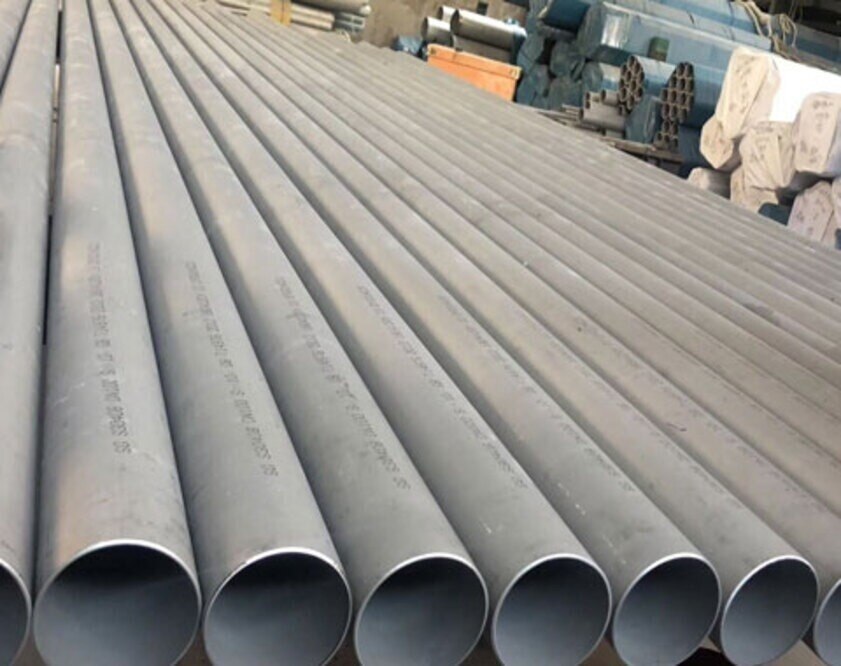
A 690 MPa label does not tell you whether a plate meets the required EN 10025-6 thickness class, impact condition, certificate level or fabrication route. By checking the grade designation, test documents, stock details and processing controls, you can compare suppliers and decide whether S690QL fits your equipment design.
Key takeaways
- Verify EN 10025-6, yield class, −40 °C impact results and heat number.
- Specify thickness, delivery condition, testing, tolerances and certificates before ordering.
- Control preheating, interpass temperature and heat input during fabrication.
- Compare stock, traceability, cutting capability and delivery reliability—not price alone.
What S690QL means on a plate certificate
S690QL on a plate certificate identifies an EN 10025-6 quenched-and-tempered structural steel grade, not any plate that happens to reach 690 MPa. “S” means structural steel, “690” denotes the minimum yield-strength class, “Q” means quenched and tempered, and “L” indicates a 27 J minimum Charpy impact energy at −40 °C, tested longitudinally.
The 690 MPa value is thickness-dependent. As plate thickness increases, the specified minimum yield strength can reduce, so read the certificate’s thickness row rather than relying on the grade name. Confirm the actual yield strength, tensile strength, elongation, Charpy result, heat number, chemical analysis and delivery condition.
An EN 10204 3.1 certificate links those results to the plate you receive.
- S690QL: 27 J minimum at −40 °C.
- S690QL1: a separate EN 10025-6 designation with the impact requirement tested at −60 °C; do not treat it as a document variant or substitute it without engineering approval.
- S700MC: a thermomechanically rolled grade with a different manufacturing route and forming behaviour.
- S890QL: a higher-strength quenched-and-tempered grade with different welding, toughness and design controls.
A s690ql high tensile steel plate supplier in india must therefore match the exact grade, thickness, heat, test results and certificate requirement. “High tensile” or IS 2062 E550 alone does not prove S690QL equivalence.
Where S690QL fits among high-strength equipment steels
Choose S690QL when your equipment needs 690 MPa-class yield strength, -40°C Charpy toughness, and the controlled properties of an EN 10025-6 quenched-and-tempered plate. It suits crane structures, lifting equipment, mining machinery, pressure-support frames and heavy transport components where weight reduction matters but S890QL would add welding and forming difficulty.
S690QL1 is not a certificate variant or a supplier’s shorthand. It is a separate EN 10025-6 grade with the same strength class and a lower specified impact-test temperature: -60°C rather than S690QL’s -40°C. Select it for colder service or a project specification that explicitly requires the QL1 grade.
| Grade | Main distinction | Choose it when |
|---|---|---|
| S690QL | EN 10025-6, quenched and tempered; 690 MPa class; impact tested at -40°C | You need high strength, structural toughness and established equipment-fabrication practice |
| S690QL1 | Same strength class; impact tested at -60°C | Low-temperature toughness controls the design |
| S700MC | EN 10149-2 thermomechanically rolled; about 700 MPa class | You need cold-forming efficiency and the design accepts TMCP plate rather than Q&T plate |
| S890QL | EN 10025-6, quenched and tempered; 890 MPa class; impact tested at -40°C | S690QL cannot meet the required load-to-weight ratio and fabrication controls are available |
Do not substitute S690QL for S700MC, S890QL or IS 2062 E550 because the yield figures look similar. Compare impact temperature, thickness-dependent yield strength, chemistry, delivery condition, forming limits and welding procedure requirements against the design specification. The grade name alone does not prove equivalence.
What to put in an S690QL purchase specification
A plate that arrives with the right grade but no verifiable parent heat is not purchase-complete. Your specification must identify EN 10025-6 S690QL, quenched-and-tempered delivery condition, and the exact plate dimensions: thickness, width, length, permitted over/under-tolerance, flatness, squareness and edge condition.
Require these documents and controls from the stockist:
- EN 10204 3.1 material test certificate, or 3.2 where your client or inspection authority requires independent validation.
- Heat number, plate number, cast number, mill name, chemical analysis, tensile results, yield strength for the supplied thickness, elongation and Charpy V-notch impact results at −40°C.
- Ultrasonic testing to the specified class, such as EN 10160, when internal discontinuities matter to welded load-bearing parts.
- Dimensional inspection against EN 10029 and surface-condition acceptance against EN 10163-2; do not treat surface quality as proof of dimensional compliance.
- Certificate of conformity, packing details, corrosion protection, certified net weight and dispatch inspection report.
- Cutting tolerance, original plate dimensions, rolling direction where relevant, and a traceability map linking every cut piece to its parent plate and heat.
| Option | What to verify | Why it matters |
|---|---|---|
| Mill plate | Original markings and certificate | Preserves heat identity |
| Cut piece | Transfer marking and parent-plate map | Prevents untraceable fabrication |
| S690QL | EN 10025-6 and Q+T condition | Rejects unnamed “high-tensile” substitutes |
| S690QL1 or IS 2062 E550 | Separate specification evidence | Similar strength does not prove equivalence |
Compare delivery lead time to the fabrication site, including Bengaluru, alongside price. An S690QL high tensile steel plate stockist in India that cannot confirm the exact thickness, width, impact-tested heat and certificate type is not offering an equivalent package.
How to fabricate S690QL without losing its properties
A careless heat-affected zone, hydrogen crack, or rough thermal-cut edge can reduce S690QL’s strength, toughness and fatigue life. Control the process, not only the final dimensions.
1. Set the welding procedure from EN 1011-2 principles and the plate producer’s recommendations. Control hydrogen pickup through dry, approved consumables, clean joint faces and protected storage. Establish preheat, heat input and interpass temperature for the plate thickness, restraint and joint detail; do not apply one fixed preheat temperature to every job.
2. Use controlled thermal cutting and remove the hardened or heat-affected edge when the drawing or procedure requires it. Specify cut-edge quality, repair limits and post-cut inspection. Do not weld over cracks, notches or unremoved slag.
3. Drill with sharp, rigidly supported tools, suitable cutting speed and feed, and sufficient coolant. Prevent rubbing and overheating, because a work-hardened or heat-damaged hole can initiate fatigue cracking. Deburr every hole and inspect critical edges.
4. Cold-bend only to the qualified minimum inside radius, considering thickness, rolling direction and bend orientation. Form gradually; do not flame-straighten a finished component unless the approved procedure permits it, because local heating changes the quenched-and-tempered structure.
5. Machine with rigid fixturing, sharp tooling and controlled feeds. Avoid excessive heat and interrupted cuts that damage the surface. Blend machined transitions and weld toes, remove gouges, and use the specified magnetic-particle or ultrasonic inspection on fatigue-critical areas.
Request cut-part heat traceability from an S690QL plate stockist in India, not merely a grade marking on the parent plate.
How to compare Indian suppliers for an equipment order
A credible quotation compares delivered, verifiable material—not merely rupees per kilogram. For s690ql plate in bengaluru, check whether the offer covers the exact grade, thickness, dimensions, certificate, cutting scope and delivery date your fabrication schedule needs.
Ask each supplier to confirm:
- Certified net weight, original plate dimensions, thickness and flatness tolerances under EN 10029, plus surface condition under EN 10163-2.
- The EN 10204 3.1 material test certificate, heat number, rolling direction where relevant, and traceability from parent plate to every cut piece.
- Ultrasonic testing class, cutting tolerances, edge condition, packing and corrosion protection.
- The strength value for your thickness: 690 MPa up to 50 mm, 650 MPa above 50–100 mm, 630 MPa above 100–150 mm, and 610 MPa above 150–200 mm.
- The promised arrival date at your fabrication site, not only the stockist’s dispatch date.
| Supplier comparison | Evidence to request | Why it changes the order |
|---|---|---|
| Mill plate | Parent-plate dimensions and heat-linked 3.1 certificate | Confirms origin and avoids unverifiable cut pieces |
| Cut pieces | Heat number marked on parts and cutting report | Preserves traceability after nesting and profiling |
| “High tensile” equivalent | Standard, impact temperature and chemical limits | S690QL is not automatically equivalent to IS 2062 E550 |
| Fast delivery | Confirmed stock, certificate availability and transport date | A common thickness may not match the required width, heat or test condition |
Shyam Metals & Alloys is worth comparing on this evidence, including whether its offered S690QL and S690QL1 documents identify the specification rather than relying on a catalogue label.
Related products
 | Alloy Steel Plate Grades View product → |
High Strength Plates View product → |
Frequently asked questions
What does S690QL mean on a plate certificate?
S690QL identifies an EN 10025-6 quenched-and-tempered structural steel grade. S means structural steel, 690 the minimum yield-strength class, Q quenched and tempered, and L a 27 J minimum Charpy impact value at −40 °C tested longitudinally.
Where does S690QL fit among high-strength equipment steels?
S690QL suits equipment that needs high yield strength with reduced structural weight, but its weldability, toughness, thickness range and fabrication controls must match the design.
What should an S690QL purchase specification include?
State the standard and grade, plate thickness and dimensions, delivery condition, impact-test direction and temperature, testing requirements, tolerances, certificate type, heat-number traceability and any cutting or machining needs.
How do you fabricate S690QL without losing its properties?
Use the approved welding procedure, control preheat and interpass temperature, limit heat input, avoid uncontrolled flame straightening and follow the plate mill’s fabrication guidance.
How should you compare Indian S690QL suppliers?
Check genuine stock or mill lead time, heat-number traceability, EN 10204 certificate availability, cutting and logistics capability, dimensional control and experience supplying equipment manufacturers.
Related product
High Tensile Plates High Tensile Plates En10028 S690Ql View product → |