“SA387 GR 1/2” is not a complete grade designation, so a quotation using that phrase alone can lead to the wrong chemistry, strength class or certification. You will be able to identify the correct SA-387 plate, match its documents to your vessel or skid requirements, and decide whether a stockist’s dimensions and traceability are suitable for the job.
Key takeaways
- Treat “SA387 Gr 1/2” as ambiguous until Grade 11, 12 or 22 is confirmed.
- Class 1 and Class 2 identify tensile-strength requirements, not product quality.
- Specify design temperature, pressure, chemistry, welding procedure and required plate dimensions.
- Match heat numbers, test certificates and inspection documents before fabrication.
Resolve the SA387 GR 1/2 designation before requesting a quotation
“SA387 GR 1/2” does not identify one formal grade. “SA387 Gr 1 by 2” is equally ambiguous: it could mean Grade 11 and Grade 12, or informal shorthand for another designation.
Treat “sa387 gr 1 2 steel plates” and “sa387 gr 1 by 2 steel plates stockist in india” as search phrases requiring clarification, not as order descriptions.
| Designation | Meaning | What the project must establish |
|---|---|---|
| SA-387/SA-387M | ASME pressure-vessel material specification | Whether the governing ASME code requires this designation |
| ASTM A387/A387M | ASTM pressure-vessel alloy plate specification | Whether the project permits ASTM certification |
| Grade and Class | Chemistry and mechanical-property requirements | Exact grade, Class 1 or Class 2, and applicable edition |
SA-387 and ASTM A387 are related, but their prefixes are not automatically interchangeable. Let the governing project code determine whether you need SA-387, ASTM A387, or both.
Place these details on the purchase order:
- Exact specification and edition
- Exact grade and Class 1 or Class 2
- Plate thickness and dimensions
- Delivery heat-treatment condition
- Required supplementary tests, such as impact testing or ASTM A578/A578M ultrasonic examination
The plate marking, purchase order and material test certificate must match in grade, class, heat number and dimensions. A certificate stating only “A387 plate” is incomplete.
Compare Grade 11, Grade 12 and Grade 22 without treating Class 2 as a quality label
Grade 11, Grade 12 and Grade 22 use different chromium-molybdenum chemistries, while Class 1 and Class 2 identify strength requirements. Do not select a plate from shorthand alone.
| Grade | Approximate alloy system | What to verify |
|---|---|---|
| Grade 11 | 1% chromium, 0.5% molybdenum Cr-Mo system | Carbon, chromium, molybdenum, phosphorus and sulfur on the MTC |
| Grade 12 | Related lower-chromium, lower-molybdenum system | Exact heat-analysis limits in the current SA-387/A387 table |
| Grade 22 | 2¼% chromium, 1% molybdenum system | Actual chemistry and specified mechanical properties on the MTC |
The label 1¼Cr-½Mo is commercial shorthand, not a substitute for the current specification table. Grade 22 is not interchangeable with Grade 11 or Grade 12: its alloy content changes elevated-temperature strength, oxidation resistance, welding controls and design calculations.
Class 1 and Class 2 are strength classes, not thickness classes or simple quality rankings. For common Cr-Mo grades, Class 2 generally has higher specified tensile and yield-strength requirements than Class 1. A Class 1 plate cannot replace a Class 2 plate because the chemistry looks similar.
Treat a387 gr 11 cl1 plates india and a387 gr 22 cl2 plates india as distinct procurement specifications. Match the grade and class across the purchase order, plate marking and MTC, then confirm the standard edition and project code. A stockist offering only “A387 plate” has not supplied enough information for approval.
Match SA-387 plate to the pressure equipment around an instrumentation system
SA-387 plate belongs in the pressure boundary of equipment serving an instrumentation system, not in the instrumentation hardware itself. It is pressure-vessel-quality alloy plate for elevated-temperature service.
1. Use it for process vessels, separators, reboilers, boilers and heat-exchanger components when the vessel design, process temperature and pressure code select the grade and class. It also suits vessels handling hydrocarbon or steam systems, plus high-temperature piping supports designed as integral parts of pressure equipment.
2. Keep it out of instrument tubing, impulse lines, cable trays, ordinary instrument stands, cabinets, brackets and non-pressure-bearing structural supports. Thin tubing and impulse lines require tubing products with suitable dimensions, pressure ratings and corrosion resistance; plate is the wrong product form.
3. Reject the shortcut of treating sa387 gr 1 2 steel plates as a general instrumentation material. Wet chloride service can require stainless steel, duplex stainless steel or nickel alloy. Wet hydrogen sulfide requires project-specific sulfide-stress-cracking and sour-service controls, while low-temperature service requires qualified impact-tested material.
4. Select galvanized steel, stainless steel, nickel alloy or a corrosion-resistant lining for supports or wetted equipment when their exposure demands it. Do not infer nozzle suitability, cyclic-service acceptance or low-temperature performance from the plate grade alone; confirm the design code, fabrication requirements and supplementary tests before ordering.
Build the purchase specification around temperature, pressure, chemistry and welding
You cannot select a grade and class from a search phrase such as “sa387 gr 1 2 steel plates” or “a387 gr 11 cl1 plates india”; provide the service and fabrication data first.
1. State the design temperature, design pressure, process medium, hydrogen exposure, wet H2S exposure, chloride concentration, minimum design metal temperature, plate thickness and corrosion allowance.
2. State the weld procedure, required welding procedure qualification, post-weld heat-treatment condition and cyclic-service duty. Do not accept “normalized” or “annealed” as sufficient descriptions; identify the actual delivery and PWHT condition.
3. Require the quotation to identify the current ASTM A387/A387M or ASME SA-387/SA-387M edition and report exact heat-analysis values for carbon, manganese, phosphorus, sulfur, silicon, chromium and molybdenum. It must also state tensile strength, yield strength and elongation for the selected grade and class.
4. Add Charpy impact testing, hardness limits, maximum carbon equivalent, ultrasonic examination and other supplementary tests when required by the vessel code, design temperature, purchaser specification or inspection plan.
5. For pressure-vessel UT, name ASTM A578/A578M or the project equivalent. Define scanning coverage, acceptance level and report format; SA-387 compliance alone does not prove those results.
The purchase specification must also identify the applicable welding procedure qualification record and PWHT cycle, including temperature, holding time and cooling method. That detail prevents an apparently suitable plate from failing low-temperature, sour-service or cyclic-service review.
Audit stock dimensions, heat traceability and the stockist’s documents before fabrication
A plate is usable only when the purchase order, plate marking and MTC tell the same story. Check the heat number, grade, class, nominal thickness, width, length, heat-treatment condition, chemistry, tensile results, yield strength, elongation, impact results and NDT records. A generic distributor certificate is not enough.
Ask the stockist to provide:
- Actual thickness, width and length
- Cut-to-size tolerances, flatness, edge condition and surface condition
- The standard used for dimensional acceptance
- Heat-treatment temperatures or batch reference
- Original mill traceability after re-rolling, cutting or splitting
| Stock state | Acceptable evidence | Disqualifying gap |
|---|---|---|
| Re-rolled, cut or split plate | Original heat number linked to the mill MTC | New distributor certificate with no original-heat link |
| Surface repair | Location, depth, method, weld procedure, examination and approval | Undocumented grinding or welding |
| Ready stock | Dimensions that reduce nesting, machining and weld joints | Dimensions that ignore mill tolerances or corrosion allowance |
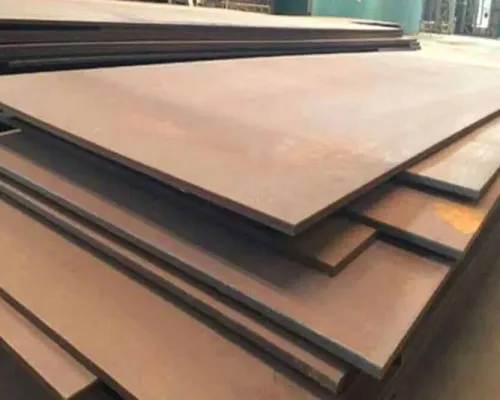
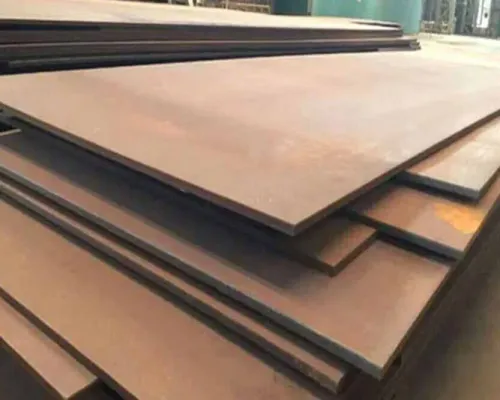
Compare the offered dimensions with the nesting plan for small vessels, separators or skids. A stockist such as Shyam Metals & Alloys is useful only when the exact grade and class retain mill traceability; availability alone proves no code compliance.
Require the quotation to state ASTM A387/A387M, ASME SA-387/SA-387M, or both. Search terms such as “sa387 gr 1 by 2 steel plates stockist in india” and “a387 gr 22 cl2 plates india” need this documentary check before fabrication.
Related products
 | Alloy Steel Plate Grades View product → |
 | Alloy Steel Plate Grades View product → |
Frequently asked questions
What does SA387 Gr 1/2 mean on a steel plate enquiry?
It is ambiguous shorthand, not one formal grade. Confirm whether the requirement is Grade 11, Grade 12, Grade 22, or another designation before requesting a quotation.
How do Grade 11, Grade 12 and Grade 22 differ?
They use different chromium and molybdenum chemistries for elevated-temperature service. Compare the specified grade and class against the equipment design temperature, pressure and welding requirements.
Is SA387 Class 2 a higher-quality plate than Class 1?
No. Class 1 and Class 2 identify different tensile-strength requirements. Class 2 is not a general quality ranking.
What should you specify when buying SA387 plates for instrumentation projects?
State the exact grade and class, design temperature and pressure, plate thickness and dimensions, chemistry limits, welding procedure, heat treatment and inspection documents.
Which documents should you check before fabricating SA387 plates?
Check the heat number, plate identification, material test certificate, chemical and mechanical results, heat-treatment records, dimensions, surface condition and any required third-party inspection report.
Related products
 | Alloy Steel Plate Grades View product → |
 | Alloy Steel Plate Grades View product → |
 | Alloy Steel Plate Grades View product → |
 | Alloy Steel Plate Grades View product → |