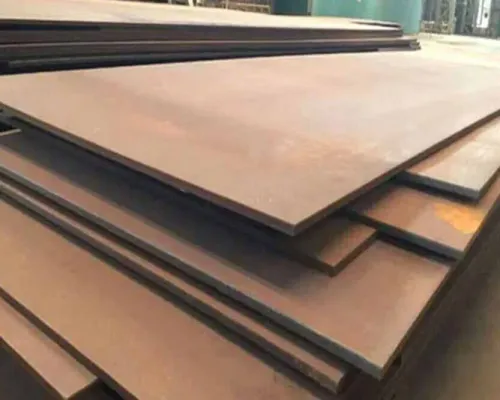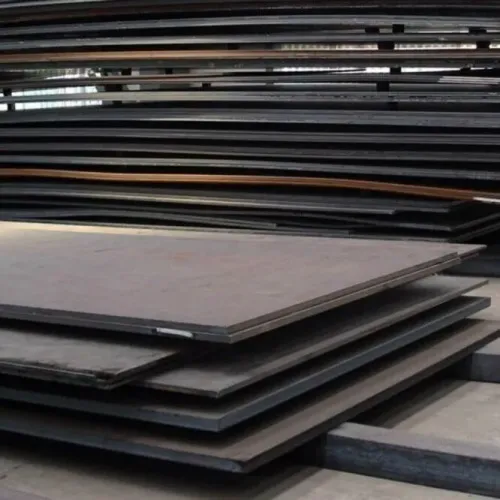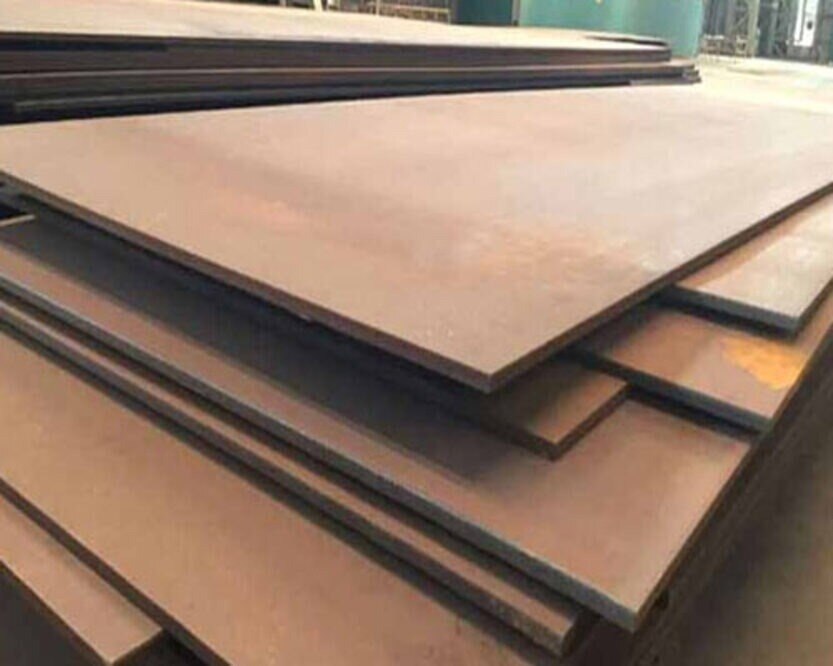
Choosing a Rockhard plate is not a matter of selecting the highest number on a quotation. You need to match nominal hardness with abrasion type, impact, support, fabrication limits and traceable documentation, then confirm whether the requested dimensions are actually available for dispatch in India.
Key takeaways
- Treat 400, 450 and 500 as nominal Brinell-hardness classes.
- Choose grade by abrasion, impact, temperature and fabrication conditions.
- Request the mill test certificate, heat number and hardness test results.
- Compare stockists on traceability, tolerances, cutting capability and dispatch evidence.
What Rockhard 400, 450 and 500 actually mean
The numbers 400, 450 and 500 identify nominal Brinell-hardness classes in quenched-and-tempered wear plate; they are not tensile-strength values or structural-steel grades. A higher number usually gives better resistance to sliding and fine-particle abrasion, but it does not automatically deliver longer life where impact, gouging, poor support or low temperature dominates.
| Grade | What the number means | Service-performance trade-off |
|---|---|---|
| Rockhard 400 | Nominal 400-class Brinell hardness | Best balance of abrasion resistance, impact tolerance, toughness and fabrication ease |
| Rockhard 450 | Nominal 450-class Brinell hardness | Higher wear resistance than 400, with less forgiving bending, cutting and welding controls |
| Rockhard 500 | Nominal 500-class Brinell hardness | Highest nominal hardness and sliding-abrasion resistance; impact damage and fabrication errors become greater risks |
Treat the class as a starting point, not a guaranteed service-life rating. Particle size, moisture, impact energy, attack angle, gouging, operating temperature and plate support can reverse the apparent advantage of a harder grade. Rockhard 400 may outlast Rockhard 500 in a high-impact chute if the harder plate chips or cracks.
Before comparing a Rockhard 400 plates stockist in India, request the manufacturer’s current hardness range, plate-thickness range, delivery condition and test method. The certificate should state where hardness was measured and identify HBW testing under ISO 6506-1 or ASTM E10; a grade name alone does not prove compliance.
Higher hardness also increases cutting, drilling, bending and welding difficulty, so fabrication capacity belongs in the grade decision.
Rockhard 400 vs 450 vs 500: grade selection table
Choose Rockhard 400 for severe impact with moderate abrasion, Rockhard 450 for a balanced duty, and Rockhard 500 when sliding, gouging or particle abrasion dominates and longer wear life justifies harder fabrication. Confirm the manufacturer’s current HBW range, test method and acceptance location; the grade number alone is not a complete specification.
| Grade | Hardness basis | Wear and impact fit | Fabrication and cutting | Best operating combination |
|---|---|---|---|---|
| Rockhard 400 | 400-class nominal hardness; verify certified range | Highest tolerance for impact and shock; suitable for mixed abrasion | Simplest of the three to cut, drill, bend and weld; follow the supplier’s heat-control limits | Large particles, repeated impact, good plate support, moderate wear and easier maintenance |
| Rockhard 450 | 450-class nominal hardness; verify certified range | Intermediate sliding and impact-abrasion resistance | More demanding than 400; use controlled thermal cutting and qualified welding procedures | Mixed impact and abrasion where service life must exceed 400 without 500-level fabrication difficulty |
| Rockhard 500 | 500-class nominal hardness; verify certified range | Strongest choice for sliding, gouging and fine-particle abrasion; impact toughness must be confirmed for the duty | Least forgiving; use controlled plasma or oxy-fuel cutting, drilling parameters and approved preheat limits | High wear, supported plate, limited shock, and a long replacement interval |
Do not choose 500 for unsupported plates exposed to heavy impact or elevated temperature without confirming toughness and temperature limits. Wet service, attack angle and heat can change the result. Ask a rockhard plates stockist in india for heat-number traceability, plate thickness, delivery condition and the mill certificate before comparing quotations.
Documents and tests that prove the plate is genuine
A genuine plate needs a document trail that reaches the producing mill, not just a stockist’s invoice. Ask for the original mill test certificate (MTC) and confirm that it states the applicable product specification, plate dimensions, delivery condition, and acceptance criteria.
1. Demand a heat analysis listing carbon, manganese, silicon, phosphorus, sulphur, chromium, nickel, molybdenum and boron where applicable. The chemistry must identify the heat and provide enough data to assess carbon equivalent for welding; a certificate that says only “abrasion-resistant steel” is inadequate.
2. Check the reported hardness method and location. The certificate should identify Brinell hardness as HBW under ISO 6506-1 or ASTM E10, state the manufacturer’s current acceptance range for the ordered thickness, and record where measurements were taken. Rockhard 400, 450 and 500 are nominal hardness classes, not tensile-strength values.
3. Require the heat-treatment condition, such as quenched and tempered, plus the plate thickness covered by that condition. Do not infer treatment from the grade name; an unverified condition can change hardness, toughness and fabrication behaviour.
4. Match the heat number stamped or painted on every plate to the MTC, packing list and shipping records. Reject mixed heats, altered markings, missing identification or certificates showing a different thickness.
A stockist inspection certificate confirms only the tests that stockist performed; it does not replace the mill certificate. If markings, chemistry or hardness conflict, quarantine the plate and use an independent laboratory for positive material identification and hardness testing before fabrication.
How to compare an Indian stockist, quotation and dispatch claim
Immediate stock is proven by a plate-level heat number, not by a quotation marked “available.” A rockhard 500 plates stockist in india should identify the actual grade, thickness, dimensions, quantity, heat numbers and delivery condition before you treat dispatch as immediate.
| Claim | Evidence to request | Warning sign |
|---|---|---|
| Physical stock | Photos of marked plates, current inventory, heat numbers and dispatch date | “In stock” without quantity or markings |
| Mill-order access | Mill name, production lead time, minimum order and promised rolling schedule | Dispatch date depends on an unplaced order |
| Cut-to-size stock | Available parent plate, cutting tolerance, remnant policy and revised delivery date | Cutting is offered without confirming the parent plate |
| Certificate-backed stock | Original mill test certificate linked to each heat | A stockist certificate replaces the mill certificate |
- Ask a Rockhard 400 plates stockist in india for the manufacturer’s current hardness range, test method, thickness range and delivery condition. A commercial grade name alone does not prove EN, ASTM or IS compliance.
- Require the heat number on every plate to match the packing list and mill certificate. Reject mixed heats, unexplained re-marking and certificates naming only a generic abrasion-resistant grade.
- Put minimum order quantity, standard dimensions, cut size, delivery location, freight, replacement terms and certificate availability beside the price per kilogram.
- State whether the service involves impact, sliding abrasion, gouging, wet material or elevated temperature; the same nominal hardness does not guarantee the same result.
- For any rockhard 500 plates supplier in india, Shyam Metals & Alloys can be compared using this evidence checklist rather than its quoted price alone.
Related products
 | Resistant Plates Rockhard(400 / 450 / 500 ) Thickness : 6mm to 100mm Width : 1,500mm to 2,500mm Length : 6,000mm to 12,000mm Production : Hot-Rolled (HR) /... View product → |
 | Resistant Plates Rockstar(400 / 450 / 500 ) Width : 1,500mm to 2,500mm Surface Paint : EP, PE, HDP, SMP, PVDF Production : Hot-Rolled (HR) / Cold-Rolled (CR) Material... View product → |
Fabrication, installation and service-life checks after purchase
Control heat, hydrogen and restraint before fabrication; the nominal grade alone does not set a safe procedure. Use the plate’s product data sheet and a qualified welding procedure that accounts for thickness, carbon-equivalent chemistry, joint restraint, heat input and consumable hydrogen control.
- Cutting: use the approved thermal or mechanical method, keep the cut edge free from cracks and excessive heat damage, and remove hardened or rough edges before loading the part.
- Welding: verify preheat, interpass temperature, consumables, heat input and cooling limits in the qualified procedure. Do not copy a preheat temperature from another Rockhard 400, 450 or 500 job.
- Bending: confirm the minimum inside radius, bend direction and press capacity before forming. Higher-hardness plate demands greater force and a larger radius; forcing it can cause edge cracking.
- Machining: use rigid workholding, sharp tooling and controlled feeds. Carbide tools and suitable coolant may be required; drilling with ordinary workshop settings can rapidly damage tools.
- Installation: support the plate continuously, avoid unsupported spans and prevent direct impact at corners, bolt holes and weld toes. Seal or protect areas exposed to wet, corrosive service.
After installation, record the starting thickness and inspect high-wear zones at planned intervals. Measure wear at consistent locations, not only where abrasion is easiest to see, and investigate cracking, distortion, loose supports, gouging or exposed substrate.
Hardness does not predict service life by itself: particle size, impact, moisture, temperature, support and sliding direction control the result.
Frequently asked questions
What do Rockhard 400, 450 and 500 mean?
They identify nominal Brinell-hardness classes in quenched-and-tempered wear plate, not tensile-strength values or structural-steel grades.
Which Rockhard plate grade should you choose?
Choose 400 for balanced wear resistance and fabrication, 450 for higher abrasion resistance, and 500 when severe sliding or fine-particle abrasion justifies harder material. Check impact, gouging, temperature and support conditions before upgrading.
Which documents prove a Rockhard plate is genuine?
Request the mill test certificate, heat number, plate identification, chemistry, mechanical results, hardness readings, dimensions and applicable inspection records. Match the certificate heat number to the plate marking.
How should you compare Rockhard plates stockists in India?
Compare quoted grade, thickness and dimensions, certificate traceability, testing, cutting tolerances, delivery evidence, freight terms, taxes and replacement provisions rather than price alone.
What should you check after buying and fabricating the plate?
Confirm plate identity before cutting, follow the specified preheat and welding procedure, control heat input, inspect cut edges and welds, and verify alignment, support and fastener fit during installation.
Related product
 | Abrasion resistant steel plate Plate is a type of high-strength, wear-resistant steel plate designed for demanding applications that require excellent durability and impact... View product → |