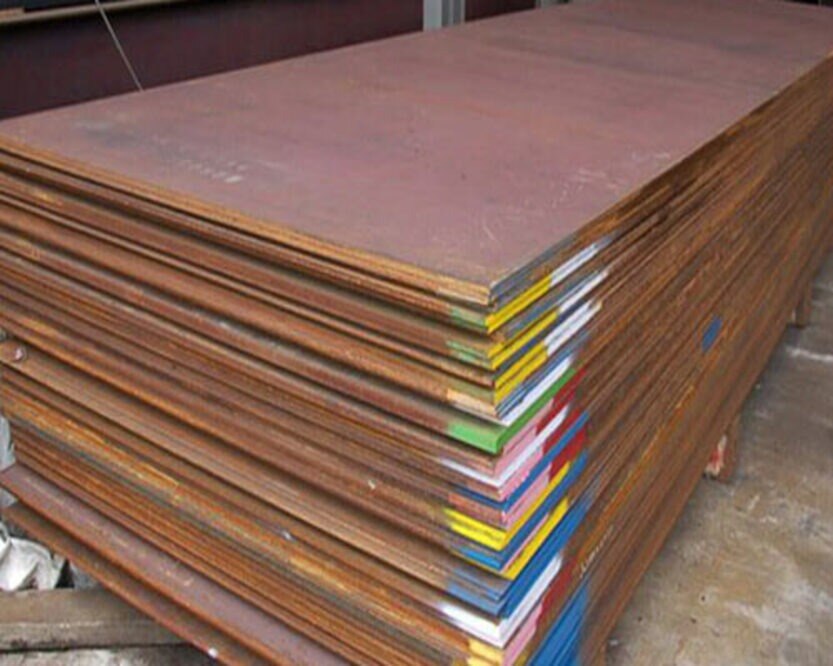
The numbers 400, 450 and 500 identify nominal Brinell hardness classes, not a guaranteed service life, tensile-strength level or plate thickness. The right choice depends on the abrasive mechanism, impact load, fabrication method, required test certificate and the cost of replacing or processing the plate.
Key takeaways
- Treat Rockhard numbers as nominal Brinell hardness classes, not interchangeable standards.
- Choose Rockhard 400 for balanced wear and impact when fabrication flexibility matters.
- Check hardness range, thickness limits, test reports and heat numbers before fabrication.
- Compare manufacturers, suppliers and stockists by traceability, cutting controls and documentation.
What Rockhard 400, 450 and 500 actually mean
Rockhard 400, 450 and 500 are nominal Brinell hardness classes, not interchangeable national standards. The number does not state plate thickness, tensile strength, or guaranteed service life. Hardness normally increases in that order, but the manufacturer’s guaranteed HBW range, thickness limits and acceptance standard define what you actually receive.
| Grade | Nominal meaning | What to compare |
|---|---|---|
| Rockhard 400 | Approximately 400 HBW class | Guaranteed range, toughness and fabrication limits |
| Rockhard 450 | Approximately 450 HBW class | Guaranteed range, chemistry and impact results |
| Rockhard 500 | Approximately 500 HBW class | Guaranteed range, cracking risk and welding controls |
Ask for the product datasheet, the test method such as ISO 6506-1 or the contractual equivalent, sampling location, thickness-specific limits and agreed acceptance plan. Surface preparation, scale, decarburisation, plate curvature, cooling rate, test location and through-thickness hardness variation can change the reported result.
Hardness alone does not establish yield strength, tensile strength, elongation, Charpy impact toughness or service life. A buyer comparing a rockhard 400 plates manufacturer in india with another source should request a heat-linked mill test certificate showing chemical composition, carbon equivalent, yield strength, tensile strength, elongation, Charpy impact temperature and Q+T delivery condition where specified.
Compare Hardox, JFE Everhard, Quard, Abrex, Rockstar and equivalent grades by those certified properties and test standards—not by brand names or nominal hardness alone. A 10 mm plate and a 25 mm plate carrying the same grade label are not automatically equivalent.
Choosing the grade for sliding wear, impact and equipment life
Chute and hopper liners usually see sliding and gouging abrasion, while crusher and screen parts absorb repeated impact. Rockhard 400 suits severe shock, repair welding, cold forming and faster fabrication when cracking risk matters more than maximum sliding-wear resistance.
| Grade | Main advantage | Practical fit |
|---|---|---|
| Rockhard 400 | Better impact and fabrication tolerance | Crushers, screens, distorted structures and repair-prone liners |
| Rockhard 450 | Balanced wear resistance and impact tolerance | Mixed-duty chutes, buckets and mining equipment |
| Rockhard 500 | Higher sliding-abrasion resistance | Well-supported liners where sliding dominates and qualified fabrication is available |
Hardness does not automatically increase toughness, tensile strength or equipment life. A harder plate becomes more sensitive to restraint, edge damage, heat input and fabrication defects; confirm the guaranteed HBW range, Charpy requirement and temperature instead of relying on the grade number.
- Plate support, thickness and impact severity
- Cutting, drilling, bending and welding procedures
- Replacement access and expected downtime
- Freight, machining, consumables, offcuts and repair labour
A Rockhard 400 plate can cost less overall if fabrication is quicker or repairs are simpler. A rockhard 500 plates manufacturer in india should provide chemistry-linked fabrication guidance, not only a hardness label.
Do not use abrasion-resistant plate as the default for corrosion-dominated service, elevated temperature, pressure-vessel code work, severe low-temperature impact or extensive unqualified forming. Verify the governing design code and material specification first.
Fabrication controls that change the grade decision
A plate that meets its hardness requirement before fabrication can fall outside it after uncontrolled heating. Obtain the grade-specific fabrication datasheet or mill procedure before choosing Rockhard 400, 450 or 500.
1. Request limits for preheat, interpass temperature, heat input, hydrogen-controlled consumables, joint restraint, plate thickness, cooling practice and post-weld treatment. Qualify the welding procedure against the actual plate chemistry and thickness, including carbon equivalent; do not apply an ordinary mild-steel procedure to Rockhard 500.
2. Confirm whether forming is cold bending or hot forming. Obtain the minimum bend radius for the ordered thickness and rolling direction. Hot forming outside the supplier’s temperature window can change the quenched-and-tempered microstructure and final hardness.
3. For cutting and drilling, specify flame-cut edge treatment, carbide tooling, rigid fixturing, drill geometry, cutting speed, coolant and hole-oversize limits. High-speed-steel drilling parameters can cause rapid wear, work hardening or oversized holes, particularly in Rockhard 500.
4. Record the permitted cooling method and any post-forming hardness check. A thick plate cools differently from a thin one, so a generic grade label cannot establish safe fabrication settings.
Rockhard 400 can reduce repair complexity and tolerate a wider fabrication window. Rockhard 500 can justify tighter controls when sliding-wear savings exceed extra tooling, welding and inspection effort; Rockhard 450 occupies the middle. Select from the qualified procedure, not the nominal number alone.
How to compare an Indian manufacturer, supplier and stockist
A manufacturer that melts or rolls plate controls production records; a supplier sources material against your order; a stockist holds finished plates in a warehouse. A “rockhard 400 plates supplier in india” or “rockhard 400 plates stockist in india” label does not prove either origin or availability.
| Business type | Evidence to request | Main limitation |
|---|---|---|
| Manufacturer | Original mill name, country of melt, country of rolling, certificate issuer, heat number, plate marking and heat-linked MTC | Production lead time may apply |
| Supplier | Source mill, purchase trail, certificate issuer and proposed plate identification | The material may come from another stockist or an imported mill |
| Stockist | Warehouse photographs or inspection, plate marking, heat number, MTC and dispatch location | Listed dimensions do not prove physical stock |
Before comparing quotations, send the same specification to every bidder:
- Grade, thickness, width, length, quantity and application
- Guaranteed HBW range, test method, sampling location and Q+T condition
- Dimensional tolerances, bare or coated surface and inspection certificate
- Cutting plan, destination, standard mill size, remnant-stock policy, minimum order quantity and lead time
Ask whether the quoted plate is full-size or cut-to-size, where it will dispatch from, and whether offcuts remain your property. A Bengaluru buyer could include Shyam Metals & Alloys in the comparison, but should judge its quotation by traceability and certified properties rather than the seller’s label.
Calculate landed cost from plate rate, freight, cutting, offcuts and fabrication. A cheaper sheet can cost more after unusable remnants, longer delivery or missing certification are included.
Related products
 | Resistant Plates Rockhard(400 / 450 / 500 ) Thickness : 6mm to 100mm Width : 1,500mm to 2,500mm Length : 6,000mm to 12,000mm Production : Hot-Rolled (HR) /... View product → |
 | Abrasion resistant steel plate Plate is a type of high-strength, wear-resistant steel plate designed for demanding applications that require excellent durability and impact... View product → |
Acceptance checks before you release the plate for fabrication
Release the plate only after its physical marking and paperwork agree with the purchase order and mill test certificate (MTC). A quotation from a Rockhard 500 Plates Manufacturer in India is not comparable without thickness-specific guarantees, dimensional tolerances, surface condition, inspection requirements and the governing specification.
1. Match the heat number, grade, plate marking, thickness, width, length, quantity, Q+T heat-treatment condition and surface condition. Reject mismatched markings, unlisted substitutions, wrong dimensions and damage that exceeds the purchase specification.
2. Review the MTC for the specified Brinell test method, commonly ISO 6506-1, hardness range, test location and sampling plan. Check chemical analysis, yield strength, tensile strength, elongation, Charpy impact temperature and results, dimensional tolerances, and any ultrasonic-testing requirement.
3. Do not accept an unexplained hardness failure before checking preparation. Scale, decarburization, flame-cut edges, curvature, insufficiently flat grinding or a test taken too near an edge can distort HBW readings. Request independent retesting when results conflict with the MTC, and use third-party inspection when the order is safety-critical, high-value or disputed.
4. Do not substitute Rockhard for Hardox, JFE Everhard, Quard, Abrex, Rockstar or another proprietary grade without written engineering confirmation covering hardness, strength, toughness, welding, forming and dimensions.
Select Rockhard 400 for the stronger balance of impact tolerance and fabrication control, 450 as the middle ground, and 500 only when the wear mechanism and qualified fabrication controls justify its tighter processing demands.
Frequently asked questions
What do Rockhard 400, 450 and 500 mean?
They identify nominal Brinell hardness classes. The number does not specify thickness, tensile strength or guaranteed service life, so check the manufacturer’s HBW range, thickness limits and acceptance standard.
Which Rockhard grade suits sliding wear and impact?
Rockhard 400 offers a balance of wear resistance, impact tolerance and fabrication flexibility. Choose Rockhard 450 or 500 when higher hardness is justified by the service conditions and your fabrication process supports it.
Which fabrication controls affect the grade decision?
Review the manufacturer’s cutting, preheating, forming and welding instructions, then match them to plate thickness, joint design and workshop equipment before selecting a harder grade.
How should you compare a Rockhard plate manufacturer, supplier and stockist in India?
Compare guaranteed hardness ranges, thickness availability, heat-number traceability, test certificates, cutting controls, delivery capability and support for the required acceptance standard.
What should you check before releasing Rockhard plate for fabrication?
Verify the grade, dimensions, thickness, surface condition, heat number, batch traceability, hardness results, test certificate and conformity with the purchase specification.