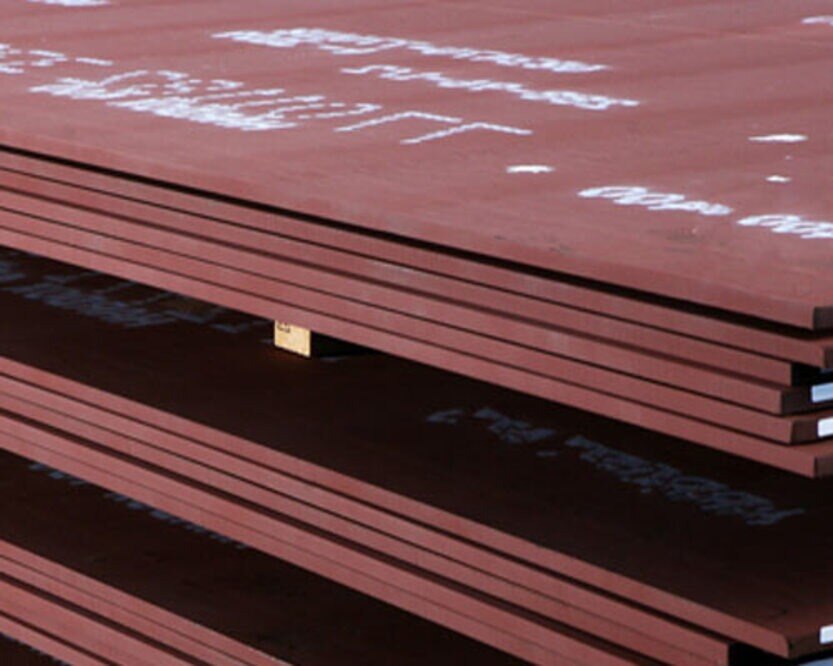
A failed wear plate does not prove that the steel grade was wrong. First identify whether the damage came from abrasion, impact, gouging, fatigue, corrosion, welding or a support problem, then preserve the evidence before choosing a replacement. By the end, you will have a method for investigating the failure, selecting Rockhard 400, 450 or 500 against the actual duty, repairing it safely and measuring whether the new solution works.
Key takeaways
- Lock out the machine and photograph wear, cracks, welds and supports.
- Match plate grade to impact, abrasion, temperature and structural evidence.
- Repair distorted supports before fitting a harder replacement plate.
- Control welding heat and document inspection results after every repair.
Stop the Damage and Identify the Failure Mechanism
Isolate and lock out the machine before anyone loads the failed area again. Photograph the plate in place, including the wear pattern, cracks, welds, corners and nearby supports; record operating hours, material handled, impact events and recent repairs.
Retain the failed piece without grinding or welding it, and inspect adjacent liners, bolts and supporting steel for transferred damage.
Classify the damage before ordering a replacement:
- Uniform thinning or a hole with rounded edges indicates abrasive wear; map remaining thickness on a grid and record where the plate became perforated.
- Deep grooves with raised lips indicate gouging from trapped or oversized material.
- Local dents, shattered edges or star cracks indicate impact damage.
- A bowed plate, elongated holes or separated fasteners indicates bending or restraint.
- Repeated cracks at corners, holes or weld toes indicate fatigue from cyclic loading.
- Cracks confined to weld metal or the heat-affected zone indicate weld or HAZ failure.
- Rust-lined pits and cracking beneath deposits indicate corrosion-assisted damage.
- Sudden cleavage-like fracture indicates brittle impact failure.
Visual inspection cannot reliably separate hydrogen-assisted weld cracking, HAZ cracking, fatigue, brittle fracture and restraint cracking. Trace every crack, check straightness, inspect welds, map hardness across the parent plate and HAZ, and examine the fracture surface when possible. Review the welding record, including preheat, consumable control and heat input.
Do not accept a search label such as rockhard plates supplier in india as proof of grade or suitability. Request the mill certificate, heat number, chemical analysis, hardness results, thickness, delivery condition and agreed acceptance tests before choosing the repair.
Choose the Grade from Duty and Evidence, Not the Hardness Number
A plate marked Rockhard 400, Rockhard 450 or Rockhard 500 is not verified by the stamp alone. Match the heat number and plate identification to the mill test certificate, then compare the reported hardness range with the purchase specification.
Check thickness, chemical analysis, delivery condition, impact toughness where specified, and traceability from the original plate to the cut component.
Ask the supplier for:
- The agreed hardness range and test method, not only the nominal grade
- Heat-treatment condition, thickness tolerance and plate dimensions
- Chemical composition and carbon-equivalent value
- Impact-test results when impact loading is part of the duty
- Ultrasonic inspection results and acceptance level, if internal defects matter
- Cutting condition and welding documentation, including the qualified WPS
| Grade | Evidence to confirm | Service fit | Main risk |
|---|---|---|---|
| Rockhard 400 | Certificate hardness range and chemistry | Sliding abrasion with moderate impact | Faster wear under severe gouging |
| Rockhard 450 | Same evidence plus toughness requirement | Higher abrasion with controlled impact | Cracking or difficult fabrication if toughness is inadequate |
| Rockhard 500 | Same evidence plus welding and forming controls | Severe sliding or gouging abrasion | Impact cracking, weld failure or support damage |
Choose from the wear mechanism, impact energy, plate support and repair constraints. A harder replacement is not automatically better: moving from 400-class to 500-class steel can shift failure into welds, corners, bolt holes or unsupported structure.
Search terms such as rockhard 400 plates supplier india or rockhard 450 plates supplier india do not replace certificate review or an agreed acceptance test.
Fix the Structure Before Installing a Harder Replacement
A harder replacement is the wrong fix when the plate failed from poor support, restraint or concentrated impact rather than uniform thinning. Gaps behind the liner, unsupported spans, sharp internal corners, small edge distances, protruding fasteners and trapped rock focus load into one spot.
A 500-class plate can then move the failure to a weld, bolt hole, corner or backing structure.
Treat these findings as structural faults and correct them before selecting a grade:
- Add support or stiffeners beneath unsupported spans, and remove gaps that allow the liner to flex under impact.
- Replace sharp corners with a suitable radius, reposition joints away from impact zones, and countersink or protect protruding fasteners.
- Remove trapped oversize material and correct chute alignment, feed angle or excessive drop height.
- Repair cracked welds only after identifying whether restraint, fatigue, hydrogen or heat-affected-zone cracking caused them; a visual check alone cannot separate these mechanisms.
| Option | What it corrects | Use it when |
|---|---|---|
| Reset or reinforced liner | Gaps, flexing and concentrated impact | The parent structure remains sound |
| Local patch or replaceable insert | Damage confined to one impact or wear zone | Access and support can be restored |
| Harder replacement plate | Uniform abrasion after fit-up is corrected | Wear, not cracking or distortion, dominates |
Do not let a search label such as “rockhard 500 plates supplier india” determine the remedy. Compare the proposed plate with the mill certificate, thickness, hardness range, impact data and welding documentation; hardness alone does not prove longer service life.
Control Heat and Inspect Every Repair
Thermal cutting, drilling and forming can change the edge you are relying on. Follow the plate producer’s limits for cutting speed, heat input, cooling, hole-making and bend radius; excessive heat can leave a hardened, cracked edge, while uncontrolled heat can create a soft zone that wears quickly.
Use a qualified welding procedure, not the Rockhard grade number alone. Set preheat, interpass temperature, heat input and consumable hydrogen level from the plate’s carbon equivalent, thickness and joint restraint. A repair can look sound while its heat-affected zone wears through first.
- Cut with the approved process and condition. Remove slag and inspect every cut edge when the component has cracked, carries impact loads or is highly restrained.
- Drill with the producer’s recommended tooling and speed. Deburr holes, check for radial cracking, and do not weld over a damaged hole.
- Form only within the specified bend radius. Inspect the outside radius for hairline cracks before installation.
- Weld with a qualified WPS and record consumable batch, preheat, interpass temperature and heat input. Control cooling; do not quench a hot repair.
- Inspect welds visually, then use magnetic-particle testing on ferromagnetic surfaces when surface cracking is a concern. Use ultrasonic testing where the procedure requires internal examination.
Map hardness across the weld metal, HAZ and parent plate. A single weld-metal reading can miss a softened band. Trace cracks, map wear depth and review the welding record; visual inspection alone cannot separate hydrogen cracking, fatigue, brittle impact fracture and restraint cracking.
Ask a rockhard plates supplier in india for the producer’s cutting and welding guidance before repair.
Write a Replacement Specification and Prove the New Plate Worked
Treat rockhard 400 plates supplier india, rockhard 450 plates supplier india and rockhard 500 plates supplier india as search terms, not acceptance criteria. Put the acceptance criteria in your purchase order.
- Grade and actual hardness range, not only “400,” “450” or “500”
- Nominal thickness, thickness tolerance, plate dimensions and delivery condition
- Chemical analysis, heat number, heat-treatment condition and mill test certificate
- Impact-toughness results when specified, plus ultrasonic testing class and acceptance level
- Cutting condition, weld procedure guidance and required welding consumable documentation
- Traceability from each cut component back to the original plate
Shyam Metals & Alloys should receive this same schedule when you request a quotation, so competing offers are technically comparable. Do not approve a harder replacement until its toughness and welding limits suit the impact, bending and restraint in your machine.
Measure the replacement against the failed plate at identical locations and operating duty:
| Measure | Record | Proof of improvement |
|---|---|---|
| Wear rate | Thickness loss ÷ operating hours or tonnes processed | Lower loss rate, not merely more calendar days |
| Downtime | Unplanned hours, repair hours and lost production | Fewer hours per 1,000 operating hours |
| Failure cost | Plate, labour, consumables, scrap and downtime cost | Lower total cost per operating hour |
Take ultrasonic readings on a marked grid at installation, then at fixed hour or tonne intervals. Record feed material, flow, impact zones, welds and repairs; a corner crack or weld failure must not be averaged into uniform plate wear.
Related products
 | Abrasion resistant steel plate Plate is a type of high-strength, wear-resistant steel plate designed for demanding applications that require excellent durability and impact... View product → |
 | Resistant Plates Rockhard(400 / 450 / 500 ) Thickness : 6mm to 100mm Width : 1,500mm to 2,500mm Length : 6,000mm to 12,000mm Production : Hot-Rolled (HR) /... View product → |
Frequently asked questions
What should you do first when a Rockhard plate fails?
Isolate and lock out the machine, then photograph the wear pattern, cracks, welds, corners and nearby supports before removing the plate.
How do you choose between Rockhard 400, 450 and 500 plates?
Choose from the actual duty and failure evidence, including abrasion, impact, temperature, cracking and structural loads—not hardness alone.
Why must the supporting structure be repaired before installing a harder plate?
Bent supports, gaps, poor fit-up and concentrated loads can cause the replacement plate to fail even when its hardness is higher.
How should you control heat when repairing or replacing a Rockhard plate?
Follow the plate's welding procedure, control preheat and interpass temperature, use suitable consumables, and inspect every repair.
How can you prove that a replacement Rockhard plate worked?
Write a specification covering grade, thickness, fit-up, welding and inspection, then record operating hours, wear measurements and failure-free service.