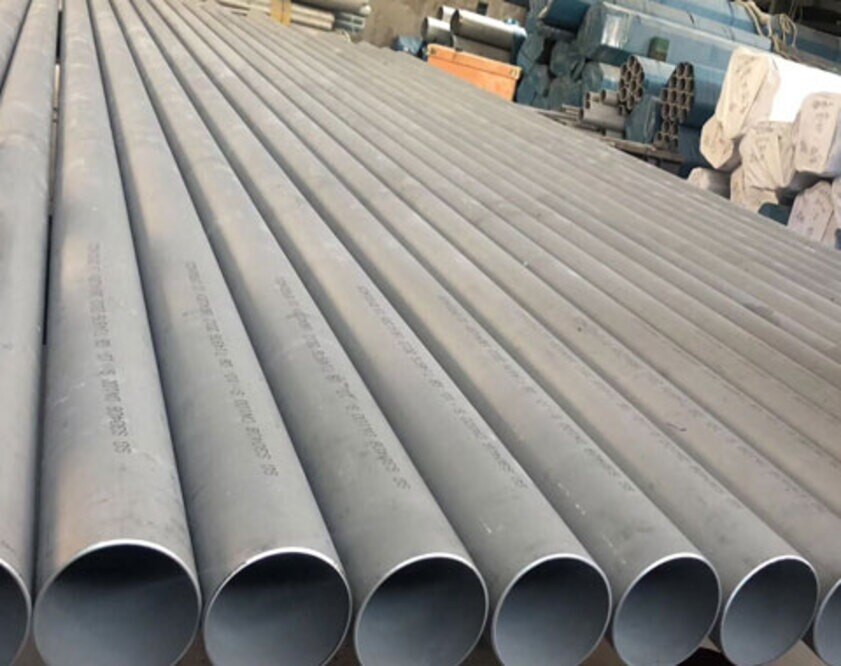
Choosing SA 537 Class 1 for a rain-exposed pressure-equipment project requires more than confirming plate availability. You need to verify the specification, heat-treatment condition, certificate, traceability, storage controls, and fabrication plan before wet-weather delays turn into rejected material or coating failure.
Key takeaways
- Confirm 345 MPa yield strength and 450–550 MPa tensile strength.
- Keep plates off the ground under ventilated, waterproof cover.
- Match heat numbers, markings, mill certificates, and purchase specifications.
- Reject the grade when stainless or Cr-Mo corrosion resistance is required.
What SA 537 Class 1 specifies—and what it does not
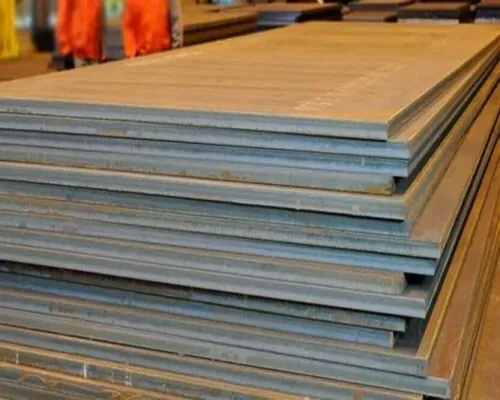
ASTM A537/A537M defines SA 537 Class 1 as normalized carbon-manganese-silicon pressure-vessel plate. It is not stainless steel and not SA 387 chromium-molybdenum plate. Commonly specified minimum properties are 345 MPa yield strength, 450–550 MPa tensile strength, and 21% elongation in 50 mm.
Commonly used chemistry limits are carbon 0.24% maximum, manganese 0.70–1.60%, silicon 0.15–0.40%, phosphorus 0.035% maximum, sulphur 0.035% maximum, copper 0.35% maximum, nickel 0.25% maximum, chromium 0.25% maximum, and molybdenum 0.08% maximum. Treat these as purchasing references, not substitutes for the specified ASTM A537/A537M edition.
- Put the applicable edition, plate-thickness range, test direction, and test method in the purchase order. Check the certificate against each item; edition-specific or thickness-dependent values control acceptance.
- Confirm normalized heat treatment. Do not replace Class 1 with quenched-and-tempered Class 2 without design and welding review: the different strength and heat-treatment condition affect forming, toughness, welding qualification, and post-weld heat-treatment assessment.
- If the vessel follows ASME rules, check the SA designation against ASME Section II before release. A buyer seeking an SA 537 Cl 1 grade alloy steel plate manufacturer in India should demand the heat number, plate identification, chemistry, tensile results, dimensions, and heat-treatment record—not rely on “alloy steel” wording alone.
Why monsoon conditions change plate control and fabrication risk
Rain turns plate control into a fabrication risk before any weld is struck. Keep SA 537 Class 1 off wet ground during temporary outdoor exposure; standing water at plate contact points causes localized staining and corrosion.
Condensation trapped inside tightly wrapped packs can be worse than visible rain because it remains unseen until the pack is opened.
Surface staining or light flash rust on edges and cut faces is not automatically rejection. Escalate for technical review when you find pitting, measurable section loss, deep rust scale, lamination-like indications, contaminated surfaces, or markings that no longer support traceability. SA 537 Class 1 provides no atmospheric corrosion protection.
1. Stop welding, forming, coating, or assembly until rain-contaminated plate is cleaned and completely dried. Wiping away visible water does not control hydrogen pickup, porosity, or delayed cracking.
2. Use the qualified WPS for preheat, interpass temperature, hydrogen-controlled consumables, heat input, joint restraint, plate thickness, ambient limits, and any post-weld heat treatment. Do not select preheat from a generic grade table.
3. Plan for muddy access routes, delayed lifting, and interrupted welding or painting. Protect packs from direct rain without airtight covers, provide drainage, and prevent water retention between plates.
4. Apply the specified surface-preparation and coating system only to clean, dry steel. Painting over mill scale, flash rust, oil, or trapped moisture causes premature coating failure; inspect drainage paths and coating damage after transport and erection.
A receiving and storage procedure for rainy-season deliveries
Photograph every wet or damaged pack before opening or moving it. This procedure applies whether the delivery comes from a manufacturer, supplier, or an SA 537 Cl 1 grade alloy steel plate stockist in India.
1. At unloading, inspect the wrapping, banding, plate edges, corners, markings, and signs of impact or rust. Look between plates for trapped water, then record the condition against the delivery documents.
2. Reject unrecorded movement of visibly damaged packs. Photograph torn wrapping, loose bands, bent corners, deep marks, and rust before separating the plates for inspection.
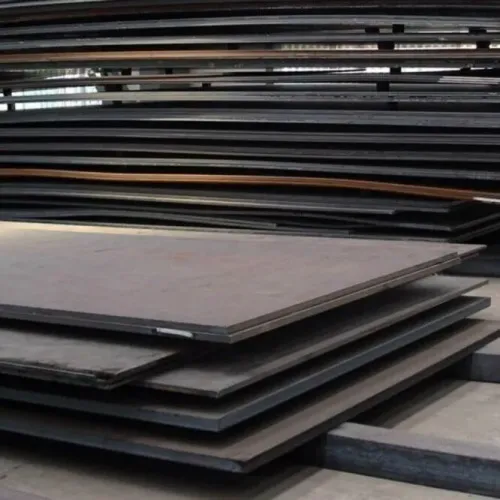
3. Place plates on level sleepers above ground, with drainage beneath and enough spacing for air circulation. Use a roofed, ventilated area that excludes direct rain; do not seal plates under airtight covers, because trapped condensation accelerates staining and corrosion.
4. Separate plates by heat number and thickness. Enter the storage location, quantity, condition, and exposure date in the storage register, and update it after every relocation or cutting operation.
5. Before coating or fabrication, remove condensation, dry the surface, and clean oil, dirt, loose scale, and corrosion products. Obtain inspection approval when pitting or measurable section loss is visible; do not paint over trapped moisture or active corrosion.
6. Before plasma, oxy-fuel, or saw cutting, document the heat-number transfer method. Mark every cut piece with the original heat number, using a durable marking that remains legible after stock reduction and monsoon handling.
How to qualify an Indian source through documents and markings
Release plate for pressure work only after the documents, markings, and purchase order tell the same story. An SA 537 Cl1 grade alloy steel plate supplier in India must provide:
- Heat number and plate number
- Manufacturer’s test certificate stating ASTM A537/A537M and its edition
- Class 1 designation, thickness, dimensions, and quantity
- Normalized heat-treatment record or a stated normalized condition
- Chemical analysis and tensile results
- Impact results when the purchase order or construction code specifies them
Check every certificate entry against the purchase order and the plate marking. Heat number, grade, class, thickness, dimensions, quantity, and reported test results must agree; a stock-availability statement does not replace this reconciliation. An SA 387 certificate proves neither SA 537 Class 1 compliance nor the required normalized condition.
Certificate validation has two distinct levels:
| Certificate | Validation | What it establishes |
|---|---|---|
| EN 10204 Type 3.1 | Manufacturer’s authorized inspection representative independent of production | Manufacturer-supplied results are validated |
| EN 10204 Type 3.2 | Type 3.1 validation plus purchaser’s representative or official inspector | Results receive additional purchaser or official inspection validation |
Confirm in writing that the ASTM certificate satisfies the project’s ASME Section II material-document requirement. Ask Shyam Metals & Alloys to demonstrate this document-to-marking traceability before release, rather than judging an SA 537 source by stock alone. Record any cutting or re-certification activity and transfer the original heat number to every remaining piece.
When SA 537 Class 1 is the right—or wrong—purchase decision
SA 537 Class 1 is the right purchase when the pressure-vessel design, construction code, and engineer specify its normalized carbon-manganese-silicon plate. The word “alloy” alone proves nothing; compare the exact specification, class, heat treatment, certificate, and qualification cost.
| Option | Code acceptance and heat treatment | Strength and welding | Corrosion, availability, qualification |
|---|---|---|---|
| SA 537 Class 1 | Pressure-vessel specification; normalized | Minimum yield commonly 345 MPa; weld with a qualified WPS | No corrosion protection; industrial availability; qualification follows the specified code |
| SA 516 Grades 60, 65, 70 | Pressure-vessel grades; normalized or normalized-and-tempered as specified | Different strength, toughness, thickness, and design-code choices; qualify welding to the selected grade | No inherent corrosion resistance; broad availability; cost depends on testing and documentation |
| SA 387 Cr-Mo grades | Pressure-vessel plate for elevated-temperature service; normally quenched and tempered | Chromium-molybdenum chemistry changes welding and heat-treatment controls | Better high-temperature suitability, not general wet-service corrosion resistance; higher qualification burden |
| Ordinary structural steel | Structural acceptance, not automatic pressure-vessel acceptance; condition varies | Suitable only within its structural design basis | Often readily available and cheaper; substitution can invalidate design approval |
Choose SA 516 when its grade and toughness or thickness range fit the design; choose SA 387 for specified elevated-temperature chromium-molybdenum service. SA 537 Class 1 is the wrong choice for atmospheric frames, platforms, non-pressure supports, or corrosive wet service needing stainless or another corrosion-resistant alloy.
Do not substitute Class 2, stainless steel, or an engineer-selected grade without design review. When comparing an alloy steel plates manufacturer in India, demand the exact grade, class, heat-treatment condition, and qualification evidence—not a catalogue label.
Frequently asked questions
What does SA 537 Class 1 specify?
ASTM A537/A537M SA 537 Class 1 specifies normalized carbon-manganese-silicon pressure-vessel plate. Common minimum properties are 345 MPa yield strength, 450–550 MPa tensile strength, and 21% elongation in 50 mm.
Why does monsoon weather increase SA 537 Class 1 plate risk?
Rain and high humidity promote surface corrosion, trapped water, staining, and wet cutting or welding conditions. Control exposure, drainage, drying, and fabrication conditions before the plate enters production.
How should you receive and store SA 537 Class 1 plates during monsoon?
Inspect for wet packaging, standing water, corrosion, distorted edges, and readable heat markings. Record the condition on delivery, place plates on raised supports, and use a waterproof cover with ventilation.
Which documents should an Indian SA 537 Class 1 supplier provide?
Request the purchase-order specification, mill test certificate, heat number, plate dimensions, standard and edition, delivery condition, mechanical test results, and any agreed inspection or testing records. Match every document to the markings on the plate.
When is SA 537 Class 1 the wrong purchase choice?
Choose another grade when the design requires stainless corrosion resistance, chromium-molybdenum service, higher-temperature performance, a different toughness requirement, or properties outside SA 537 Class 1.