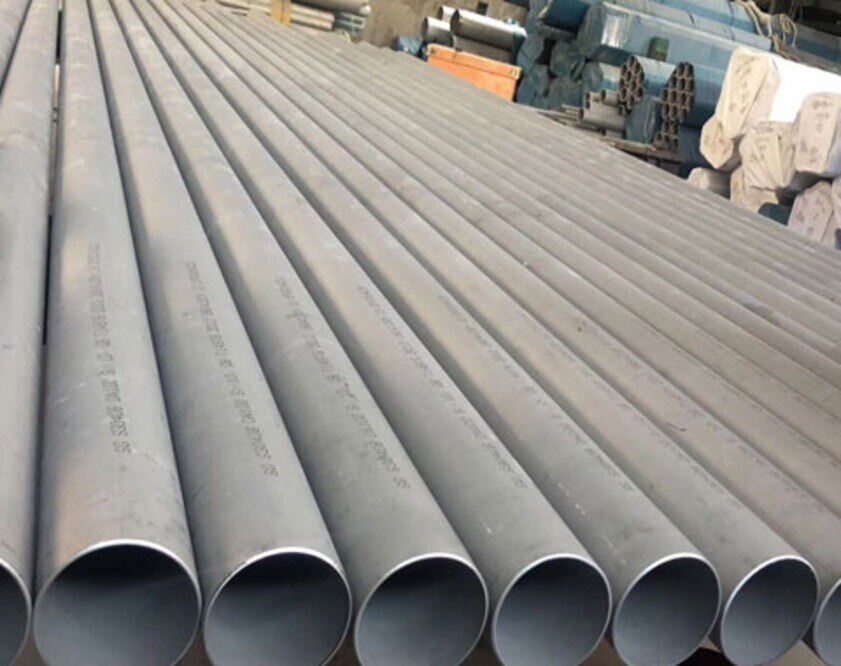
“Mn13,” X120Mn12, X120Mn13 and X12 do not form a complete purchase specification, and ASTM A128 does not automatically prove compliance for rolled plate. You will be able to cross-check the grade, match it to the wear mechanism, write an enforceable purchase order and assess an Indian supplier’s evidence before committing to fabrication or delivery in Bengaluru.
Key takeaways
- Put the exact standard, chemistry and plate form on every purchase order.
- Choose manganese steel for severe impact and work-hardening, not hardness alone.
- Request an EN 10204 3.1 certificate with heat number and chemical analysis.
- Use controlled cutting and welding procedures to limit cracking and distortion.
Which Mn13, X120Mn12, X120Mn13 and X12 designation belongs on your purchase order?
Put X120Mn12, not “Mn13” or “X12” alone, on the purchase order only when the supplier confirms the applicable standard, chemistry and rolled-plate product form. These names are related, but they are not automatically interchangeable.
| Designation | What it indicates | Evidence required |
|---|---|---|
| X120Mn12 | European designation commonly associated with austenitic manganese steel, often material number 1.3401 | Complete invoked standard, heat-wise chemistry, delivery condition and plate-form confirmation |
| X120Mn13 | A related high-manganese designation with a different nominal manganese level | Exact chemical limits and mechanical requirements from the supplier’s standard or datasheet |
| Mn13 | Commercial shorthand, not a complete purchasing specification | Formal grade designation, heat number, mill test certificate and inspection requirements |
| X12 | Incomplete and ambiguous shorthand | Reject unless the supplier expands it into a complete standard grade |
X120Mn12 broadly points to about 1.20% carbon and 12% manganese. Typical Mn13 chemistry is about 1.0–1.3% carbon and 11–14% manganese, while silicon, phosphorus and sulfur limits depend on the standard and production route.
An X120Mn12 manganese plates supplier in India must identify whether the material is rolled plate or cast product. ASTM A128/A128M covers cast austenitic manganese-steel products; an A128 reference alone does not prove rolled-plate compliance. Ask for the heat-wise chemical analysis, heat-treatment condition, dimensions, surface inspection and any specified ultrasonic test before approving the order.
A Mn13 manganese plates manufacturer in India has not established compliance by using “Mn13” in its catalogue.
When does manganese steel outperform AR400, AR500, carbon steel or stainless steel?
Mn13 earns its place when the failure is gouging, impact or repeated compressive deformation. Its initial hardness is lower than AR400 or AR500, but the austenitic surface work-hardens as rocks, scrap or ore strike and press against it. Without that loading, its advantage largely disappears.
| Material | Best service | Wrong choice when |
|---|---|---|
| Mn13 | Severe impact, gouging, crushing and high compression from large, hard feed | Wear is only low-impact sliding abrasion, or accurate drilling and frequent replacement are priorities |
| AR400 or AR500 | Low-impact sliding abrasion from sand, soil, grain or fine mineral | Repeated heavy impact causes cracking, denting or rapid gouging |
| Carbon steel | Light duty, easy fabrication and low-cost structural parts | Abrasive feed or impact quickly removes the softer surface |
| Stainless steel | Wet, chemically corrosive service where corrosion resistance controls life | Dry impact and gouging dominate, making its wear cost hard to justify |
Choose AR400 or AR500 for a chute carrying fine abrasive material that slides rather than strikes. Choose Mn13 for a crusher liner, rail crossing or hopper receiving large rocks; the material must hit or compress the plate enough to create the hardened layer.
Temperature can reverse the decision. Prolonged heating or welding that exceeds the qualified procedure can damage Mn13’s metallurgy, while the corrosion resistance of stainless steel matters in chloride, acidic or wash-down service. Mn13 is not a corrosion-resistant substitute.
Match the plate to the failure mode: gouging and impact favour Mn13; uniform thickness loss favours AR plate; corrosion favours stainless. Ask an alloy steel plates manufacturer in india for the governing standard, service temperature, impact pattern and welding procedure—not a nominal hardness number.
What condition, dimensions and certificates should Bengaluru buyers specify?
Put the delivery condition and inspection details on the purchase order; “Mn13 plate” alone leaves too much open. A manganese steel plate manufacturer in Bengaluru, or an mn13 manganese plates manufacturer in India, must quote against the same written requirements.
1. Specify solution-annealed and water-quenched delivery. Require the heat-treatment record, including heating practice, quench medium and heat or cast number. Do not accept air-cooled plate when the agreed condition is water quenched.
2. State nominal thickness, width and length in millimetres, plus the permitted thickness, width, length and diagonal tolerances. Add the required flatness limit, because a plate that meets thickness but rocks on a table can distort a wear liner or foul a machine fit.
3. Define surface condition: scale level, permitted pits, laps, cracks and repairs. State whether edges must be mill edges, sawn, sheared or thermally cut, and list each finished cut size separately.
4. State quantity as total tonnes, number of full plates and number of cut pieces. Ask for the minimum order, minimum chargeable area and available stock sizes before approving nesting or offcut substitutions.
5. Require an EN 10204 type 3.1 certificate tied to each heat number, showing chemical analysis, delivery condition, dimensions and specified hardness or tests. Specify type 3.2 when an independent inspection body must validate the results.
6. At receipt, match heat numbers on plates, tags and certificates; measure thickness, width, length and flatness; inspect both faces and edges for cracks, laps and gouges. Record photographs and quarantine any plate lacking traceability or showing transport damage.
How can you cut, weld, machine and install Mn13 without creating damage?
Prevent damage by controlling heat, work hardening and handling from the first cut. Mn13 hardens rapidly under impact and rubbing, so a careless tool, repeated bend or overheated weld creates a damaged zone that is difficult to repair.
| Operation | Required control | Damage avoided |
|---|---|---|
| Thermal cutting | Use controlled plasma or a qualified procedure; remove or inspect the heat-affected edge before machining, welding or loading it. | Brittle edges and distortion |
| Carbide machining | Use rigid carbide tooling, positive clamping, controlled feed and coolant; do not dwell or make light rubbing passes. | Work-hardened surfaces and chipped tools |
| Drilling and bending | Drill with a rigid setup and suitable carbide tooling; bend in one controlled pass with a generous radius, never reverse-bend. | Cracking and rapid tool wear |
| Welding | Use a qualified WPS, low-hydrogen approved consumables, minimum practical heat input and the specified interpass-temperature limit. | Embrittlement and harmful reheating |
The phrase x120mn12 manganese plates supplier india is only a search label; require the heat number, mill certificate and approved welding procedure before fabrication.
- Lift with spreader bars and padded slings; never drag plate across the floor or strike its edges.
- Cut and machine all openings before final fit-up.
- Fit, tack and weld in the sequence stated by the WPS, limiting restraint and heat concentration.
- After fabrication, inspect dimensions, distortion, cut edges and welds visually; perform dye penetrant or other specified NDT on critical areas.
Record repairs and re-inspect them before installation.
How should you compare an Indian manufacturer, Bengaluru supplier, stockist or trader?
A low price proves little if the seller cannot identify where the plate was melted, rolled, solution-annealed and water-quenched. Ask for the manufacturing address, process route, heat number and inspection records; ASTM A128/A128M covers cast austenitic manganese-steel products, not automatically rolled plate.
A catalogue calling itself an mn13 manganese plates manufacturer in India does not establish compliance.
| Source | Evidence to request | Commercial risk |
|---|---|---|
| Manufacturer | Plant address, heat-treatment records, heat-wise EN 10204 3.1 certificate, production traceability | Lowest substitution risk; verify that rolling and heat treatment are in-house |
| Bengaluru supplier | Original mill certificate, stock heat number, incoming inspection and storage records | Faster delivery, but confirm the named mill and condition |
| Stockist | Plate photographs, marking, dimensions, certificate-to-plate match | Cut remnants or mixed heats can appear identical |
| Trader | Written source, inspection responsibility and replacement terms | More hand-offs make traceability and urgent claims harder |
Compare delivered cost, not the rate per kilogram. Put thickness, cut dimensions, quantity, testing, certificate type, ultrasonic examination, edge condition, packing, GST, freight to Bengaluru, unloading and delivery date in the same quotation request.
An alloy steel plates manufacturer in India may quote a different product entirely: quenched-and-tempered AR plate is not interchangeable with austenitic Mn13.
Ask Shyam Metals & Alloys for the same evidence, then choose it only if the documentation, traceability and Bengaluru fulfilment match your purchase order.
- Reject quotations that omit heat number, delivery condition, test standard or validity period.
- Price cutting, packing and freight separately; urgency can make a nearby stockist cheaper than a distant mill.
- Require written acceptance criteria for cracks, laps, hardness and dimensional tolerance before dispatch.
Related products
 | Alloy Steel Plate Grades View product → |
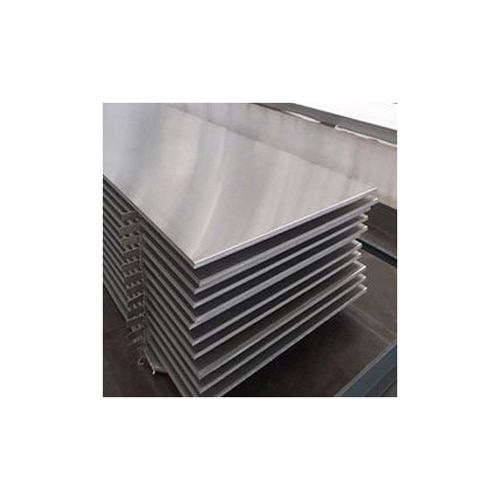 | Manganese Steel Plates View product → |
Frequently asked questions
Are Mn13, X120Mn12, X120Mn13 and X12 interchangeable designations?
No. Put X120Mn12 on the purchase order only after the supplier confirms the applicable standard, chemistry and rolled-plate product form. Do not use Mn13 or X12 alone as a complete specification.
When should you choose manganese steel instead of AR400, AR500, carbon steel or stainless steel?
Choose manganese steel for applications combining severe impact with abrasive wear, where the surface can work-harden in service. Compare AR400 and AR500 for hardness-led abrasion, carbon steel for lower-demand fabrication, and stainless steel when corrosion resistance is the primary requirement.
Which documents should Bengaluru buyers request with Mn13 plates?
Request an EN 10204 3.1 inspection certificate showing the heat number, chemical analysis, supplied dimensions, product condition and applicable material standard. Match the certificate heat number to the plate marking or delivery records.
How should you cut, weld and machine Mn13 manganese plate?
Plan cutting to control heat and distortion, use procedures suited to high-manganese steel, avoid unnecessary machining, and qualify welding consumables and preheat limits before production. Inspect cut edges and welds for cracking before installation.
Related products
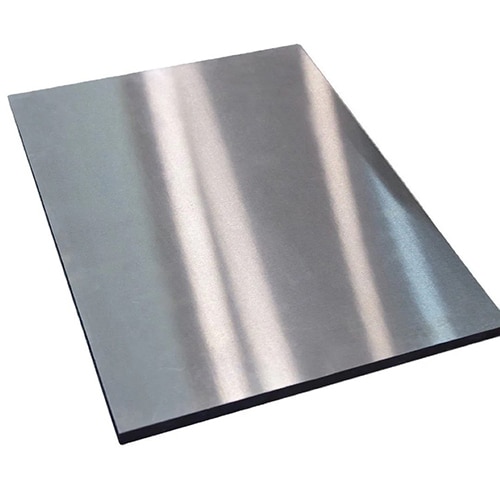 | Manganese Steel Plates View product → |
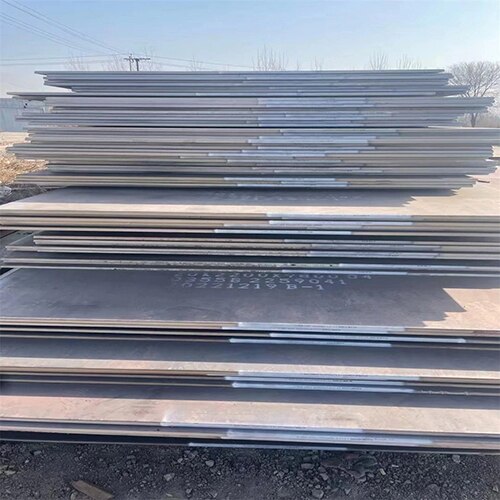 | Manganese Steel Plates 12-14% High Manganese CR Steel Plates View product → |
 | Manganese Steel Plates View product → |
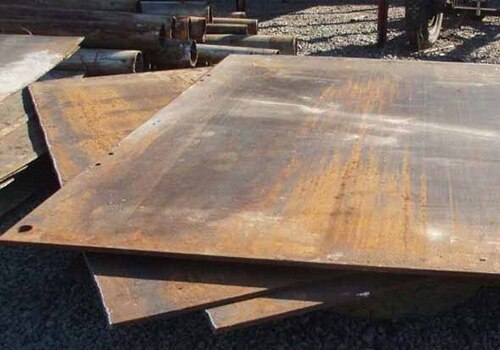 | Manganese Steel Plates Manganese Steel Plates X120Mn12 View product → |