A Bengaluru wear repair fails when a buyer chooses a harder plate without checking impact, cracking risk, fabrication limits or traceability. By the end, you will be able to match EH-C400, EH-C450 or EH-C500 to the repair, write a usable purchase specification and check whether a stockist can supply documented material in the form and quantity you need.
Key takeaways
- Select EH-C400, EH-C450 or EH-C500 from the dominant wear mechanism.
- Request the heat number, grade, thickness and mill test certificate before ordering.
- Confirm Bengaluru stock, cut dimensions and a documented delivery date.
- Qualify cutting, drilling, bending and welding procedures before repair work.
Choose EH-C400, EH-C450 or EH-C500 for the actual wear mechanism
Choose the grade from the dominant wear mechanism, not the highest hardness. EH-C400 is approximately 370–430 HBW, EH-C450 420–480 HBW and EH-C500 450–530 HBW; these are grade bands, not identical readings across every point.
EH-C500 suits chute liners, hopper liners, conveyor wear parts, buckets, crusher components and dump bodies when sliding abrasion dominates, impact is controlled and the plate has continuous, adequate support. Compare abrasive particle size, material handled, sliding distance, plate thickness, unsupported spans and operating temperature before ordering. Hardness alone does not predict service life.
| Grade | Wear-life and fabrication trade-off | Safer choice when |
|---|---|---|
| EH-C400 | Lower abrasion resistance, higher toughness and simpler repair execution | Severe impact, gouging, restraint, low-temperature exposure or cracking risk governs |
| EH-C450 | Balanced abrasion resistance and toughness | Impact and sliding wear are both significant |
| EH-C500 | Highest abrasion resistance, greater cracking and fabrication-control demands | Sliding abrasion dominates and support, cutting and welding procedures are controlled |
EH-C400 or EH-C450 can deliver longer operating life than EH-C500 if impact chips, bends or cracks the harder plate. A failed liner increases repair downtime, while thicker plate improves support only when fasteners, welds and backing structure carry the load.
Do not treat these grades as interchangeable with IS 2062 structural plate. Hardness does not establish structural yield strength, weldability or impact toughness. A search for jfe eh 500 plates for stockist in india is only a starting point: confirm the exact JFE EVERHARD designation, thickness and service duty before selecting EH-C500.
Write the material identity and mill-certificate requirements before ordering
“EH 500 plate” is incomplete. Your order must identify the mill product, because hardness alone does not establish structural-design yield strength, weldability, impact toughness or compliance with IS 2062.
1. State the exact designation, such as JFE EVERHARD EH-C500 when applicable, the current JFE material standard or specification, delivery condition, grade, nominal thickness, width and length.
2. Require the mill certificate to report the specified hardness range, chemical limits, tensile properties and any impact test with its temperature, absorbed energy and test direction. Do not accept an unspecified “500 HB” statement.
3. Require the heat number, plate identification or stencil, dimensions, individual test results and inspection document, such as EN 10204 3.1 where specified. Match the heat number on every plate or cut piece to the certificate; a distributor invoice does not replace mill traceability.
4. Put acceptance limits in the purchase order for surface condition, straightness, flatness and cut-size tolerance. State whether remnants are acceptable, and prohibit an unapproved substitute or changed thickness.
A search for “JFE EH 400 plates stockist India” does not prove that the offered plate is mill-origin material or suitable for your repair. Ask for a certificate copy, current marking photograph and written confirmation that the proposed designation, heat and dimensions match.
Confirm the applicable JFE fabrication guidance before treating EH-C400, EH-C450 or EH-C500 as interchangeable with structural steel.
Check Bengaluru stock, cut formats and delivery evidence from the stockist
Treat a catalogue entry as a lead, not proof of Bengaluru stock. Require the stockist to document the material before you release a repair order:
1. Request the current heat number, exact grade, thickness, width, length, available quantity, and whether each piece is a full plate or remnant. Ask for photographs showing the plate stencil or markings, plus the matching mill-certificate copy.
2. Convert the dimensions into your repair requirement: a full plate for repeated repairs, cut-to-size pieces for one liner, narrow strips for edges, formed liners for chutes or hoppers, or a nesting layout that reduces scrap. Specify the required cut dimensions and quantity in writing.
3. Obtain a written delivery estimate to your Bengaluru site. Imported-stock replenishment, port clearance, movement from another Indian warehouse and minimum order quantities can change availability; a listing does not prove ready stock.
4. Make the quotation state whether cutting uses a saw, plasma or flame, the dimensional tolerance for each process, edge condition, minimum order quantity, remnant policy, packing method and who carries transport risk and cost.
5. Compare documented JFE Everhard plates in Bengaluru, including a quotation described as jfe eh 450 plates stockist india, against the marking and certificate rather than the search phrase. Shyam Metals & Alloys can support that comparison when it confirms the available heat, dimensions and delivery basis at enquiry.
A supplier that will not provide these details is offering a catalogue possibility, not verified supply.
Related product
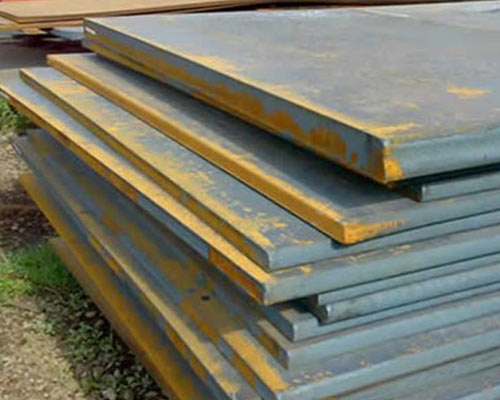 | Resistant Plates JFE Everhard(400 / 450 / 500 ) JFE Everhard(400 / 450 / 500 ) Item Abrasion Resistant Plate Material JFE EVERHARD Thickness 6mm to 50mm Width 500mm to 3000mm Length 1,0000mm to... View product → |
Set a qualified cutting, drilling, bending and welding procedure
Cracking usually begins at a cut edge, drilled hole or restrained weld, not in the untouched plate. Treat JFE EH-C500 fabrication as a qualified high-hardness-steel procedure; a search for “jfe eh 500 plates for stockist in india” does not validate the repair method.
1. Select the cutting process and inspect every edge. Flame cutting can leave a hardened or softened heat-affected zone, residual stress and edge cracks; plasma cutting needs controlled parameters and abrasive cutting suits critical repair dimensions. Remove dross, grind sharp notches, and inspect edges visually and with a suitable surface-crack test before drilling or welding.
2. Place holes away from cut edges, corners, narrow ligaments and high-stress weld toes. Drill with tooling rated for high-hardness plate, using the specified drill geometry, speed, feed and coolant. Mild-steel settings can blunt the drill, overheat the edge and create a cracked, work-hardened hole.
3. Obtain bend radius, bend direction against the rolling direction, tooling load and thickness limits from the current JFE fabrication instructions or a qualified procedure. Do not copy a mild-steel bend allowance; excessive force or a tight radius can open edge cracks.
4. Qualify welding for thickness, carbon equivalent, joint strength, toughness and hydrogen resistance. Control preheat, interpass temperature, heat input, restraint and weld sequence; keep low-hydrogen consumables dry and within their storage and rebaking limits. Do not overmatch weld hardness, copy a mild-steel repair procedure or weld across cracks.
Remove the damaged zone, inspect it, then weld only sound metal.
Use a receiving and repair checklist that protects service life
A plate that passes a hardness check can still fail early if it bridges a weak support or meets impact at the wrong angle. Accept it only after the document, marking, dimensions and repair fit agree.
1. Verify the purchase line states JFE EVERHARD EH-C500, EH-C450 or EH-C400, nominal thickness, width, length, delivery condition and current JFE specification. Check measured thickness, dimensions, hardness readings, surface condition, flatness and the supplier’s cut tolerance.
2. Match the heat number and plate stencil to the JFE certificate. Confirm chemical results, mechanical results, hardness range, specified impact temperature, energy and test direction, plus inspection and traceability documents. An invoice is not mill traceability.
3. Before installation, check liner support, fastener or weld-hole position, unsupported spans, impact direction, abrasive particle size, operating temperature and the counterface. A loose span or gouging counterface can defeat a harder plate.
4. Record the installed heat number, plate stencil, cut-piece location, orientation and repair date in the repair file. Keep the certificate, cutting record and fit-up inspection with it.
Service life depends on support, sliding distance, impact severity, abrasive size, temperature and gouging as well as hardness. Ask a JFE EH 400 plates stockist India or JFE EH 450 plates stockist India to provide the same evidence, not merely a catalogue listing.
Buy EH-C500 when verified duty rewards higher abrasion resistance and fabrication is controlled; select EH-C400 or EH-C450 when impact toughness, forming, weldability or faster repair execution is the governing constraint.
Frequently asked questions
How do you choose between EH-C400, EH-C450 and EH-C500 plates?
Choose from the dominant wear mechanism rather than hardness alone. EH-C400 is approximately 370–430 HBW, EH-C450 420–480 HBW and EH-C500 450–530 HBW; these are grade bands, not identical readings at every point.
What material information should you request before ordering JFE Everhard plates?
Specify the exact grade, thickness, plate dimensions, heat number and required mill test certificate. Match the certificate details with the plate marking and purchase order.
What should you confirm with a Bengaluru stockist?
Confirm physical stock, available thicknesses, standard and cut formats, plate marking, cutting capability and a written delivery commitment. Ask for dispatch evidence when delivery timing affects a repair shutdown.
How should you prepare JFE Everhard plates for wear repairs?
Use qualified procedures for cutting, drilling, bending and welding. Confirm the approved consumables, preheat or interpass controls, joint design and repair sequence before fabrication.