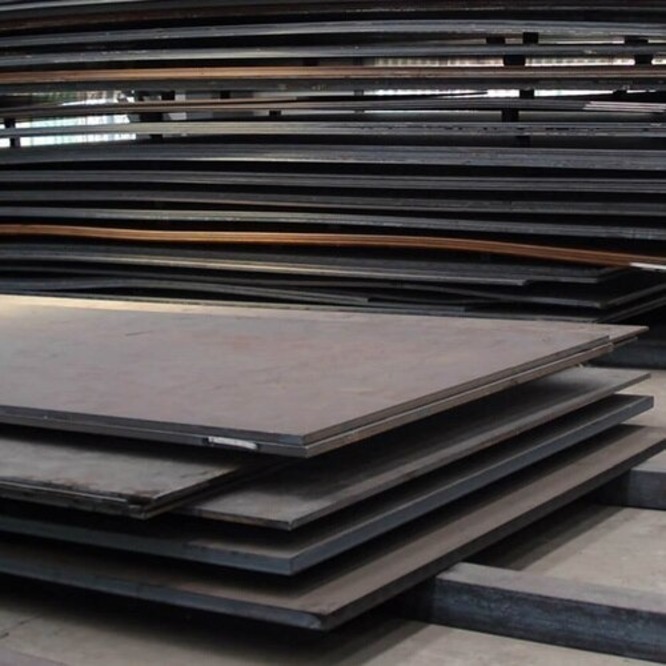
A reliable purchase starts with more than a grade name: you need the governing specification, grade and class, delivery condition, dimensions, inspection requirements and an unbroken heat-number trail. By the end, you will have a practical enquiry format for comparing Indian stockists, checking pressure-vessel suitability and accepting cut plates without losing traceability.
Key takeaways
- Send specification, dimensions, quantity, service conditions and document requirements.
- State SA387 designation, grade, class and heat-treatment condition.
- Verify pressure-vessel compliance through certificates, tests and traceability.
- Do not treat EN 10028-2 and A387 as automatic substitutes.
Turn the drawing or requisition into a complete plate enquiry
A stockist cannot quote the right plate from “Cr-Mo alloy” or a drawing alone. Send the governing specification, exact dimensions, quantity, service application and documentation required. A search for alloy steel plates for stockist in india does not replace those details; an incomplete enquiry invites the wrong grade, thickness or certificate.
1. State the material standard and designation: ASTM A387/A387M or ASME SA-387/SA-387M, including the edition required by the project. Add the grade, such as Grade 11, Grade 22 or Grade 91, and the class; Class 1 and Class 2 are not interchangeable.
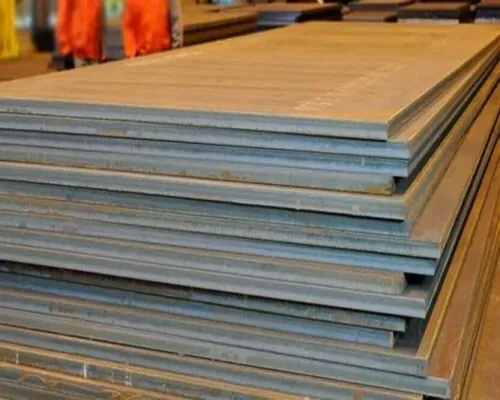
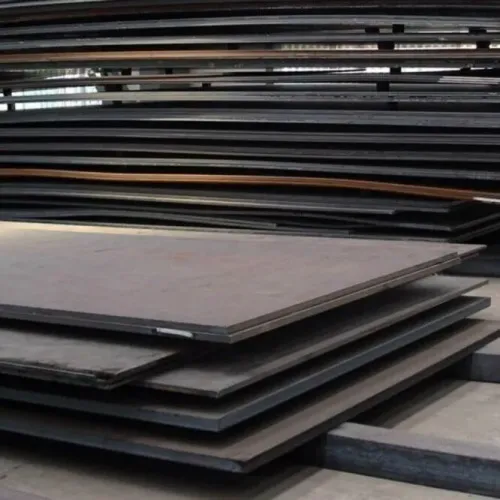
2. Give the product form and size: plate, not a generic “sheet”; nominal thickness, width, length, number of pieces and permitted tolerances. Include the drawing number and revision when cut sizes, holes or bevels are involved.
3. Identify service conditions: vessel or equipment name, design pressure, design temperature, governing code such as ASME Section VIII, Division 1, and whether the plate will be welded or formed.
4. Specify delivery condition and testing: normalized and tempered condition, impact testing temperature and energy requirement, hardness, ultrasonic examination, retesting rules and any supplementary requirements.
5. State the documents needed: original mill test certificate, heat number, chemical and mechanical results, heat-treatment chart, inspection release note, and ASME or PED/EN documentation where the end user requires it.
Ask whether the offer is original mill plate, imported trader stock, warehouse-held plate or a cut piece. The source affects traceability, certificate continuity and replacement responsibility after cutting.
Specify SA387 correctly: designation, grade, class and condition
Write SA-387/SA-387M when the project requires ASME Code material; write ASTM A387/A387M when the contract calls for the ASTM specification. They refer to the same Cr-Mo pressure-vessel product family only when the applicable edition and acceptance requirements align. “SA387 plate” alone is incomplete.
| Item | What it identifies | What you must decide |
|---|---|---|
| Specification | ASTM A387/A387M or ASME SA-387/SA-387M | Which standard and edition governs |
| Grade | Alloy chemistry, such as Grade 5, Grade 9, Grade 11, Grade 22 or Grade 91 | The grade required by design temperature and code |
| Class | Tensile-property requirements within that grade | Class 1 or Class 2 |
| Condition | Delivery heat treatment | Normalized and tempered, or quenched and tempered where specified |
Class is not a stronger or weaker version of the grade’s chemistry. It changes the specified tensile-property requirements, so Grade 11 Class 1 cannot be replaced by Grade 11 Class 2 without engineering approval.
Put these items on the purchase order:
- ASTM A387/A387M or ASME SA-387/SA-387M, including edition
- Grade and class
- Nominal thickness, width, length and quantity
- Required delivery condition
- Impact tests, hardness limits, ultrasonic examination or other supplementary tests
- Required ASME Section VIII, Division 1, PED or other project acceptance
- Mill test certificate details, including heat number and heat-treatment record
For an enquiry labelled “asme sa387 alloy steel sheets india,” replace “sheets” with the specified plate form and dimensions. SA-387 is a plate specification; a stockist’s commercial sheet label does not establish compliance. A plate made to ASTM chemistry without the required ASME designation or documentation may fail code acceptance.
Confirm that the plate is acceptable for pressure-vessel service
Suitability is a design-and-fabrication decision, not a chemistry match. Confirm the governing code, design pressure, design metal temperature, corrosion allowance, grade, class and thickness before accepting an A387 plate. A387 covers chromium-molybdenum pressure-vessel plate for welded elevated-temperature service; it does not qualify every plate for every vessel.
Check these points against the vessel design and requisition:
- Code acceptance: Identify whether construction follows ASME Section VIII, Division 1, and whether the purchase order requires ASTM A387/A387M or ASME SA-387/SA-387M. State the specification edition, grade and class; “SA387 plate” alone is incomplete.
- Welding: Use a WPS and PQR qualified for the selected grade, thickness and welding process. Set the required preheat, interpass temperature, filler metal and post-weld heat treatment; an unsuitable weld procedure can damage creep strength or create cracking.
- Heat treatment: Confirm the plate’s specified delivery condition and the vessel’s PWHT cycle. Check that the mill certificate records the heat treatment required for that grade, especially for Grade 22 or Grade 91.
- Testing: Match tensile and yield results to the stated class. Require Charpy impact testing when the minimum design metal temperature or construction code calls for it, and add ultrasonic examination if the drawing or specification demands it. Retain heat-number traceability after cutting.
The wording asme sa387 alloy steel sheets india can hide a mismatch: SA-387 is a pressure-vessel plate specification, not a generic sheet description. Ask for the exact nominal dimensions and complete certificate before approval.
Compare EN 10028-2 and A387 without assuming substitution
An EN 10028-2 plate can replace A387 only after the governing code, purchaser and end user accept the substitution in writing. Similar chromium-molybdenum chemistry is not proof of equivalence: design allowable stresses, heat treatment, impact requirements and welding rules can differ.
| Point of comparison | EN 10028-2 | ASTM A387 / ASME SA-387 |
|---|---|---|
| Product purpose | Pressure equipment plate under the European system | Chromium-molybdenum plate for welded pressure vessels at elevated temperature |
| Acceptance route | EN or PED project specification, with the named grade and delivery condition | ASTM A387 or ASME SA-387 designation, grade, class and edition |
| Typical evidence | EN 10204 certificate and required EN tests | A20/A20M requirements plus A387 or SA-387 certificate and tests |
Before buying from an alloy steel plates manufacturer in india, obtain a written cross-reference approved by the engineer responsible for the vessel. State whether the project requires ASME Section VIII acceptance, PED documentation, or another national standard; an EN plate with no code acceptance cannot enter a code-controlled substitution.
Require these records against the plate heat number:
- EN 10204 Type 3.1 or 3.2 inspection certificate, as specified
- Chemical analysis, tensile results, yield strength, elongation and hardness
- Impact-test results at the specified temperature, when required
- Heat-treatment chart or certified delivery condition
- Ultrasonic examination report to the named acceptance class, when ordered
- Original mill traceability, plate marking and any approved deviation or substitution letter
Do not accept a trader’s “equivalent grade” statement as approval. Requalify the weld procedure if the replacement changes the material group or design basis.
Choose the right seller and inspect every delivered piece
Compare sellers by responsibility, not by the label on the quotation. An alloy steel plates supplier in india may hold original mill plate, imported trader stock, or cut pieces; each affects documentation, replacement liability and delivery time.
| Seller | What you receive | Check before ordering |
|---|---|---|
| Stockist | Warehouse-held mill or imported plate | Heat numbers, storage condition, MTC, cutting policy and replacement commitment |
| Distributor | Material sourced through a supply chain | Mill identity, chain of custody, inspection charges and freight |
| Manufacturer | Plate made to your order | ASME designation, production schedule, testing and mill-issued certificate |
Request the MTC before payment. Confirm the heat number, plate number, specification, grade, class, dimensions, heat treatment and actual test results match your purchase order. An EN 10204 3.1 certificate contains manufacturer-issued, order-specific results; it is not an independent inspection certificate. Specify EN 10204 3.2 or purchaser witnessing when the inspection plan requires it.
Compare quotations on supplied or theoretical weight, cutting allowance, minimum billable size, edge condition, nesting or remnant policy, testing fees, freight, tax, and replacement cost for a rejected heat. A low per-kilogram price can become expensive after charges and delay.
Inspect every delivered piece for dimensions, warping, laminations, surface damage, identification marks and certificate linkage. If Shyam Metals & Alloys quotes as an alloy steel plates manufacturer in india, ask whether the offered plate is mill-produced or warehouse stock.
Before cutting, photograph each mark and record its location. Transfer the heat number and piece ID by stamping, paint marking or a controlled cut map; “full plate MTC” is insufficient when a cut piece cannot be linked to it.
Related products
 | Alloy Steel Plate Grades View product → |
 | Sheet and Plates Range : 3 mm to 100 mm thick in upto 2500 mm width upto 12500 mm length available with NACE MR 01-75s Carbon Steel : ASTM / ASME A 516 / 517 GR. View product → |
Frequently asked questions
What information should an alloy steel plate enquiry include?
Provide the governing specification, grade, dimensions, quantity, application, delivery location and required inspection or certification documents.
How should you specify an SA387 plate?
State ASTM or ASME SA387, the grade such as Grade 11 or Grade 22, Class 1 or Class 2, thickness, dimensions and supply condition.
How do you confirm a plate is suitable for pressure-vessel service?
Check the material test certificate against the purchase specification, including heat number, chemistry, tensile results, impact tests where required, heat treatment and traceability.
Are EN 10028-2 and A387 plates interchangeable?
No. Compare the exact grade, chemistry, mechanical properties, heat treatment, testing and design-code acceptance before approving substitution.
What should you inspect when alloy steel plates arrive?
Match each plate to its heat number and certificate, then check dimensions, surface condition, markings, quantity and any specified ultrasonic or other test reports.
Related products
 | Alloy Steel Plate Grades View product → |
 | Alloy Steel Plate Grades View product → |
 | Alloy Steel Plate Grades View product → |
 | Alloy Steel Plate Grades View product → |