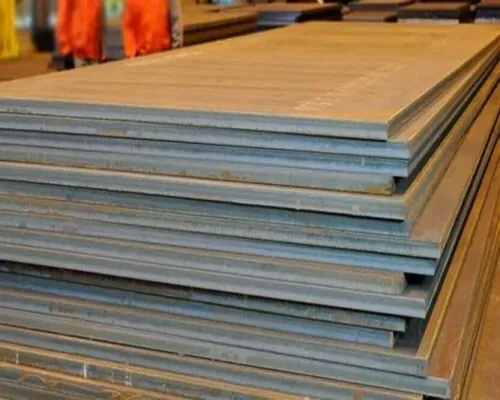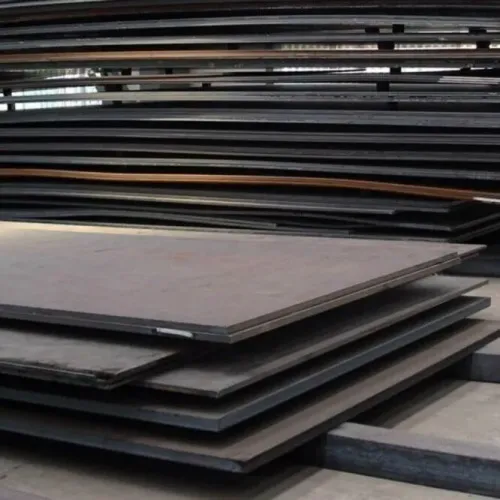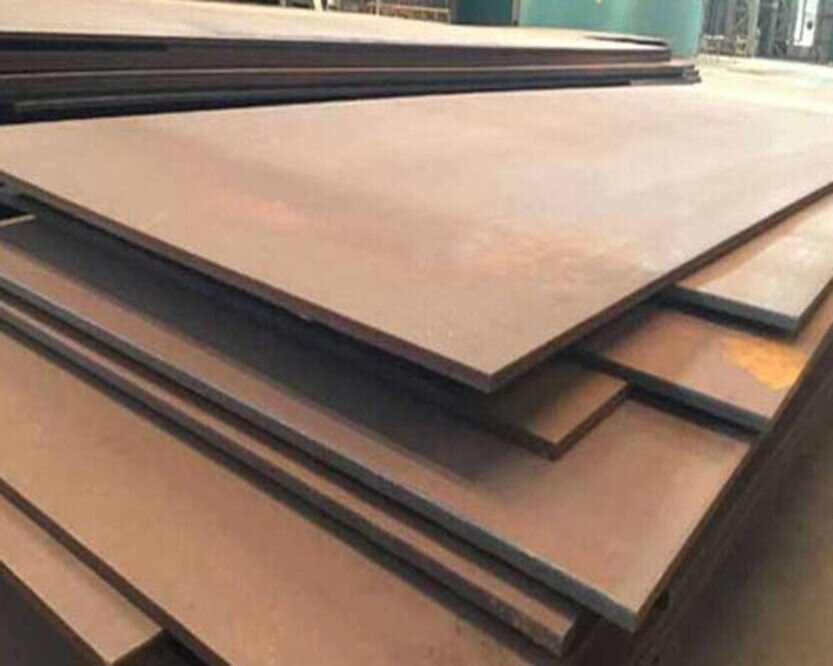
An alloy steel plate order is controlled from the furnace heat to the final inspection certificate, not just by selecting a grade from a catalogue. By following the production route and checking the heat-treatment condition, testing, dimensions and traceability documents, you can distinguish compliant pressure-vessel plate from material that is merely described with a familiar grade name.
Key takeaways
- Specify the grade, thickness, dimensions and delivery condition in the purchase order.
- Match heat treatment to the plate’s required strength, toughness and service temperature.
- Request heat numbers, test certificates and inspection reports before accepting delivery.
- Use a manufacturer for production control, a supplier for sourcing and a stockist for speed.
How an alloy steel plate moves from steelmaking to finished plate
An alloy steel plate made for an Indian project begins with a controlled heat, not with cutting stock to size. The purchase order fixes the grade, thickness, dimensions, delivery condition, governing code such as ASTM A387/A387M or ASME Section II, Part A, and required inspection documents.
1. Steelmakers melt the charge in an electric arc furnace or basic oxygen furnace, then adjust alloying elements such as chromium, molybdenum, manganese, carbon and silicon.
2. Ladle refining removes dissolved gases and inclusions while final chemistry and temperature are adjusted. The heat number is assigned here and must remain traceable.
3. The liquid steel is continuously cast into slabs. Ingot casting is an alternative route for some products and must be identified in the mill records.
4. The slab is reheated to the rolling range, then passed through roughing and finishing stands until it reaches the ordered thickness and shape. Accelerated cooling follows when the specification requires it.
5. The plate receives its ordered heat treatment: normalizing, normalizing and tempering, or quenching and tempering. The furnace cycle, cooling method and delivered condition belong on the material test certificate.
6. The mill cuts the plate, prepares edges if specified, and checks thickness, length, width, flatness, surface condition and ultrasonic quality. Define whether dimensions are measured before or after edge preparation, and state ASTM A20/A20M tolerances when applicable.
7. The manufacturer stamps or transfers the heat number and plate identification, then issues the certificate and test reports. An alloy steel plates manufacturer in India must preserve that link; a supplier must disclose the original mill instead of presenting stock as its own manufacture.
Why the delivered heat-treatment condition changes the plate’s performance
The delivered heat-treatment condition controls strength, toughness, ductility and weldability; it is not a cosmetic finishing choice. The applicable ASTM/ASME material specification and edition must govern the furnace cycle and temperature range.
| Condition | Metallurgical effect | Performance implication |
|---|---|---|
| Normalized | Heating above the transformation range, followed by air cooling, refines and homogenizes the rolled structure | Balanced strength and toughness with comparatively straightforward fabrication |
| Normalized and tempered | Normalizing is followed by controlled reheating below the transformation range | Lower brittleness and residual stress, with improved toughness and dimensional stability |
| Quenched and tempered | Rapid cooling forms harder constituents, then tempering reduces brittleness and adjusts strength | Higher strength and hardness, but tighter control of welding, hydrogen and heat input |
Write the exact condition, grade, class, thickness, governing code and edition in the purchase order. Require the material test certificate to repeat the delivered condition, heat number, chemical analysis, tensile results, hardness where specified, heat-treatment details and plate identification.
If Charpy V-notch testing is required, state the test temperature, specimen orientation, absorbed-energy or lateral-expansion criterion, test frequency and supplementary requirement. “Alloy steel” does not guarantee impact testing.
For Cr-Mo plate, normalized-and-tempered delivery does not qualify the welded component. Your welding procedure specification must address preheat, interpass temperature, controlled consumables, hydrogen control and required post-weld heat treatment. An alloy steel plates supplier in India must provide mill traceability; its certificate cannot replace your welding qualification or certify the finished fabrication.
How SA387 Grade 9 Class 1 is made and specified
SA387 Grade 9 Class 1 identifies a pressure-vessel plate made to ASME SA387/SA387M, Grade 9, Class 1. “SA387” normally means the ASME Section II, Part A adoption of ASTM A387/A387M, so the purchase order must name the code edition, thickness, delivery condition and supplementary requirements.
The 9Cr-1Mo chemistry contains roughly 9% chromium and 1% molybdenum. Chromium supports oxidation and corrosion resistance at elevated temperature; molybdenum improves high-temperature strength and resistance to softening. That combination suits boilers, heat exchangers and pressure vessels exposed to hot steam, hydrogen-bearing service or refinery process conditions.
The mill produces this plate through controlled melting, ladle refining, casting, hot rolling and specification-controlled normalizing and tempering. Normalizing refines the rolled structure; tempering reduces brittleness and residual stress. Verify the furnace cycle against the specified ASTM/ASME edition, not a generic Cr-Mo table.
Class 1 is not interchangeable with Class 2 because their mechanical-property requirements differ. The class must appear on the order, plate marking and mill test certificate, alongside heat and piece traceability.
- Do not replace Grade 9 with Grade 5, 11, 22 or 91 without the design authority’s written approval.
- Do not treat mill heat treatment as approval of welding or PWHT; the WPS must control preheat, interpass temperature, hydrogen and post-weld heat treatment.
- For sa387 grade 9 cl 1 plates india procurement, require chemistry, tensile results, yield strength, elongation and delivered condition on the certificate.
Which inspections and documents prove that the plate meets the order
Do not release a plate for fabrication until its heat number, marking, certificate and test results agree. The purchase order must identify ASTM A387/A387M or the adopted ASME Section II, Part A edition, Grade 9 Class 1, thickness, delivery heat-treatment condition, supplementary requirements and inspection document.
| Check or document | What it proves | What to reconcile |
|---|---|---|
| Material test certificate | Heat chemistry, tensile strength, yield strength, elongation, heat treatment and dimensions | Grade, Class 1, heat number and ordered thickness |
| Charpy V-notch report | Impact performance when impact testing was ordered | Test temperature, specimen orientation, energy or lateral-expansion criterion |
| Ultrasonic test report | Internal soundness against the specified acceptance level | Standard, scanning coverage, plate number and result |
| EN 10204 Type 3.1 or 3.2 | Manufacturer-certified inspection, with 3.2 adding an independent or purchaser representative | Document type stated in the order |
At receiving, an alloy steel plates supplier in India must preserve the original mill identity rather than issue an untraceable replacement certificate. That matters for SA387 Grade 9 Cl 1 plates in India, especially when material has passed through a stockist.
- Match every plate’s stamped or painted heat number, grade, class and thickness to the certificate.
- Check length, width, thickness, straightness, edge condition and surface defects.
- Confirm the delivered condition is normalized, normalized-and-tempered, or quenched-and-tempered as ordered.
- Reject or quarantine plates with missing markings, mixed heats, damaged identification or certificates that describe another plate.
- Record photographs, inspection results and any cutting plan before fabrication removes traceability.
How to choose between a plate manufacturer, supplier and stockist
Choose the source by separating what it makes from what it can procure. An alloy steel plates manufacturer in india must demonstrate melting route, plate-size limits, controlled heat treatment, ultrasonic testing and heat-to-piece traceability. An alloy steel plates supplier in india must identify the original mill and preserve its markings and certificates.
| Option | Verify | Main risk or advantage |
|---|---|---|
| Manufacturer | Furnace records, UT procedure, rolling range, heat number and mill certificate linked to each plate | Best control; reject the offer if production origin is unclear |
| Supplier | Original mill name, governing ASTM/ASME specification, procurement route and certificate continuity | Useful for grades or sizes it does not produce; relabelling breaks traceability |
| Stockist | Individual-piece markings, storage condition, cut-parent-plate records and certificate match | Fast delivery and partial quantities, but mixed heats and damaged identification create rejection risk |
An alloy steel plates stockist in india suits a short shutdown order only when receiving inspection reconciles every piece’s marking, dimensions, surface condition, heat number and UT report. Outdoor corrosion, aged certificates and plates cut without retained parent traceability can stop fabrication.
For any source, put the code and edition, grade, class, thickness, delivered heat-treatment condition and supplementary requirements in the purchase order. If Charpy testing is required, state temperature, orientation, energy criterion and test frequency.
Whether you assess Shyam Metals & Alloys or another vendor, ask one question that exposes the difference: did you produce this heat, procure it, or merely hold it?
Related products
 | Sheet and Plates Range : 3 mm to 100 mm thick in upto 2500 mm width upto 12500 mm length available with NACE MR 01-75s Carbon Steel : ASTM / ASME A 516 / 517 GR. View product → |
 | Alloy Steel Plate Grades View product → |
Frequently asked questions
How does an alloy steel plate move from steelmaking to finished plate?
The process runs from controlled steelmaking and casting through reheating, rolling, heat treatment, cutting, inspection and document review. The order fixes the grade, thickness, dimensions and delivery condition before production begins.
Why does the delivered heat-treatment condition matter?
Normalised, tempered, quenched-and-tempered and annealed conditions produce different strength, toughness, hardness and fabrication behaviour. Specify the required condition because it affects performance and compliance.
How is SA387 Grade 9 Class 1 specified?
Specify SA387 Grade 9 Class 1 with the required thickness, dimensions, ASTM A387/A387M or ASME specification edition, delivery condition, tests and inspection documents. Confirm the chemistry and mechanical requirements on the material test certificate.
Which documents prove that an alloy steel plate meets the order?
Review the material test certificate against the purchase order and specification. Check the heat number, chemical analysis, tensile results, yield strength, elongation, heat-treatment condition, dimensions and any required ultrasonic or third-party inspection reports.
How do you choose between a plate manufacturer, supplier and stockist?
Choose a manufacturer when you need controlled production or a specialised condition, a supplier when you need coordinated sourcing and documentation, and a stockist when standard material is available from inventory and delivery speed matters.
Related products
 | Alloy Steel Plate Grades View product → |
 | Alloy Steel Plate Grades View product → |