A 400-class wear plate is the result of controlled steelmaking, rolling, cooling and heat treatment—not simply a mild-steel plate with a hard surface. By following the production route and checking the right certificate fields, you can judge whether an offered plate suits your wear mechanism, fabrication method and service conditions.
Key takeaways
- Request the heat number, chemistry, hardness results and impact-test details.
- Do not select plate from 400 BHW hardness alone; check toughness and application loads.
- Use low-hydrogen welding procedures and preheat limits specified by the mill.
- Compare offers by tested grade, plate tolerances, certificates, cutting and delivery terms.
From Molten Steel to a Quenched Wear Plate
ABREX 400 begins as a deliberately alloyed steel melt, not as ordinary mild-steel plate hardened after delivery. The manufacturer controls chemistry, cleanliness and cooling because these determine the plate’s wear resistance, toughness and weldability.
- Steelmaking adjusts carbon and alloying elements such as manganese, chromium, nickel or molybdenum within the manufacturer’s specified range. This creates hardenability without relying on a hardened surface layer.
- Continuous casting turns the melt into slabs. Controlled solidification limits segregation and gives the rolling mill a consistent starting section.
- Reheating brings each slab to the correct temperature for deformation. Excessive heat can enlarge grains and reduce toughness.
- Controlled rolling reduces thickness and refines the grain structure. The rolling schedule also influences strength, flatness and directional bending behaviour.
- Accelerated cooling or quenching rapidly cools the rolled plate, producing a hard martensitic structure through its thickness rather than only at the surface.
- Tempering then reduces quench brittleness and balances hardness with impact toughness and fabrication performance. If the datasheet states N, it means a normalized or normalized-rolled delivery condition; Q+T means quenched and tempered, so confirm the manufacturer’s definition.
The finished plate is tested for hardness and dimensions before release, with results linked to a heat and plate number. A supplier listing for wear resistant plates india is not proof of this route: request the original mill certificate and verify the exact ABREX designation, country of melt and heat-number continuity.
What the Heat Treatment and Mill Certificate Must Prove
A certificate that says only “ABREX 400” and “400 BHN” cannot establish that two offers are equivalent. The 400 designation describes hardness, not a guaranteed tensile strength, impact toughness, abrasion life or weldability. Request the manufacturer’s technical datasheet alongside the original mill test certificate.
Ask for these records before comparing price:
- Exact product designation, applicable material or inspection standard, nominal thickness, width and length.
- Country of melt and country of manufacture; identify the original steel mill rather than only the Indian seller.
- Heat number, plate or slab number, and continuous marking from the certificate to the plate.
- Chemical analysis, including carbon, manganese, silicon and alloying elements stated by the product data.
- Delivery condition: Q means quenched; Q+T means quenched and tempered. N means normalized, so do not treat N and Q+T as interchangeable.
- Hardness readings with test method and locations, plus yield strength, tensile strength and elongation where the datasheet specifies them.
- Charpy impact energy, test temperature and acceptance requirement when toughness matters for buckets, liners or structures exposed to shock.
- Any post-mill processing: cutting, shot-blasting, flattening or edge treatment after receipt.
| Check | Acceptable evidence | Warning sign |
|---|---|---|
| Traceability | Heat and plate numbers match markings and certificate | Invoice lists ABREX 400 only |
| Heat treatment | Mill record states Q or Q+T and the actual process | Seller cannot identify delivery condition |
| Supplier identity | Manufacturer, importer or stockist is clearly named | “Abrex 400 plates manufacturer in India” is claimed without country-of-melt or original-mill records |
This verification applies equally when searching for an Abrex 400 plates supplier in India or an Abrex 400 plates stockist in India.
Why 400 BHW Hardness Alone Does Not Select the Right Plate
A 400 HBW reading confirms hardness, not guaranteed wear life, tensile strength or suitability for every duty. The 400 designation is a hardness class, commonly about 370–430 HBW; state the test method, test location and sampling rule in the purchase specification.
| Property | What it tells you | What to compare |
|---|---|---|
| Hardness | Resistance to indentation and a useful abrasion indicator | 370–430 HBW result, test method and location |
| Toughness | Ability to absorb impact without cracking | Charpy impact value, test temperature and specimen direction |
| Strength | Load-carrying capacity | Certified yield and tensile strength; do not infer either from HBW |
| Service condition | The failure mechanism the plate must withstand | Sliding abrasion, impact abrasion, gouging, or a combination |
The phrase wear resistant plates India describes a market, not a performance standard. Specify the material’s actual duty: ore sliding across a chute, coal striking a hopper, sand scouring a pipe bend, clinker causing impact, or scrap producing gouging. A harder plate can still fail early if impact toughness is inadequate.
Two plates with similar hardness can differ in chemistry, heat treatment, weldability, abrasive-wear performance and crack sensitivity. Compare the exact ABREX 400 designation and manufacturer’s datasheet with the mill certificate, rather than accepting “400 BHN plate” as equivalent to ABREX 400, IS 2062, ASTM A36 or EN 10025 S355.
Choose the plate whose toughness and strength match the load, while hardness matches the dominant wear mechanism.
Cutting, Welding, Bending and Machining After Delivery
A flame-cut edge can carry a heat-affected zone (HAZ) that is harder, tougher to weld and more prone to cracking than the plate interior. For impact-loaded parts, specify whether the HAZ must be removed by machining or controlled grinding, and require a hardness check when the fabrication specification identifies edge hardness as critical.
Use the plate’s mill test certificate, not a generic workshop setting, to establish the welding procedure. Carbon equivalent, thickness, hydrogen level, joint restraint and consumable strength determine preheat and interpass limits.
A qualified WPS must control consumable drying, heat input, interpass temperature and cooling; one blanket preheat value for every 400-class plate can cause hydrogen cracking or excessive softening.
- Cutting: use controlled flame cutting or plasma parameters, inspect for cracks and gouging, and remove damaged or excessively hardened edge material before welding.
- Bending: obtain the manufacturer’s minimum inside radii for the ordered thickness in both rolling directions. Forming force and springback rise with hardness; a “bendable” label is not a radius specification.
- Machining: use rigid workholding, carbide tools, conservative speeds and feeds, and coolant. High-speed-steel tools or excessive feed accelerate wear, work hardening and edge chipping.
- Welding: record preheat and interpass temperatures with contact thermometers or temperature crayons, then let restrained joints cool under control.
Ask an abreх 400 plates supplier in india whether cutting, blasting or edge grinding occurred after receipt. Match the supplied heat number to the original certificate, because post-delivery processing can change the edge condition without changing the plate’s stated hardness.
How to Compare Offers from Indian Manufacturers, Suppliers and Stockists
A quoted 400 BHN value does not prove that you are buying ABREX 400. Start by matching the brand designation, original mill certificate, heat number and manufacturer’s technical data to the purchase order.
| Offer | Evidence to demand | Decision |
|---|---|---|
| ABREX 400 from the original mill | Plate identification, heat number, chemical analysis, heat treatment, hardness results and inspection standard | Suitable when records match the delivered plate |
| “400 BHN plate” | Hardness result without branded designation or traceable certificate | Not equivalent proof |
| Cut stock from a parent plate | Parent-plate number, cut-piece identification, minimum usable dimensions and cut history | Accept only if traceability remains intact |
| Another wear-plate brand | Its own datasheet for hardness, toughness, strength, bending and welding limits | Use only after engineering approval |
Check availability as carefully as grade. An abreх 400 plates stockist in india may hold mixed heats, remnants or a parent plate that cannot produce your required dimensions. Specify thickness, width, length, dimensional tolerances, flatness, surface condition and whether cut pieces are acceptable.
For an abreх 400 plates supplier in india, ask these questions before comparing price:
- Where were the steel melted and the plate manufactured?
- Does every delivered piece carry the heat number shown on the original certificate?
- Was it shot-blasted, painted or cut after receipt, and are those operations documented?
- What minimum transverse and longitudinal bend radii apply to the ordered thickness?
Shyam Metals & Alloys can be assessed on the same evidence: documentation and physical conformity must decide the offer, not the seller’s label.
Related product
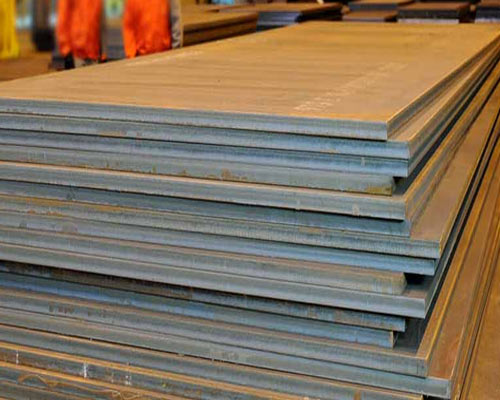 | Resistant Plates Abrex (400 / 450 / 500 ) Item Abrasion Resistant Plate Material Abrex 400 /450 /500 /600 Thickness 6mm to 100mm Width 1,500mm to 2,500mm Length... View product → |
Frequently asked questions
How are Abrex 400 plates manufactured?
The process starts with an alloyed steel melt, followed by casting, rolling and controlled quenching. Chemistry, cleanliness and cooling determine hardness, wear resistance, toughness and weldability.
What must an Abrex 400 mill certificate prove?
Ask for the heat number, plate dimensions, chemical composition, hardness results, heat-treatment condition and traceability linking the certificate to the supplied plate. Add impact-test results when the application requires toughness at a specified temperature.
Is 400 BHW hardness enough to choose an Abrex 400 plate?
No. Compare toughness, thickness, chemistry, plate tolerances, service impact and wear conditions. Two plates with similar hardness can perform differently under shock loading, low temperatures or welding.
How should you fabricate Abrex 400 plates after delivery?
Use controlled cutting, low-hydrogen welding and the supplier's preheat and interpass limits. Plan bending around plate thickness and rolling direction, and use suitable tooling and slower machining parameters than for mild steel.
How do you compare Abrex 400 suppliers and stockists in India?
Compare traceable mill certificates, available thicknesses, test coverage, dimensional tolerances, fabrication support, delivery terms and replacement procedures—not price per kilogram alone.